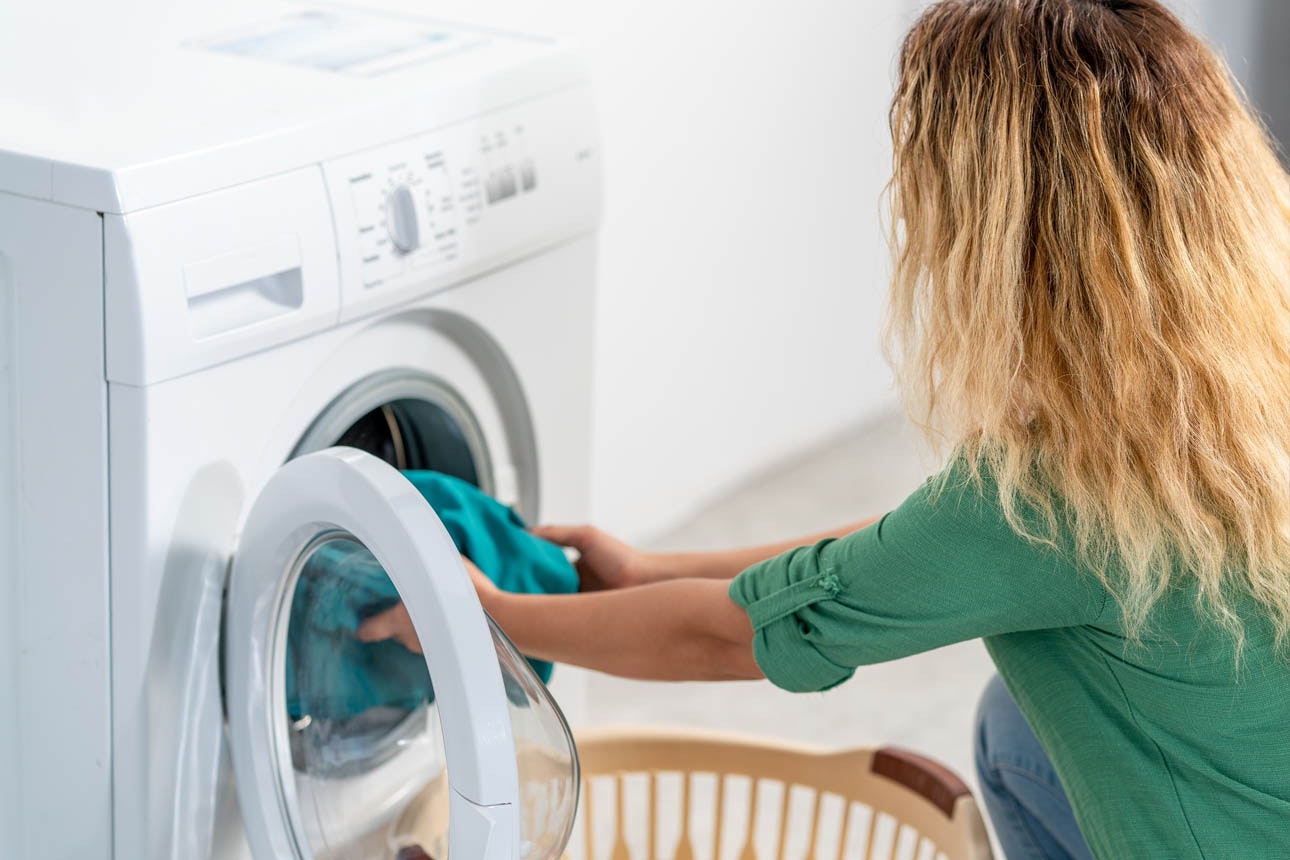
We test washer dryers using a 3.5kg load because our research shows this is about in the middle of the range of amounts that most people wash, whatever the size of their machine.
We use a normal, cold wash. If there isn’t such a cycle, we use the closest approximation.
Lifetime score
Our overall score combines test performance (how well the appliance works) with predicted reliability (how likely models from the brand are to remain free of faults) and brand satisfaction (how likely owners of the brand are to be very satisfied).
We’ll only recommend appliances you’ll love to own, that work well and keep working well for a long time.
Test performance
Our test performance score is comprised of two sub-scores:
Washing performance
Drying performance
Washing performance
We test a machine’s ability to remove dirt, rinse away detergent, spin out water and remain gentle on fabrics. We also assess its water efficiency.
Drying performance
We test how long the dryer takes to dry clothes, and assess how energy efficient it is.
Predicted reliability
It’s reasonable to expect a new appliance to remain fault-free for at least the first five years. Our predicted reliability won’t tell you whether the washing machine in your laundry will spring a leak tomorrow, but it does show which brands make models that are less likely to fail.
Owner satisfaction
Satisfaction is important – no appliance should be a source of buyer regret. Appliances with very satisfied owners are more likely to get cleaned regularly and maintained well. Their owners are also more likely to seek repair for faults than look for a quick replacement.
Repairability (coming soon)
Older appliances are more likely to go wrong, but common faults should be repairable. Repairs should be affordable and convenient – parts need to be easy to find at a reasonable cost, instructions should be available, and repair shouldn’t need hours of expert labour.
We haven’t been able to assess repairability yet, but it’s important, so we’re gathering data and forming a plan so we can start including it in our lifetime scores. It will be challenging. We’ll need to analyse product failure data in our reliability surveys, conduct hands-on inspections to evaluate how easy products are to take apart, and investigate which brands make spare parts available at a reasonable price.
Survey data 101
In our annual reliability and satisfaction survey, consumers tell us about faults that have left an appliance they own unusable or mean they’ve had to change how they use it. We also ask them how satisfied they are with the appliance. We use their data to produce our predicted reliability and owner satisfaction scores.
We use a statistical test to rate the relative performance of each brand. Compared to data we have for all products (of the same type) in the survey, we rate each brand with highest, high, average, low or lowest reliability and satisfaction. You can compare the rating of different brands for the same product type (for example, the reliability rating for Miele and Haier washing machines), but you can’t compare the results for different product types (for example, satisfaction of LG TVs and Samsung phones).
We analyse brands that get at least 30 responses in our survey. That means there are some brands we can’t analyse because we don’t have enough data. For those brands, we assume they have average predicted reliability and owner satisfaction.
*Our data is based on 396 washer dryers in our 2024 survey. *