By Rebecca Styles
Research Lead | Hautū Rangahau
Sue Peoples put her cat Jac into a cattery before heading off on holiday with her partner. A week later, the cattery rang with bad news. It had given Jac to another family and the cat had run away.
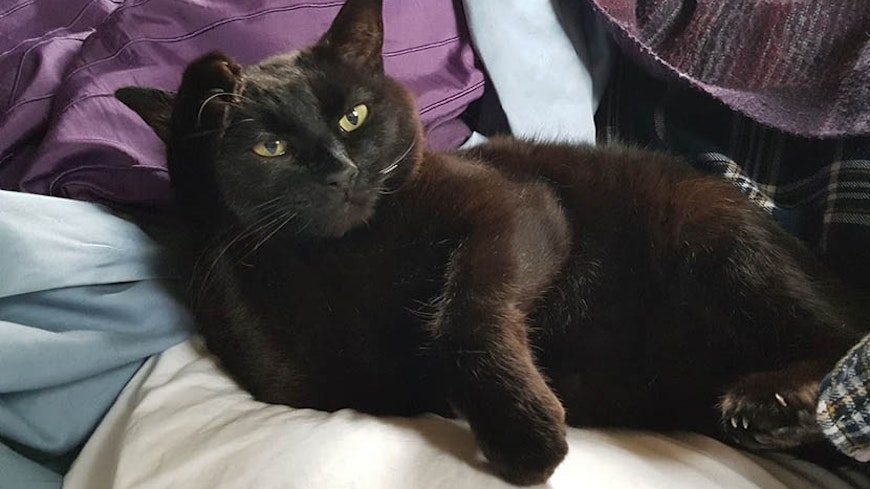
“Of course, I was very upset. I don’t have kids, so Jac’s like my fur baby,” Sue said.
The couple cancelled the rest of their holiday and flew back to try to find Jac. They searched, put up posters and spread the word on social media. They also recruited locals to help with the search – but with no luck.
“When I think of her out in the dark, it just destroys us,” Sue said.
How did it happen? Jac was mistaken for another cat called Sam – something Sue found hard to fathom as Jac had three legs so it should have been easy to identify her. Sam was also given Jac’s daily medication for arthritis, Sue said.
Sue filed a claim in the Disputes Tribunal against the cattery, claiming back her costs. The case was settled before the hearing and Sue was reimbursed $2000 for accommodation and flights.
Standards of care
If you need a cattery or kennel to mind your pet while you’re on holiday, what standards of care should you expect?
Basic requirements are set in a code of welfare, developed under the Animal Welfare Act.
The code has minimum standards that cover essential care from ensuring animals have adequate food, exercise and shelter, through to having trained staff who can assess animal health and behavioural issues.
Facilities need to be clean, and have adequate lighting and ventilation. They must also have separate areas for animals requiring isolation because of health or behavioural problems.
Records should also be kept for each animal, including vaccination and microchip information.
However, there’s no requirement for pet care facilities to be routinely audited to check they’re complying with the code. They’re usually only visited if there’s a complaint.
Both the SPCA and the police have the power to investigate complaints about failures to comply with the code. Evidence of shortfalls can be used to support a prosecution under the Animal Welfare Act.
Local councils may require catteries and kennels to be registered. However, of 12 city councils we contacted, only Wellington City Council does so. The registration process includes a site visit and an annual inspection. The council will inspect premises more often if it receives complaints.
Up to standard?
In the past two years, the SPCA received 56 complaints about pet care facilities. That’s about one complaint a fortnight.
Dirty premises, inadequate security to prevent animals escaping, lack of supervision, lack of veterinary care for sick animals and insufficient staff were among complaints.
When the SPCA receives a complaint, an inspector will visit the facility. They’ll check on the animals and make sure the operation complies with the act and the welfare code, SPCA national inspectorate manager Alan Wilson said.
If breaches are found, the inspector will usually work with the facility to remedy the issue. In serious cases, the SPCA can take legal action against the facility’s owner. However, no boarding facilities have been prosecuted since the code came into force in October 2018.
What to check
SPCA scientific officer Dr Alison Vaughan recommends asking your vet to recommend a cattery or kennel for your pet.
It’s also a good idea to visit the facility before making a booking. Look for clean and secure facilities. Don’t be shy to ask about staff experience and qualifications.
Some facilities allow your pet a short stay to get used to the environment, Dr Vaughan said.
For kennels, ask staff how they handle behavioural issues, such as dogs behaving aggressively.
A good facility will also check your pet is up to date with vaccinations, flea and worm treatments, and is microchipped and that your dog is registered.
The code of welfare recommends facilities have a quality assurance programme outlining how standards are met day-to-day. Ask the facility if it has a programme.
If you strike problems
Calling out poor service can help ensure companies lift their game.
If a boarding facility isn’t up to scratch, contact the local SPCA. It can inspect facilities. You can also advise the Ministry for Primary Industries, which is responsible for administering the Animal Welfare Act: [email protected].
If you get sub-par service? You’ve got rights under the Consumer Guarantees Act.
Catteries and kennels – like other traders – have to provide their services with reasonable care and skill. If they fail to do so, you can request compensation, such as a refund or partial refund of the boarding fee.
You can also ask for compensation for any reasonably foreseeable consequential losses. That’s out-of-pocket expenses you incurred because of the company’s failure to perform its services.
If, like Sue, your beloved moggie is given to another family and disappears, you can ask to be reimbursed for things such as petrol costs to search for your pet or money spent printing “Missing Pet” fliers.
You can take the company to the Disputes Tribunal if it refuses to come to the party.
Putting Jac to rest
A few weeks after Jac went missing, her body was found curled up under some rushes by a local farmer.
“We are devastated that she was all alone, with no one hugging her, but we do have closure which is a positive,” Sue said.
Jac has been brought home and is resting in peace under a rātā tree in the sun.
“We still miss her terribly every day, but it will be nice to think that part of her will be with us.”