By Bryan Wall
Product Test Journalist | Kaipūrongo Whakamātautau Hautaonga
Over 60% of New Zealand households are on metered water – and that can make a thirsty top loader washing machine far more expensive to run than a front loader.
If you live in Auckland, opting for a top loader instead of a front loader could cost you over $100 more every year!
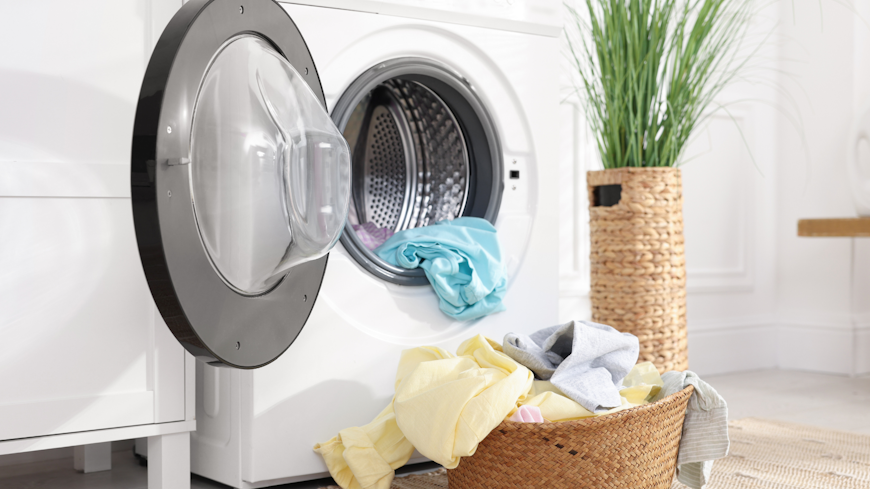
Read on to find out the real costs of owning a washing machine – and which models are cheapest to run, based on our tests.
Where in New Zealand has metered water?
Auckland, Tauranga, Kāpiti Coast and Christchurch are all fully metered and get separate bills for water based in usage. Here’s what households are paying:
Auckland (from 1 July 2026): $5.82 per 1,000L (made up of water supply and wastewater)
Tauranga: $3.87 per 1,000L
Kāpiti Coast: $1.72 per 1,000L
Christchurch: No usage charge if you average less than 900L/day (which is more than enough for most households). After that, $1.47 per 1,000L.
Wellington, New Plymouth and Thames–Coromandel are all in the process of rolling out metered water, and it’s likely many other councils will follow suit.
Why do top loaders use more water?
Top loader and front loader washing machines wash your clothes in different ways. Front loaders have a horizontally mounted drum, which fills with a low level of water and detergent. The clothes are lifted in and out of the water by the rotation of the drum. This motion agitates the fibres of the garments and aids removal of the dirt.
Top loaders have vertically mounted drums and completely submerge the clothes in water, sloshing them around to remove dirt. They rely on increased contact time with water and detergent for dirt removal.
Currently, the average water use per wash of top loaders in our test is 117 litres (with the worst offender using over 160 litres!). For front loaders, the average is only 59 litres.
Why do front loaders take longer to wash?
Two things are required for effective dirt removal – enough contact time with the detergent/water for the chemicals to do their work, and agitation of the fibres to loosen dirt and release it into the water to be flushed away. Front loaders don’t have the clothes submerged in water continually like top loaders do, so the cycle times need to be increased to extend overall contact time with the detergent. This is why front loaders use more electricity than top loaders.
Current average cycle times are 130 minutes for front loaders, compared with only 59 minutes for top.