By Nick Gelling
Product Test Journalist | Kaipūrongo Whakamātautau Hautaonga
Printer manufacturers rely on ink sales to turn a profit, so they discourage you from buying unofficial ink cartridges. They’re usually worth getting anyway.
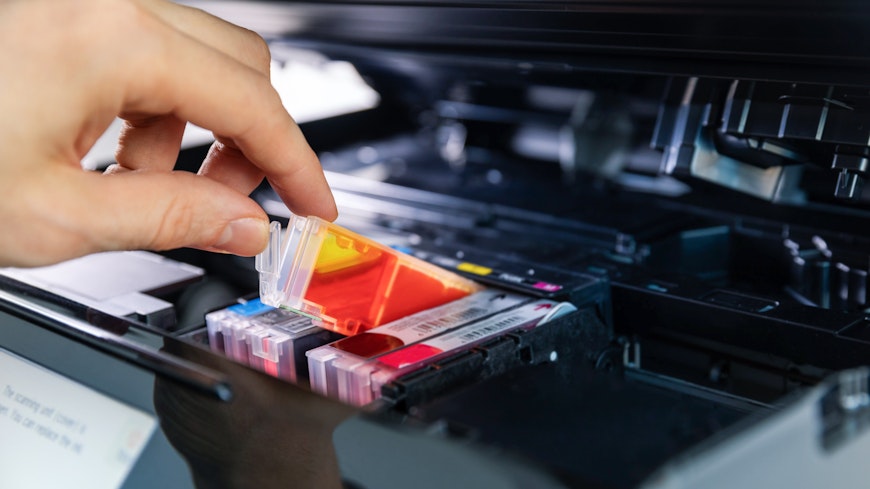
The students of a science and tech education provider in Auckland were left without printed activity sheets after their Epson printer stopped recognising its ink cartridge following a software update.
Like many other printer owners in New Zealand, managing director Ben had been trying to save money by using third-party ink that was far cheaper than the official Epson product. However, after completing an “unassuming firmware upgrade”, Ben’s printer no longer recognised the ink it’d been using, nor could its firmware be rolled back to a version that worked with the cheaper ink.
This isn’t the first we’ve heard of printers blocking the use of off-brand cartridges. We wanted to get to the bottom of it – are printer manufacturers actively sabotaging the third-party ink ecosystem?
It’s a firm no, according to Epson Australia / New Zealand. “Firmware upgrades, on occasion, can stop third-party ink cartridges from working, but this is an unintended consequence not an intended outcome,” said a spokesperson. “It is the responsibility of the non-genuine ink manufacturer to ensure their product works with the Epson printer.”
Third-party ink sellers aren’t concerned
Affordable Ink is an online ink store based in the Bay of Islands. It sells both brand name and third-party “compatible” cartridges and toners for all four of the big printer brands in New Zealand.
Jeff Cartridge is Affordable Ink’s founder (and, yes, that is his real name).
Cartridge says that, while customers’ printers do sometimes reject ink cartridges, “we can usually get around most of these issues by replacing the unrecognised cartridge with an updated version”.
The printer brand with the most roadblocks to using compatible ink cartridges, he says, is HP, which sends automatic updates to the printer that disrupt the use of remanufactured or compatible cartridges.
“The user used to be able to turn off these updates, but that’s not possible on later printers. As a reseller, we do not know when or what the next update will be.”
Cartridge says HP’s set-up process also trips up many customers.
“The latest printers lock the end user into only using genuine HP cartridges for the life of the printer. This is part of the agreement the user enters when installing the printer. Most people do not read this and have no idea what they are agreeing to. There is no way to undo it.”
He says many of these printers end up in landfill.
“It is cheaper to throw away the printer and replace it with a non-HP printer than to buy HP ink. These tactics also make HP-compatible and remanufactured cartridges far more expensive than those from other manufacturers.”
HP has been in legal trouble before
Over recent years, HP has paid millions of dollars in fines and compensation as a result of its hostile targeting of off-brand ink. Lawsuits included a €10 million fine from the Italian regulator and a US$1.5 million class action in California.
Closer to home, the Australian Competition and Consumer Commission (ACCC) led another successful class action lawsuit against HP in 2018. Aussie buyers who weren’t warned they couldn’t use non-HP ink received AU$50 in compensation each.
However, the parade of lawsuits has not stopped HP from blocking third-party cartridges.
We tried to ask HP to explain its policies, but it did not respond. HP’s website states:
“HP uses dynamic security measures to protect the quality of our customer experience, maintain the integrity of our printing systems, and protect our intellectual property.
“Printers use the dynamic security measures to block cartridges using non-HP chips or modified or non-HP electronic circuitry. Firmware updates delivered periodically over the internet … can also block cartridges using a non-HP chip.”
The website also clarifies that installing a third-party cartridge does not void a printer’s warranty. However, any damage to the printer caused by using third-party ink is not covered.
Are cheap printers really that cheap?
Printers are often priced using a “razor and blades” strategy, where the printer is sold at a loss with half-empty cartridges. The manufacturer and retailer bank on making back their money by charging extortionate prices for ink refills once customers are locked in – Ben’s company bought its Epson printer for just $60, but buying replacement Epson ink would cost about $80!
Tech commentators, including Consumer NZ, have criticised printer manufacturers for taking this approach. Epson recognises the economic model for printer hardware has become unviable.
“The competitive nature of the category has driven prices down such that some models, particularly entry level, make a loss … What’s particularly concerning is the increase in numbers of people buying low-cost printers and disposing of them once the ink in the box is depleted,” says Epson. “This is incredibly wasteful and damaging to the environment.”
In response to this trend, Epson says it is reducing its range of ink cartridge printer models.
Is third-party ink safe to use?
Epson discourages the use of unofficial ink cartridges.
“The reason for this is that Epson cannot control the quality of non-genuine ink cartridges,” says a spokesperson.
Again, HP did not respond to our queries, but its website states it cannot guarantee the quality or reliability of non-HP cartridges or refilled HP cartridges.
“Some printers, such as HP+ printer models, may require the use of genuine HP cartridges. But even if your printer does not require their use, HP still recommends that you use genuine HP cartridges.”
In 2024, HP’s then-CEO suggested non-HP cartridges could inject malware onto a printer and the network it is connected to. Security experts were quick to criticise the comments as disingenuous.
Jeff Cartridge urges consumers to disregard the suggestion that third party ink will damage their printers.
“This is a myth promoted by the genuine ink cartridge manufacturers, and we have thousands of customers that can attest to this.”
Bypass cartridges – use ink tanks instead
Ink cartridges are notoriously costly, but did you know that the ink itself is only a fraction of the cost of the cartridge? The embedded microchips that validate a cartridge as “official” are one thing driving up the cost. Manufacturers are also required to recycle used cartridges – and pass on that cost to the consumer.
However, some inkjet printers don’t use replaceable cartridges, instead storing ink in high-capacity tanks.
Tanks can print many more pages before they need a refill and can be filled from easy-to-use ink bottles. An ink-tank printer can print 10 or more pages for the cost of printing a single page from a cartridge. This means far cheaper running costs, but usually a more expensive machine upfront (manufacturers need to make a profit somehow).
Each printer company has its own branding for this technology. Look for Brother INKvestment, Epson EcoTank, Canon MegaTank or HP Smart Tank.
We’ve lab-tested 21 ink tank printers, along with 26 standard inkjets and 13 laser printers, to see which are best at print accuracy, print speed, scanning and copying.
Best ink tank printer in NZ
Was this page helpful?
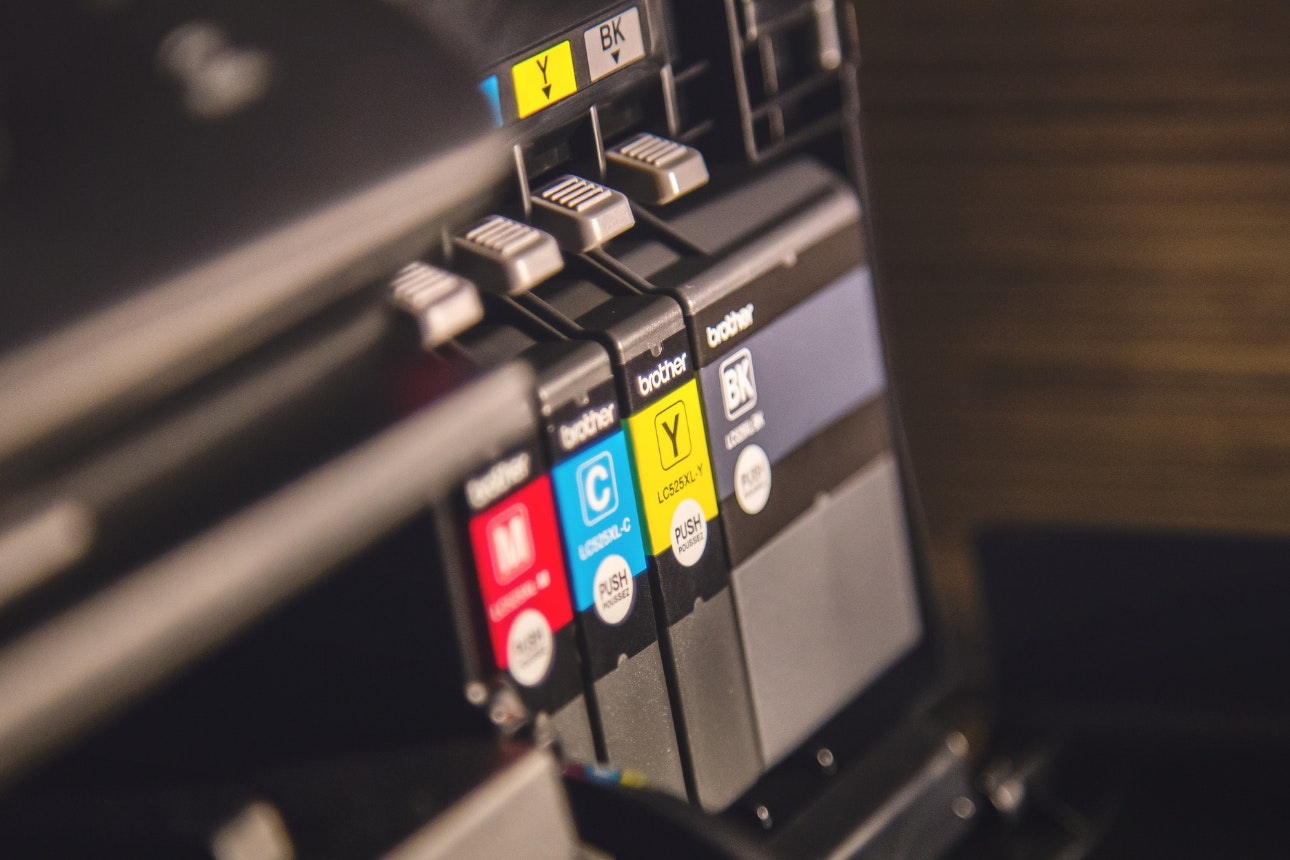
4 ways to save on printer ink
How to tell if a printer will cost a fortune in ink
Printer reviews