By Vanessa Pratley
Former Investigative Journalist | Kaipūrongo Whakatewhatewha
As I scroll social media, the phrases pop out at me: “Fibre is the new protein”; “Supercharge your gut health”; “Boost your microbiome!”
From supplements and sodas to breakfast cereals and muesli bars, the promotions all promise something. Whether it’s healing my gut, stopping the bloat or helping to keep me regular, the claims sound almost too good to be true.

I put my phone down, then pick it right back up again. I want to get to the bottom of these products and whether they work, but I also want to know more about bowel and gut health. So, I decide to chat to two experts in the field, who share how to keep regular – without the marketing spin. (Warning, I’ll be using the word “poo” a few times in this article.)
How gut health affects your whole body
Sir Jim Mann is a professor of medicine and human nutrition at the University of Otago and was previously a practising endocrinologist at Dunedin public hospital. He’s been at the university for 38 years, and his passion in and dedication to his field has earned him the honour of a knighthood.
Professor Mann released research this year stating fibre is an essential nutrient, and that we should all start considering it as such. For him, bowel health is more than just having a good poo. It’s a whole ecosystem of bacteria and other micro-organisms, called a microbiome. The bowel’s healthy function is essential to the health of your whole body.
“There’s very good evidence that it’s pivotal to a whole dimension of human health that wouldn’t have been appreciated 30 years ago,” Prof Mann says.
Research has found gut health is linked to your immune system, your nervous system, heart health and cancer. Ultimately, your poo can be a good indicator of your overall wellbeing.
What’s the best way to stay regular?
Professor Mann says if you want to keep regular, it’s easy.
“The bottom line is so simple … you need to increase dietary fibre.
“Buy a pack of bran in the supermarket, which costs almost nothing, and add it to your wholegrain cereal that you have for breakfast … add one tablespoon of bran, and if that doesn’t do the trick, add two tablespoons.
“We’re talking about something that’s costing us close to nothing to buy and it’s probably every bit as good as psyllium, Metamucil, probiotics, all those other things. So that’s what you need to do, and that will give you regular bowel motions.”
Richard Gearry is also a professor of medicine at the University of Otago and vice chairman and trustee of the New Zealand Gut Foundation.
“We always say a healthy, balanced diet is the starting point for maintaining gut health, but there are some specific situations where increasing fibre in your diet might be helpful.”
Kiwifruit could be a great addition to your diet, according to Professor Gearry.
“We’ve done a trial with Zespri showing that green kiwifruit are effective for relieving constipation. It was done between New Zealand, Italy and Japan, and it showed that they’re able to improve laxation [having a bowel movement].
“So, some of those old wives’ tales are true. We’ve proven that in our study, which is good, but really, the key is a healthy, balanced diet.”
Professor Gearry also recommends following a Mediterranean diet. “It’s good for cardiovascular health, good for mental health and it’s also good for gut health.”
So, what does a Mediterranean diet involve?
“Lots of fruit and vegetables, less processed foods, red meat in moderation, fish. The Mediterranean diet is going to be probably the basis of good health,” Professor Gearry says.
How can I get more fibre in my diet?
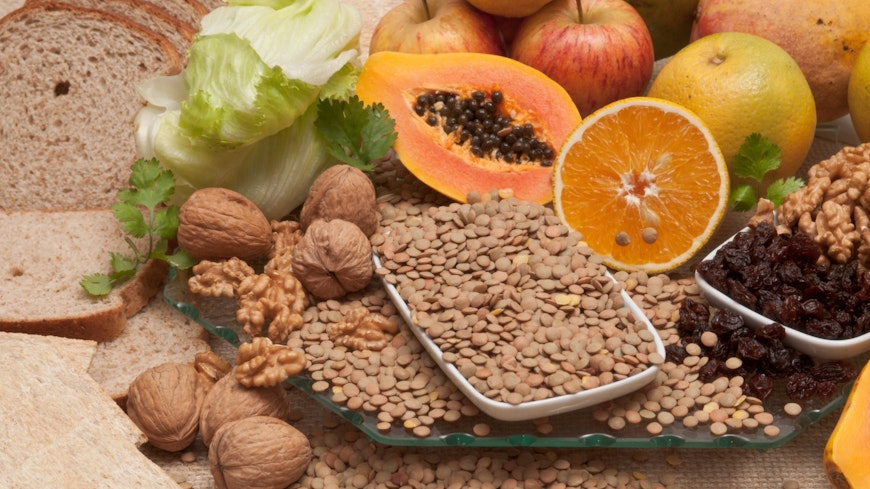
Fibre is found in plant-based foods, such as fruit, vegetables and legumes. It can’t be broken down during digestion, so it passes through the stomach intact.
There are two kinds of fibre: soluble and insoluble.
Soluble fibre: dissolves in water, forming a gel-like substance that slows down digestion. Can help lower cholesterol and blood sugar. Sources include bananas, peas and oats.
Insoluble fibre: doesn’t dissolve in water, remaining mostly undigested through the gastro-intestinal tract. Adds bulk to your poo and helps prevent constipation. Sources include wheat bran, brown rice and corn.
Most of us aren’t getting the recommended daily amount of fibre. It’s around 25–30 grams per day for adults. For reference, a serving of Weet-Bix contains about 3 grams of dietary fibre, a medium apple about 4 grams, and two slices of white bread about 1.4 grams.
Without enough fibre, you can get constipated. That’s when your poo is hard or lumpy, and it can be painful or difficult to pass it. There are other things that can cause constipation, such as medicines, dehydration, a sedentary lifestyle or medical issues like irritable bowel syndrome.
Top foods to boost fibre
Avocado (medium):10g
Apple (medium): 4g
Brussels sprouts (one cup, cooked): 6.4g
Kidney beans (half a cup): 5.7g
Kūmara (one cup, cooked): 6.4g
Oats (100g): 10.4g
Which high-fibre foods should I avoid?
Professor Mann says it’s important to keep an eye on your sugar intake while you’re in pursuit of upping your fibre intake.
For example, Mother Earth’s Raspberry and White Chocolate Oaty Slice has 2.5 grams of dietary fibre per bar, but about 20% of the average recommended daily intake of sugar.
He also agrees avoiding ultra-processed foods is a good idea.
Ultra-processed foods are ready-to-eat products with little to no whole foods in them, and often contain added sugar, salt, fats, additives and preservatives. These foods usually contain ingredients that you wouldn’t cook with at home or have in your pantry, such as colours and emulsifiers.
As their name implies, another trait of ultra-processed foods is the extensive processing they go through when they’re being made. This includes hydrogenation and extrusion – not tasks you’d do in your home kitchen. Examples of ultra-processed foods include biscuits, crackers, most packaged breads, chips, chicken nuggets and ready-to-eat meals.
Research has shown eating lots of ultra-processed foods can increase health risks, such as being overweight or having obesity, type 2 diabetes, heart disease, high blood pressure, breast cancer and depression.
Do probiotic sodas and supplements work?
Another group of products commonly touted as good for bowel heath is probiotic sodas and supplements. Professor Gearry says while these products aren’t bad for you, they can be expensive.
“A lot of the products that are available don’t really have science behind them, which doesn’t mean they don’t work, it just means that we don’t know if they work or not,” he says.
When it comes to product claims such as “supports your gut health,” Professor Gearry says consumers should take them with a grain of salt.
“Those sorts of things are quite nebulous and really probably aren’t related specifically to the product that’s there. So, for example, probiotics may be helpful, but there aren’t a lot of studies in humans that are randomised that show that that is the case,” he says.
“What I would always say to an individual is that while it may not be harmful, remember that it harms your pocket if you have to pay for these things.”
How does the digestive system work?
It’s time for an anatomy lesson, and I trust you won’t fall asleep for this one. Your bowels are made up of your small bowel, or small intestine, and your large bowel, or large intestine.
Your bowels are part of a larger system called the gastro-intestinal tract, or GI tract for short. It includes everything from your mouth through to what some call “the back passage”, otherwise known as your anus.
Food enters through the mouth and travels down the oesophagus to the stomach. Then comes the small intestine, where nutrients are absorbed into your body. There, food is broken down with help from your liver, gallbladder and pancreas. Stuff that’s left undigested – waste – moves to your large intestine.
Your large intestine has two parts: your colon and your rectum. Waste moves along the intestine, where the colon absorbs water, and then it pauses in the rectum until it’s ready to leave your body as poo.
When should I see a doctor?
Knowing when to get help starts with knowing your normal bowel motions.
How often do you go? What does it look like? How does it feel? (Without reaching into the toilet bowl, of course!)
A small deviation from our normal probably isn’t much to be concerned about.
But Professor Gearry says we should know and worry about alarm symptoms.
“Any bleeding from the gut or bowel needs to be assessed by a GP. Any significant change in bowel habits, so people going from one extreme to the other, constipation to diarrhoea or vice versa.”
Another thing to look out for is your belly keeping you up at night.
“A lot of abdominal symptoms go to sleep when you do and then wake up when you do. So, symptoms that keep you awake at night need to be looked at,” says Professor Gearry.
If you’ve got a strong family history of bowel cancer or inflammatory bowel disease, like Crohn’s or colitis, Professor Gearry says it’s also worth getting help.

Compare health insurance policies
Use our interactive database to compare health insurance cover and benefits for the policies in our survey.