By Vanessa Pratley
Former Investigative Journalist | Kaipūrongo Whakatewhatewha
With dozens of toothpastes on supermarket and pharmacy shelves, it can be tricky to know what one to pick, especially if your goal is whiter teeth.
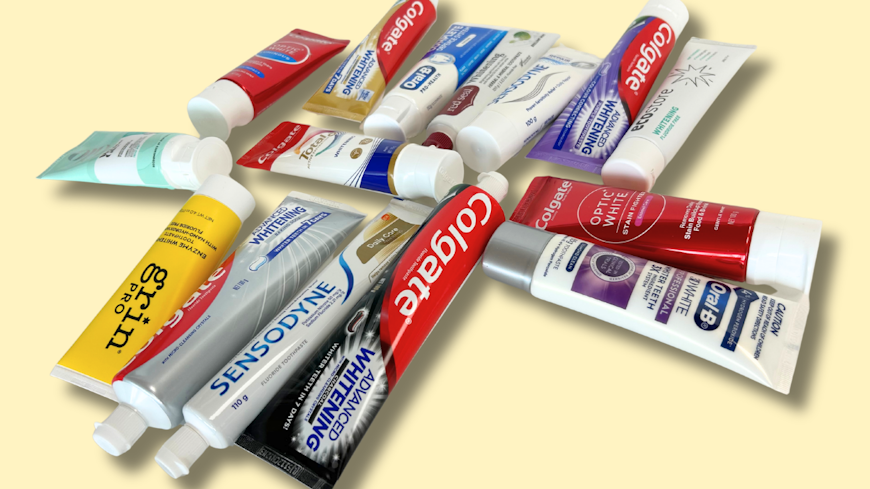
In the world of ‘whitening’ toothpastes, ingredients are everything. So, we’ve done the hard work and reviewed 15 whitening toothpastes’ ingredients and claims.
How do whitening toothpastes work?
Whitening toothpastes contain abrasives to help remove stains. They may also include ingredients that prevent stains from forming. However, they’re generally only able to remove surface stains rather than whitening your teeth.
Types of teeth staining
Whether your teeth can be whitened depends on a few things, including what kind of stains you’ve got.
There are two types of stain: extrinsic (surface) and intrinsic (deep).
Extrinsic stains occur when the stain attaches itself to the pellicle (a thin layer of protein that forms on your teeth every day from saliva) or takes hold in the pores of tooth enamel.
Cigarettes, tea, coffee or red wine will cause extrinsic stains. So will highly coloured foods like berries, such as cherries.
Intrinsic stains sit below the tooth’s surface and are very difficult to remove using home treatments. There are a few common causes of intrinsic staining.
Ageing: Wear and tear thins the outer enamel; the dentine layer below then begins to show through, making the teeth appear yellow.
Antibiotics: Tetracylcine antibiotic use during certain stages of tooth development can cause discolouration.
Fluorosis: If children swallow too much fluoride toothpaste when their teeth are developing, they risk developing fluorosis or surface mottling on the teeth.
Root canal work: A tooth can sometimes darken following this procedure.
Genetics and injuries to the teeth and gums can also contribute to tooth discolouration.
Whitening toothpastes ranked
Dentist fees: What you can expect to pay
For plenty of us, the thought of the dentist’s bill is worse than the drill. Here's what you can expect to pay for a trip to the dentist.