By Nick Gelling
Product Test Journalist | Kaipūrongo Whakamātautau Hautaonga
Wireless in-ear headphones won’t replace professionally fitted hearing aids, but they can suit people early in their hearing loss journey.
Apple is leading this new trend in earbud marketing, claiming its AirPods Pro earbuds can provide “clinical grade” hearing assistance to adults with mild to moderate hearing loss.
We run you through what you need to know about using AirPods as hearing aids, including how they work, whether they’re safe and how much they cost.
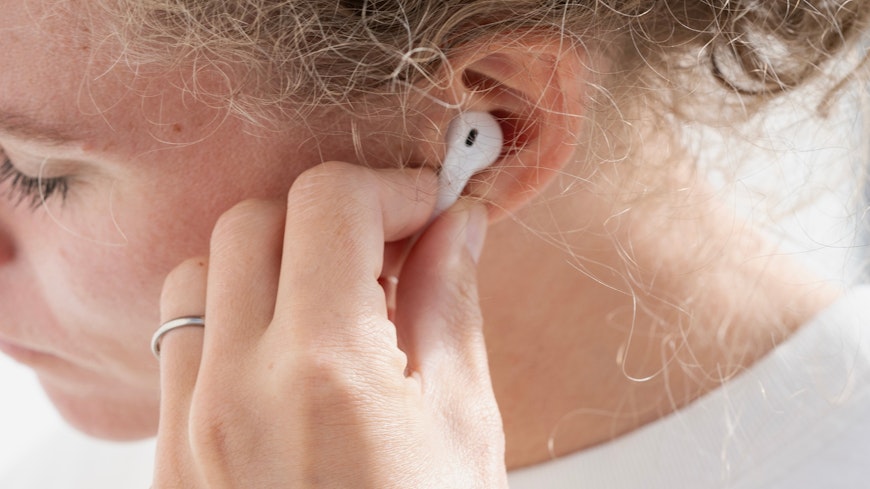
How does the AirPods Pro “hearing aid” feature work?
I tried out the 5-minute “hearing test” using a pair of AirPods Pro 2. The test identified how much hearing loss I had in each ear and at each frequency, then recommended next steps. It told me I had little to no hearing loss, which isn’t too surprising given I’m only 30 years old.
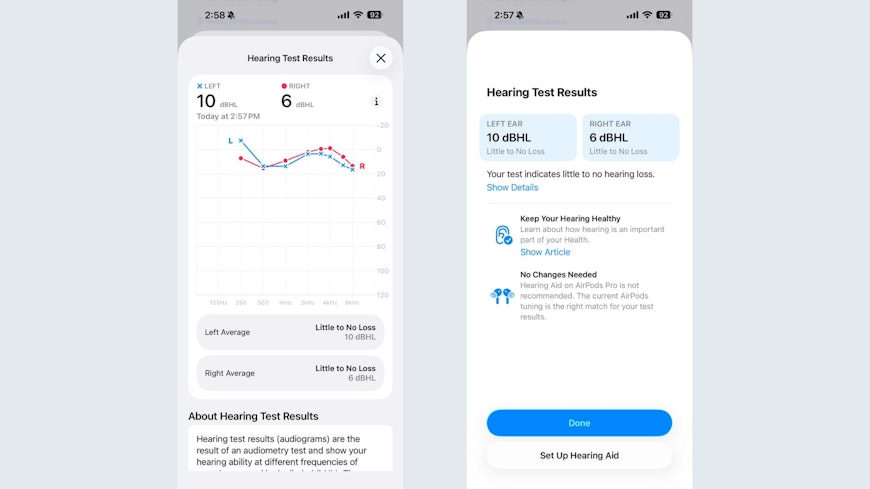
From here, you can use the results (called an audiogram) to customise the sound profile of your AirPods. For example, if you can hear high frequencies fine in your left ear, but struggle with them in your right ear, your headphones can automatically tune each bud to account for that.
Brenna Sincock, an independent audiologist based in Rolleston, believes AirPods can generate accurate audiograms but doesn’t think the feature should be called a hearing test.
“A professional hearing test includes bone conduction testing to determine the type of loss, speech testing to determine discrimination abilities and tympanometry to determine middle ear/tympanic membrane health,” says Sincock.
“The results of all these components of the hearing test are then used to determine an individual’s type and configuration of loss, whether medical intervention is warranted and which hearing aids are most appropriate.”
If you’ve been to an audiologist or another health professional and received a clinical audiogram, you can enter those results instead of using Apple’s “test”.
If you choose to activate AirPods Pro’s hearing aid feature based on your audiogram, you can set and adjust the amplification level, left–right balance and ambient noise reduction level. There’s also a toggle setting called “conversation boost” that automatically detects when someone is speaking and filters out ambient noise so you can focus on the conversation.
The hearing aid setting only applies to sound from the outside world, not to audio, like music, or phone calls that are sent to your headphones from your phone or tablet. A separate setting called “media assist” applies audio adjustments to these sounds, again based on your hearing test or audiogram.
Are AirPods Pro cheaper than hearing aids?
The AirPods Pro 3 cost $480, while a basic pair of hearing aids starts at about $1,500. However, New Zealanders are eligible for the Hearing Aid Subsidy Scheme, funded by Disability Support Services.
The scheme provides $511.11 in funding per hearing aid ($1,022.22 for a pair) once every 6 years. That can bring the cost of some basic hearing aids down to a similar price as a pair of AirPods.
In some cases, further funding may be available through ACC or other agencies. The subsidy does not apply to over-the-counter (OTC) options that can be bought without consulting a health professional.
Catherine Poutasi is general manager of commissioning and funding at Disability Support Services. She says hearing aids must be assessed and fitted by approved audiologists to be eligible for funding.
“While AirPods Pro offer features that can assist with hearing in certain situations, they are not currently included in the approved hearing aid list.”
If you don’t already use an iPhone or iPad, AirPods aren’t a cost-effective option because you need to link the headphones to one of these devices to unlock the hearing aid feature. The cheapest iPhone begins at $1,199, while the cheapest iPad is $699.
Is it safe to use AirPods as hearing aids?
In New Zealand, medical devices fall under the Medicines Act 1981, which is administered by Medsafe. Under the Act, medical devices do not need pre-approval or certification for sale.
“This includes prescribed hearing aids, devices marketed as over the counter (OTC) hearing aids, and consumer electronics with hearing assistance features,” says Chris James, group manager at Medsafe. “As a result, Medsafe does not approve or endorse hearing aids.
“If safety issues arise, regulatory action can be taken.”
While over-the-counter hearing aids can be bought without consulting an audiologist, the New Zealand Audiological Society recommends engaging one.
The society states it “supports OTC hearing aids as an option for certain individuals with hearing loss and encourages members of the public to talk to their audiologist or audiometrist about the options available”.
In the US, AirPods Pro do have approval from the Food & Drug Administration to be used as an OTC hearing aid.
5 limitations of AirPods Pro
They can’t replace a clinical hearing aid for severe hearing loss. The fine print on Apple’s website states “the Hearing Test feature is not a substitute for seeking medical advice from a healthcare practitioner if you have any concerns about your hearing health”. It’s also not suitable for people under 18.
They treat the symptom – but a healthcare professional might be able to treat the cause. If your hearing loss is due to a treatable medical condition, or even a simple wax blockage, an audiologist might be able to diagnose and improve the condition, rather than simply countering it.
They aren’t designed to be worn all day. AirPods are relatively comfortable to wear for a long period compared to other headphones, but you’ll still get tired of having them in your ears all the time.
By contrast, in-the-ear hearing aids look a bit like earbuds but are custom made using an impression of a client’s ear canals. “They usually insert deeper into the canal, and retention and comfort is much better,” says Sincock.
Their battery likely won’t last the whole day. AirPods Pro need to be in Transparency mode to use the Hearing Aid feature. Transparency mode uses active noise cancelling, so it drains battery faster than if noise cancellation was switched off. Apple claims “up to 10 hours” of battery in transparency mode with volume and amplification at 50% (the life will vary depending on your settings). That probably means wirelessly topping up your buds from their portable case once per day – as well as recharging the case every couple of days.
By comparison, new hearing aid models last between 20 and 50 hours on a single charge. Most hearing aids are rechargeable now, but you can still get one with disposable batteries if you prefer.
They are less discreet than most hearing aids. Some people with hearing loss feel self-conscious and want to avoid drawing attention. Hearing aids are usually designed with discretion in mind, and available in skin tone colours to help them stay hidden.
Additionally, wearing earbuds is a social cue that you don’t want to be interrupted. Be aware that others, particularly people you don’t know, may be less likely to engage with you when you’re using earbuds as hearing aids. In social settings, you may have to explain yourself so you don’t appear rude.
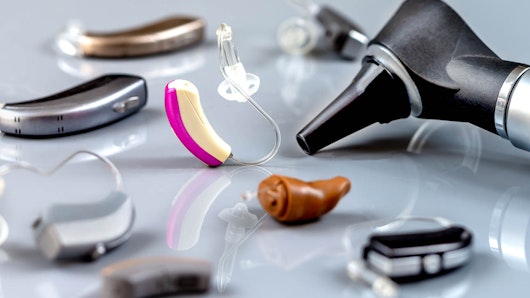
Buy hearing aids like an expert
Our comprehensive hearing aid buying guide covers device costs, subsidy details and clinic fees, as well as the pros and cons of different types and the features to look out for. It also steps you through the entire process, from getting a test to buying to resolving complaints.
How well do AirPods Pro perform as headphones?
Check out our headphones test results to explore wireless headphones further. We’ve tested more than 50 in-ear buds with active noise cancellation, many of which can boost the volume of your surroundings.