By Belinda Castles
Researcher | Kairangahau
The cheaper price of home-brand products is a drawcard for shoppers, but we found these supermarket-owned brands are seldom on special compared with branded equivalents. Despite this, they are almost always the cheapest option.
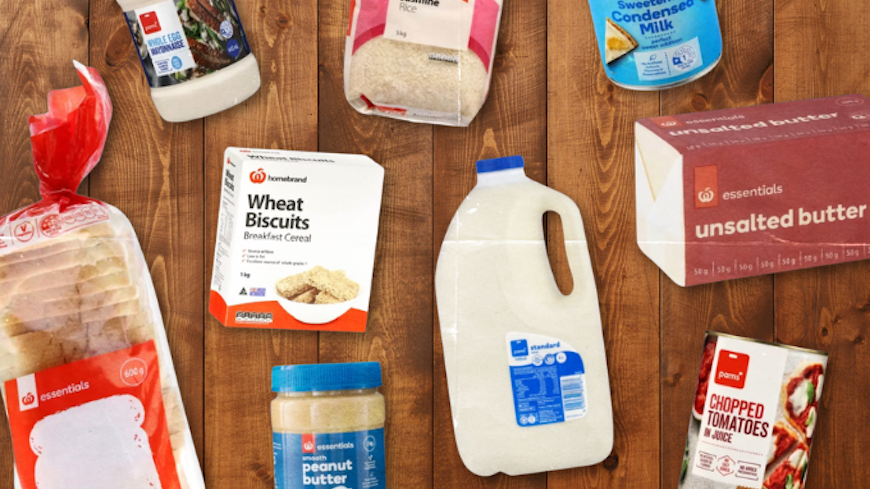
Home brands – also called private labels – are supermarket-owned brands such as Pams, Pams Value, Woolworths and Woolworths Essentials.
New Zealanders are still under pressure from high grocery bills. Home-brand products are marketed as cheaper alternatives to products from big-name brands, and shoppers are increasingly putting them in their trolleys. In Consumer NZ’s supermarket sentiment survey, 71% of people who reported having changed their grocery shopping habits in the past year reported buying more budget or home-brand products.
In our investigation into the cheapest supermarket prices, we found branded products regularly cycled on and off special. This raised two questions for us in the context of home brands: how often are they promoted compared with equivalent branded products, and are they still the cheapest option even when branded products are discounted?
To look into these questions, we obtained some data from the University of Auckland on the availability and price of six product categories (whole blue milk, Edam cheese, butter, white bread, baked beans and canned tomatoes) across 12 supermarkets nationwide, over a period of 8 weeks earlier this year.
Here’s what we found:
Even though home brands are seldom on special, they were always the cheapest option. The exception was Edam cheese, where some weeks the branded product was cheaper or the same price.
There’s little difference nutritionally between the different brands of milk, white bread, butter and Edam cheese in our survey. In these cases, we recommend that you buy on price to save money.
You’ll pay less for Pams and Pams Value products at Pak’nSave than at New World. (We weren’t surprised at this. In our 2026 supermarket price investigation, we found Pak’nSave was the cheapest store in all regions we surveyed.)
What are home brands?
Both supermarket chains have different tiers of home-brand products.
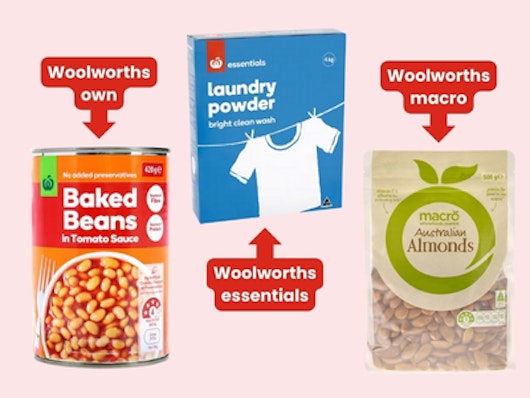
Woolworths home brands are:
Woolworths own
Essentials – the budget option
Macro (includes organic range, free-range products or products with a sustainable focus).
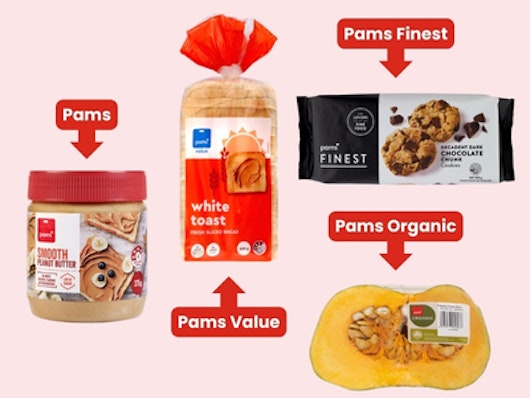
Foodstuffs home brands are:
Pams
Pams Value – the budget option
Pams Finest – the premium option
Pams Organic.
Home-brand-labelled products are generally produced by existing suppliers to the supermarkets who win the private-label contract. This means the supplier of a home-brand label may be producing products under its own brand in competition with the same products sold under the home brand.
Some manufacturers disclose this information. For example, Keytone Dairy states on its website it makes products for brands including Pams, Woolworths, Alpine and Anchor. However, supplier–supermarket contracts are usually confidential. The packaging on home-brand products will say something like “Marketed by Pams” or “Packed for Woolworths”.
If you suspect the suppliers of a particular product are the same, try comparing the two ingredients lists and nutrition information panels. If they’re identical, there’s a good chance the product is made by the same company.
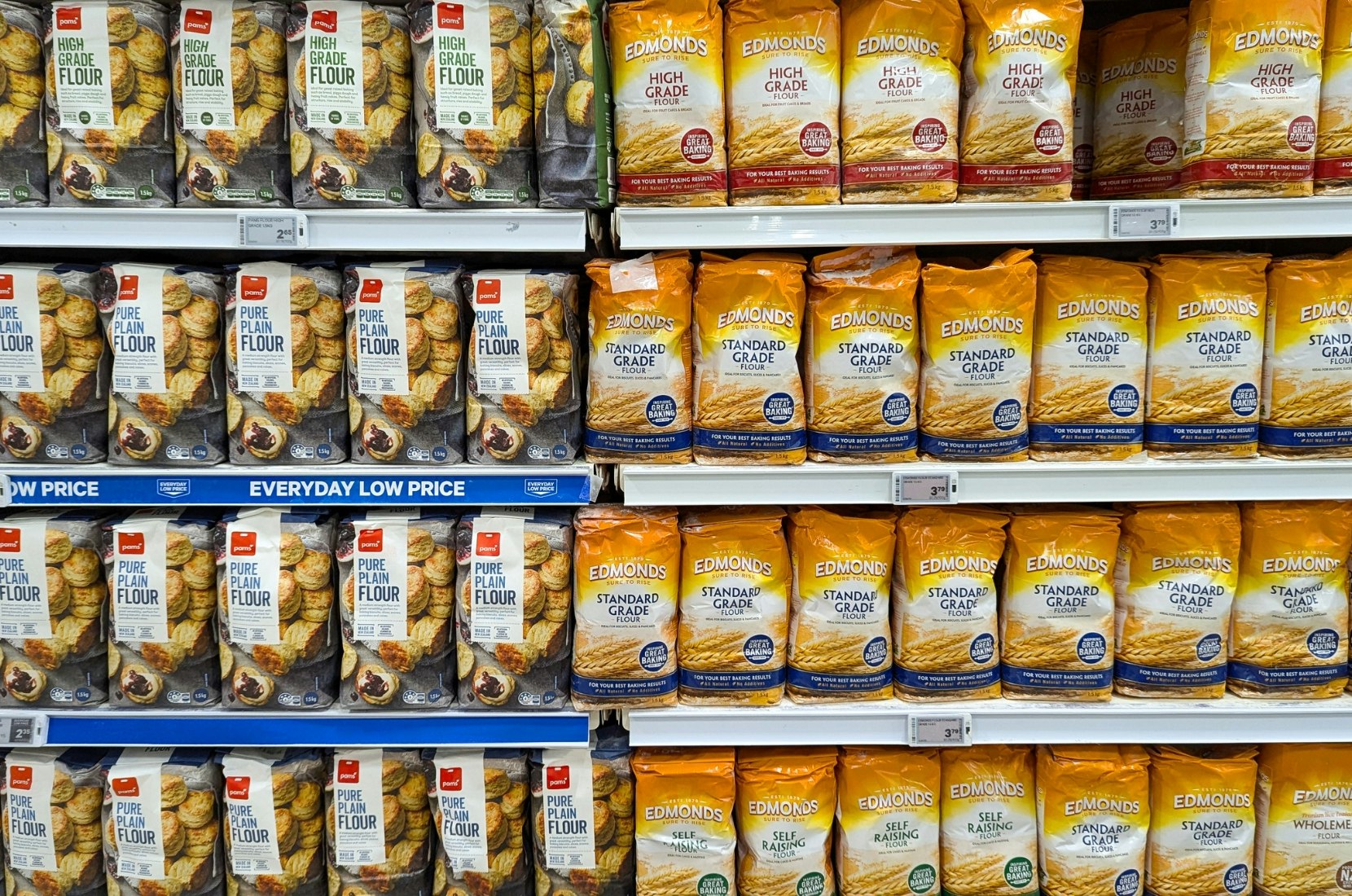
Home-brand products are usually priced differently. Because they’re owned by the supermarket, supermarkets don’t have to coordinate promotional campaigns with an external brand owner. They’re often priced as everyday low-price items rather than regularly put on special.
We asked Dr Sandra Smith, senior lecturer in marketing at the University of Auckland Business School, what impact this has on consumers.
“Specials on branded products can create a sense of urgency and can stimulate switching as shoppers compare the special price with the regular price. Home brands, by contrast, often offer a stable low-price benchmark, which can make budgeting more predictable and affordable.”
Smith said that a branded product offers shoppers familiarity, trust and perceived quality, making a promotional price especially attractive even when a private-label alternative is cheaper.
How much cheaper are home-brand products?
Our information from the University of Auckland showed the following.
Average prices of branded and home-brand products
For milk, butter, white bread, baked beans and canned tomatoes, we found that it was always cheaper to buy the home brand, even when the branded product was on special.
Edam cheese was the only category in which we found that the branded product sometimes matched or beat the home-brand price. In the Auckland and Wellington Pak’nSave stores the University of Auckland surveyed, Mainland Edam was the same price as Pams in 2 out of 8 weeks. In the Auckland and Wellington New World and Woolworths stores, Mainland was cheaper in 1 of the 8 weeks.
Are the ingredients and nutrition information different for home-brand products?
We also checked nutrition information and ingredients lists to see if there was any difference between home-brand products and equivalent branded products.
Here’s what we found out about milk, Edam cheese, butter, white bread, baked beans and canned tomatoes.
Whole blue milk
Cow’s milk is a good source of liquid nutrition – it contains protein, vitamin B12, vitamin D and calcium. But it’s seldom on special.
Milk is milk, however it’s branded, so buy on price. We found you can save a lot of money buying home-brand milk.
Across the stores, a 2L container of home-brand milk was nearly $1 cheaper than its Anchor or Meadow Fresh equivalent. If your family goes through 8L of milk a week, you could save over $200 per year by buying home-brand.
Edam cheese
Cheese is a regular item on many people’s shopping lists, satisfying cravings all around the country for toasties, cheese sandwiches or snacks with crackers.
As we found for milk, we found that there was not a lot of difference nutritionally between home-brand Edam and Mainland Edam cheese. But there was when it came to price. The 500g blocks of Edam we surveyed ranged in price from $7.99 to $11.19.
Butter
If you’re in the “butter is better” camp, you’ll know that butter prices have been hitting consumer wallets hard.
Butter ingredients don’t differ between brands – butter’s two ingredients are cream and salt – but taste does. Find out how home-brand butters compared in our tasting of 12 butter brands.
White bread
Nutritionally, there isn’t much difference between the home-brand loaves of white bread and their Nature’s Fresh equivalents. The sodium and fibre content were similar for all the loaves we surveyed.
When buying bread, check the unit price (price per 100g). The home-brand offerings were only 600g, compared with a Nature’s Fresh loaf weighing 700g. Even taking this into account, we found that it was cheaper to buy home brand – on average by approximately $2 per loaf at New World and Woolworths, and approximately $1.50 at Pak’nSave. If your household chomps through five loaves of bread per week, that’s a saving of around $400 to $500 per year.
Learn how unit pricing can help save you money at the checkout.
Baked beans
There’s more to consider when it comes to home-brand baked beans. Woolworths sells Woolworths and Woolworths Essentials baked beans. New World and Pak’nSave sell Pams and Pams Value baked beans.
Although it’s cheaper to buy home-brand options, it pays to check the ingredients list and nutrition information panels on tins of baked beans.
Woolworths Essentials baked beans have less beans and tomato puree than the other Woolworths home-brand option.
Pams Value baked beans have less beans and tomato puree than regular Pams beans. It’s also a smaller can (400g versus 420g).
If you’re watching your salt intake, check the sodium content of baked beans per 100g. Wattie’s baked beans have 435mg of sodium per 100g. The sodium content in home brands ranged from 230mg to 320mg per 100g.
See which brand came out top in our baked beans taste test.
Canned tomatoes
Canned tomatoes are a pantry staple. When it comes to home-brand canned tomatoes, there’s plenty of choice. We surveyed one product from each of our home brands (Pams, Pams Value, Woolworths, Woolworths Essentials) and two Wattie’s products (crushed and chopped).
It’s difficult to compare the percentage of tomatoes you’re getting across brands. Some brands list the percentage of tomatoes only. Others separate out the percentage of juice and tomatoes. But check the nutrition information panel for sodium content – some products contain added salt. Wattie’s canned tomatoes were higher in sodium than home-brand tomatoes.
Sodium content of the tomatoes we surveyed:
Wattie’s Crushed & Sieved Tomatoes – 145mg/100g
Wattie’s Italian-Style Tomatoes – 140mg/100g
Woolworths Diced Tomatoes Italian – 10mg/100g
Essentials Diced Tomatoes - 5mg/100g
Pams Italian Diced Tomatoes – 5mg/100g
Pams Value Chopped Tomatoes in Juice 4mg/100g
Who decides which products go on special?
Specials on branded products are usually the result of agreements between supermarkets and suppliers. These agreements can involve rebates, discounts and other payments from suppliers to supermarkets.
According to the Commerce Commission’s Wholesale Supply Inquiry Closure Report, published in July, there are around 50 different types of supplier payments, worth around $6 billion annually.
The supermarkets use some of that money to fund specials, contributing to the familiar pattern of prices fluctuating between regular and discounted levels (known as high-low pricing). We’ve written about this practice before. In our investigation into supermarket prices, we found that some so-called “specials” reflected the item’s most common price rather than a special price.
Growing supermarket power
Home brands are just one example of supermarkets’ growing control over grocery supply.
The major supermarket groups also control wholesale operations, which buy groceries from suppliers and distribute them to individual stores. This means the supermarkets operate at both the wholesale and retail levels of the grocery market – an arrangement known as “vertical integration”.
Smith said vertical integration likely gives supermarkets increased control over costs, pricing, product range and shelf space.
“Where supermarket-owned products compete directly with branded alternatives, this can increase tension over pricing, margins, promotional support and shelf space. Over time, it may affect the visibility and viability of competing brands and reduce the range of choices available to consumers.”
While consumer demand for established brands may limit this effect, Smith warned that unchecked retailer dominance could become anti-competitive.
Supermarkets’ responses
We asked the supermarkets why their home-brand products are rarely on special.
Woolworths said:

We run specials across thousands of products in our stores each week, to deliver savings off our standard shelf price. While branded products often cycle on and off promotional specials, our Own Brand ranges are designed to deliver a low price every day. That is why home brands often remain the most affordable option in a basket, even when a branded equivalent is on sale.
In some cases, prices can vary between the North Island and South Island stores due to regional differences including freight and local supply chain expenses.
Our margins and pricing strategies are commercially sensitive, but we operate a low-margin, high-volume business.
Foodstuffs said:
Pams and Pams Value aim to provide customers with dependable quality, choice and value.
Promotional decisions are typically made between our teams and suppliers, and the cost of a promotion can be met by the retailer, the supplier or a combination of both. Promotional activity varies by product, category and customer shopping mission. There is no single model that applies across the board.
Foodstuffs North Island and Foodstuffs South Island are separate regional co-operatives, and the stores are individually owned and operated. That means the price of the same or similar products will not always be the same across Pak’nSave and New World stores, or between the South and North Islands.
About our data
The data used for this research article were obtained from the University of Auckland’s Real Cost of Food Transdisciplinary Project database.
The University of Auckland collected data online from 12 supermarkets between 2 February and 20 April 2026.
The supermarkets were:
Woolworths Mount Eden, New World Mount Roskill and Pak’nSave Mount Albert in Auckland
Woolworths Lower Hutt, New World Hutt City and Pak’nSave Lower Hutt in Wellington
Woolworths Colombo Street, New World Bishopdale and Pak’nSave Papanui in Christchurch
Woolworths Dunedin South, New World Centre City and Pak’nSave in Dunedin.
Prices listed in this article are based on an average price across stores for each product. The price collected was the current price, which may have included specials.