By Belinda Castles
Researcher | Kairangahau
Shrinkflation (where a company downsizes its product) and skimpflation (where the quality takes a hit) can sting your wallet at the checkout. We asked you to tell us what products you’ve noticed have fallen victim to these 2 tricks manufacturers use.
Our investigation into shrinkflation and skimpflation calls for more transparency around these 2 practices. Here are 7 you sent us.
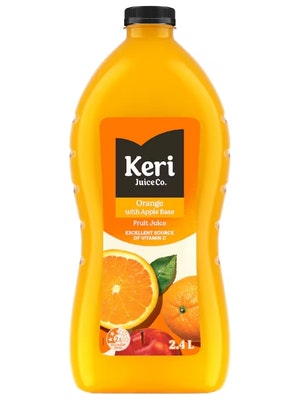
1. Keri fruit juice shrunk by 20%
3L ➜ 2.4L
Several people contacted us about the Keri juice range getting smaller with no drop in price to compensate.
A Coca-Cola New Zealand spokesperson told us difficult weather conditions have severely impacted orange crops across the world. This has caused an industry-wide shortage of the oranges it uses to produce its fruit juices and drinks.
“This shortage has driven up the price of juice concentrate globally. Reducing the number of different pack sizes is one way we can ensure ongoing supply of Keri juice products,” they told us.
2. Cadbury Roses chocolates shrunk by 10%
420g ➜ 380g
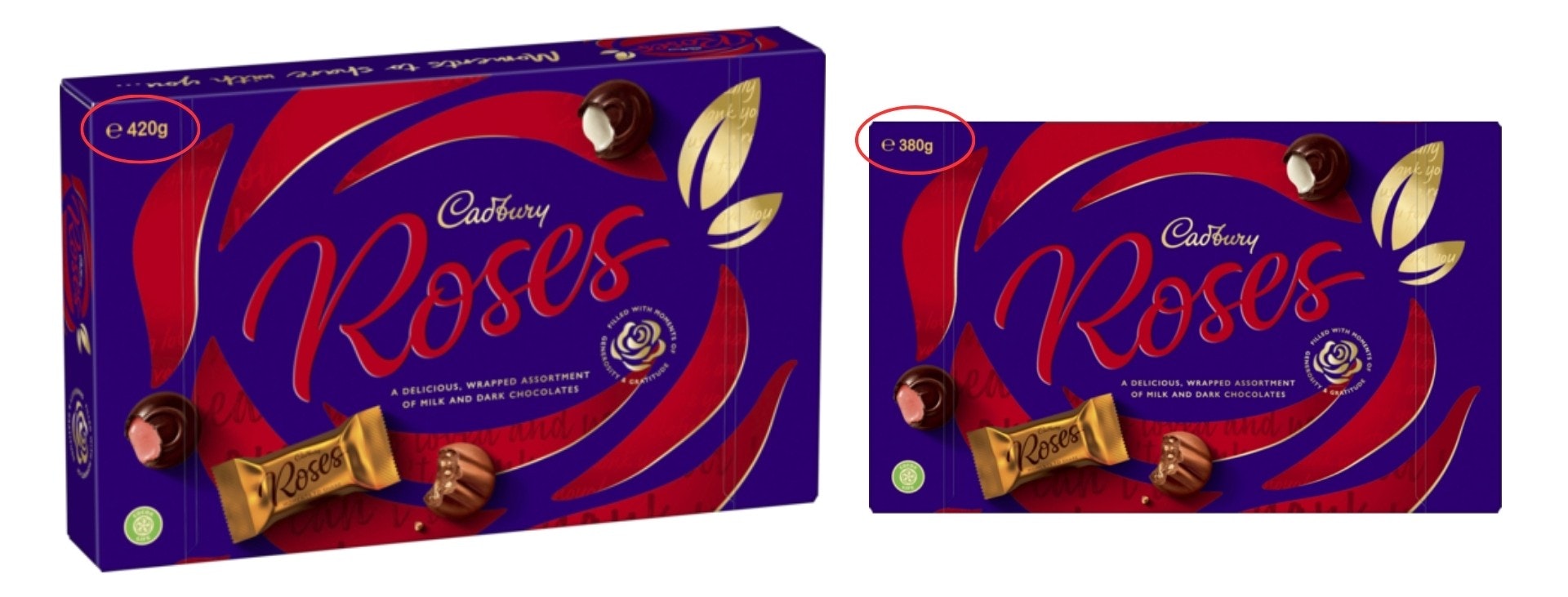
Consumer NZ’s content manager Kate Harvey noticed this one before Christmas. Kate tracked the prices of a 420g box of chocolates during Christmas 2024. Then, when she went to check on prices at the end of 2025, she discovered the box had shrunk to 380g.
A Mondelēz New Zealand spokesperson explained that, over the past 18 months, the company had witnessed significantly higher cocoa and input costs across its supply chain. As a consequence, it has had to look at ways to address this across a range of products.
“Last year, we made a change to the pack size of Cadbury Roses to manage sustained cost pressures while continuing to deliver the quality, taste and experience consumers expect from Cadbury. While pack sizes have changed, the alternative is often more significant price increases, which can impact consumers’ ability to purchase treats at all.”
The company said Cadbury Roses chocolates are now available in 380g, 225g and 150g sizes, with some retailers selling larger tins.
3. Rebel Bakehouse Gluten Free wraps shrunk by 20%
10 inches ➜ 8 inches
Weight decreases vary depending on the flavour.
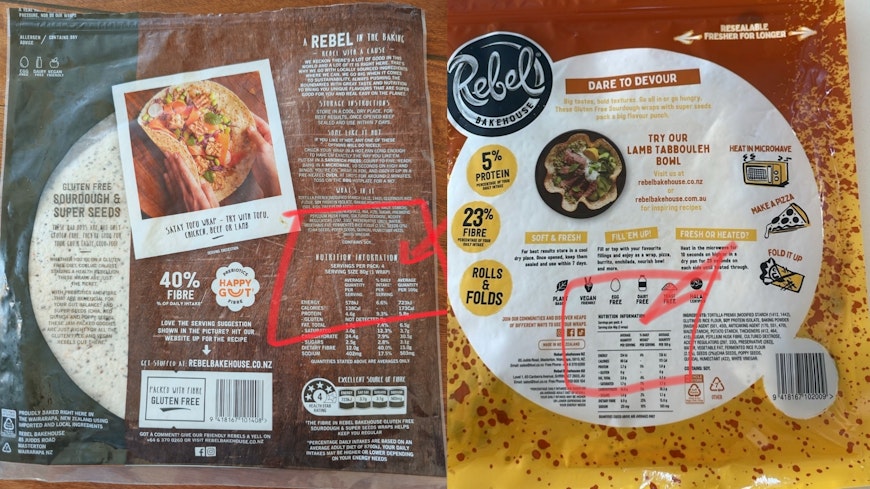
An example sent by a Consumer NZ member shows Rebel Bakehouse Gluten Free wraps decreasing in size from 80g to 46g.
Several people contacted us about these wraps, including Elisabeth.
Elisabeth and her daughter both eat a gluten-free diet and were regular buyers of these Rebel Bakehouse wraps. Always happy with the quality and availability, they were shocked when their favourite wraps shrunk.
“These little guys are not satisfying. If we had been asked, we would have preferred one less wrap per packet but the bigger size,” Elisabeth said.
A Rebel Bakehouse spokesperson said due to rising costs the company chose to resize its gluten-free wraps instead of increasing the price. It also aligned the price of the gluten-free wraps with the regular wheat wraps, which resulted in a 13% to 21.7% price reduction depending upon promotional activity in-store.
“Consumers were notified of the change via our website and online shopping websites. We have also done shelf talkers in supermarkets about the new packaging. However, we acknowledge we could have done a better job communicating the size change on the gluten-free wraps.”
4. Purex Mega Long toilet paper shrunk by 9%
450 sheets per roll ➜ 410 sheets per roll
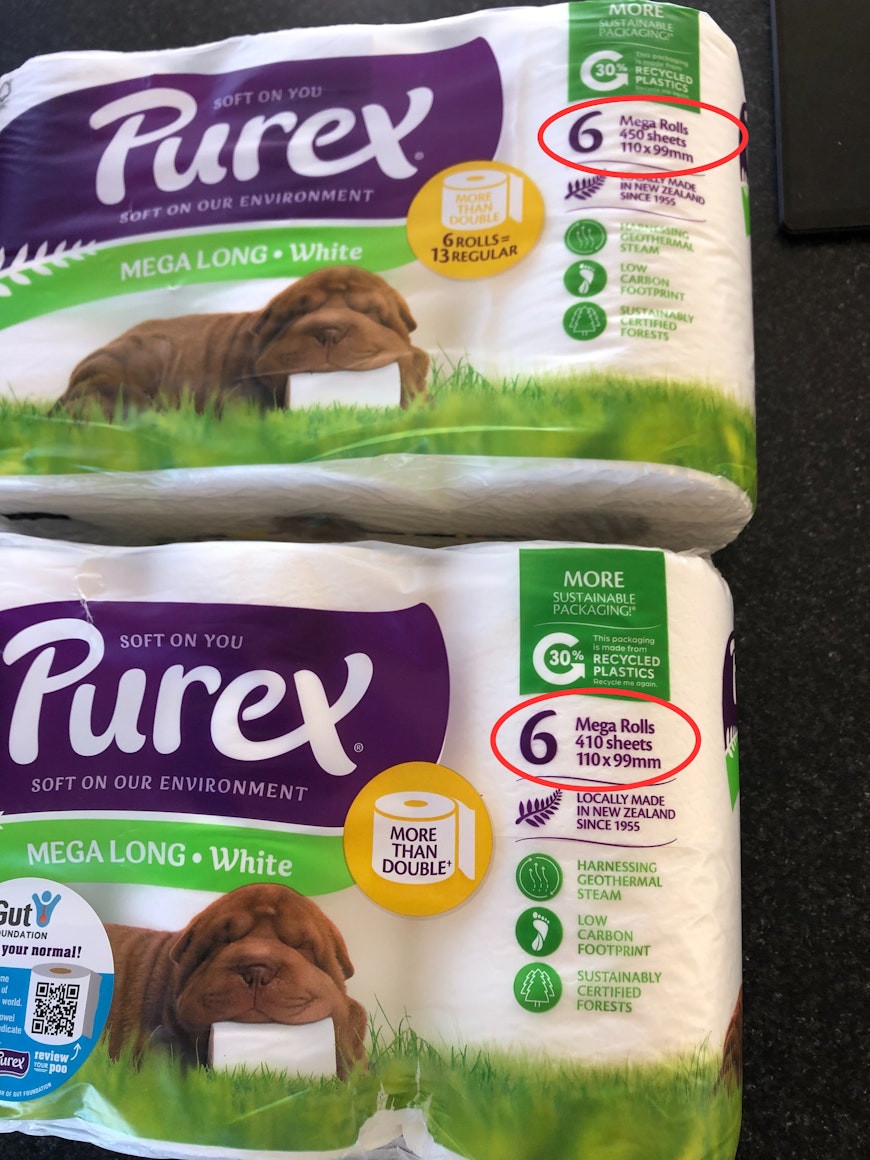
Carol sent us photos of the old and new Purex Mega Long toilet paper. The older packaging states there are 450 sheets per roll – equal to 13 regular rolls. The new packaging states there are 410 sheets per roll.
Essity Australasia is the company that owns the Purex brand in New Zealand. A spokesperson said the change was to maintain an affordable price despite the rising costs of making Purex in New Zealand.
“Essity is the only New Zealand manufacturer of tissue products, and the price of pulp fibre and energy needed to make the product has gone up significantly in recent years. In October 2025, we chose to reduce the number of sheets in each mega roll to avoid passing on costs and increasing the recommended retail price.”
The company said product packaging was updated to highlight the sheet change.
Consumers can use unit pricing (price per 100 sheets) to compare the price of toilet paper.
5. Nescafé Cappuccino coffee sachets removed the chocolate shaker
Keith felt ripped off when Nescafé stopped selling its cappuccino sachets with a chocolate shaker included.
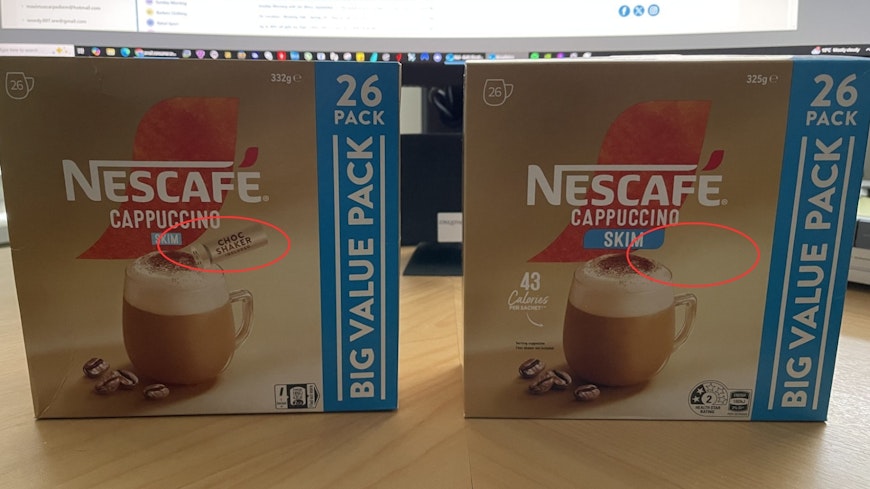
A Nestlé spokesperson told us it had removed the shaker for a number of reasons.
“From January 2024, Robusta coffee beans increased in price by 80%. At the same time, our research showed that many people did not use the shaker. In removing the single-use plastic shaker, we’re also saving more than 100 tonnes of plastic each year – equivalent to more than 9 million takeaway coffee cups,” they said.
Nestlé said it communicated this change on the pack and on its website. It also initially gave out complimentary reusable stainless-steel shakers and a tin of chocolate powder.
The shaker was removed from the 10-pack in November 2024 and from the 26-pack in April 2025. Nestlé told us the recommended retail price for both packs increased in April 2025.
6. Anchor Blue Milk Powder 400g makes up 14% less milk
3.2L ➜ 2.75L
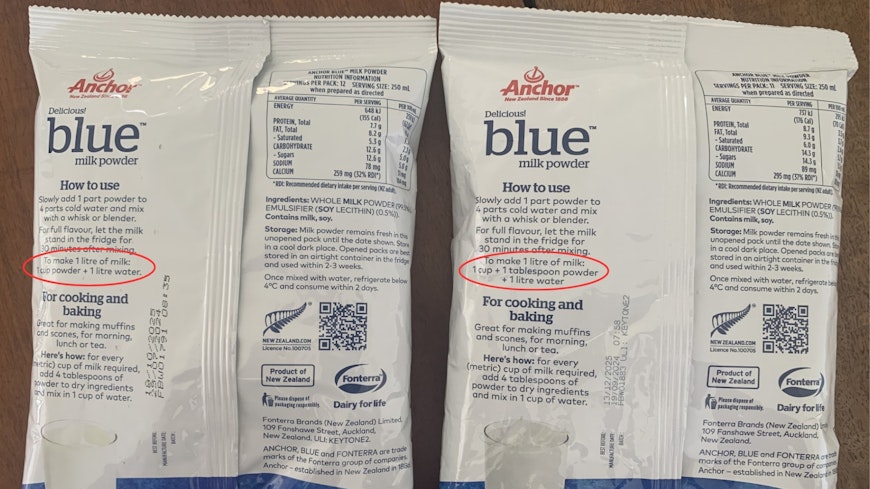
Eagle-eyed Bronwyn discovered this example in her pantry.
Bronwyn had two 400g bags of Anchor Blue Milk Powder. One bag stated it made up 3.2L, the other bag only made up 2.75L. The directions had also changed from using 1 cup of milk powder to using 1 cup plus 1 tablespoon. The ingredients list was exactly the same on both packets.
“The slight change to the mixing instructions results in the packet making 14% less milk.”
Bronwyn said companies should be required to make sure consumers are aware when a product has changed.
An Anchor spokesperson confirmed there was no change to the product formulation, powder weight or recommended retail price. The on-pack directions were updated in February 2024 to align with comparable products in the market.
“The directions of use are a guide only, allowing consumers to adjust the amount of powder to suit personal taste and preference. Those who prefer the original mixing instructions can continue to prepare the same amount of milk.”
7. Pams marmalade and jams shrunk by 10%
500g ➜ 450g
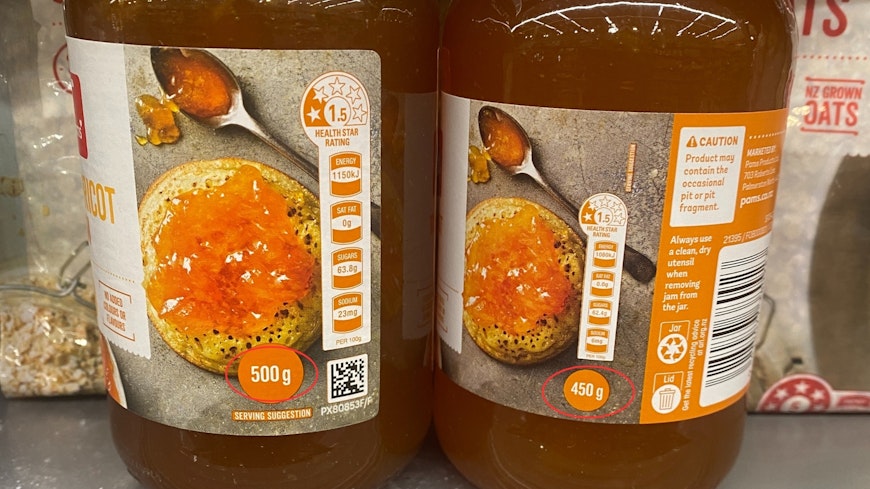
Richard and Tony both complained to us about Pams jams range shrinking from 500g to 450g.
A Foodstuffs spokesperson told us the Pams range has reduced in size by 50g due to a change in supply partners earlier in 2025.
“While the product weight has reduced by 50g, recommended retail prices have also come down to reflect the change. Customers can also compare products by referring to the unit pricing,” they said.
If you change it, say it
Unfortunately, there’s nothing legally wrong with companies reducing the size of their packaging or skimping on ingredients by stealth.
But respondents in Consumer’s grocery survey for 2025 reported feeling ripped off and unfairly treated. As many as 78% of respondents were concerned supermarkets aren’t being transparent about shrinkflation, with only 12% saying “it’s usually clear”.
We think companies have a responsibility to make it clear to consumers when they’re changing their products to ensure consumers aren’t being misled.
Supermarkets also need to front up. French supermarket chain Carrefour puts warning labels on shelves, advising customers when a product has shrunk.
In 2025, the Australian Competition and Consumer Commission released a report into supermarket competition. The watchdog recommended supermarkets be required to publish notifications when package sizes changed.
We think New Zealand consumers should experience the same transparency.
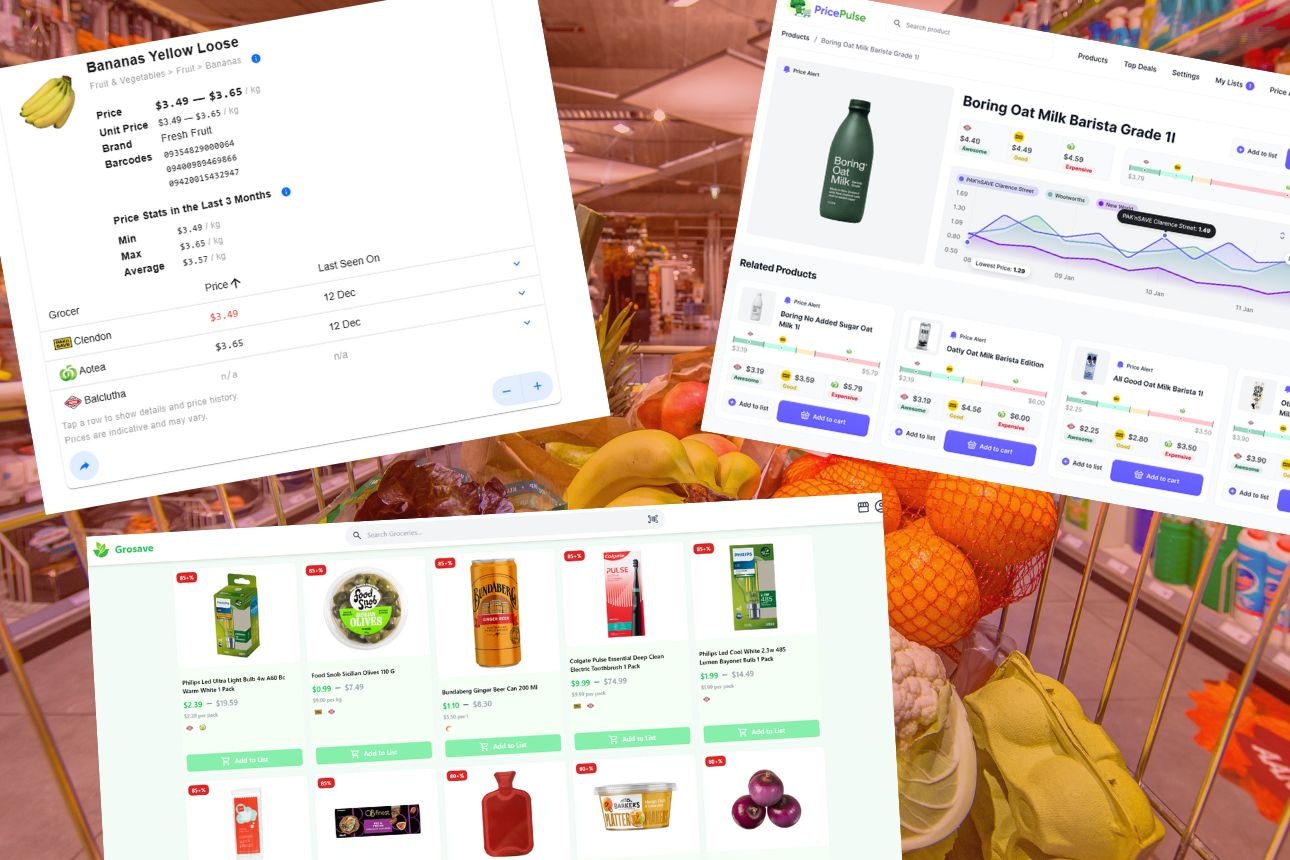
The easiest way to compare the price of products, regardless of packaging size, is to check their unit prices. Our report on unit pricing has some great tips on how to save money at the supermarket.
If you have examples of products you think have shrunk in size or quality, we’d like to hear from you. Email [email protected].