By Erin Bennett
Test Data Lead | Hautū Raraunga Whakamātautau
I recently looked in the back of my wardrobe and was appalled to see how many empty boxes I had stashed there. Why was I keeping them? There’s an unconscious impulse to hang on to the boxes from major purchases, just in case. But just in case of what?
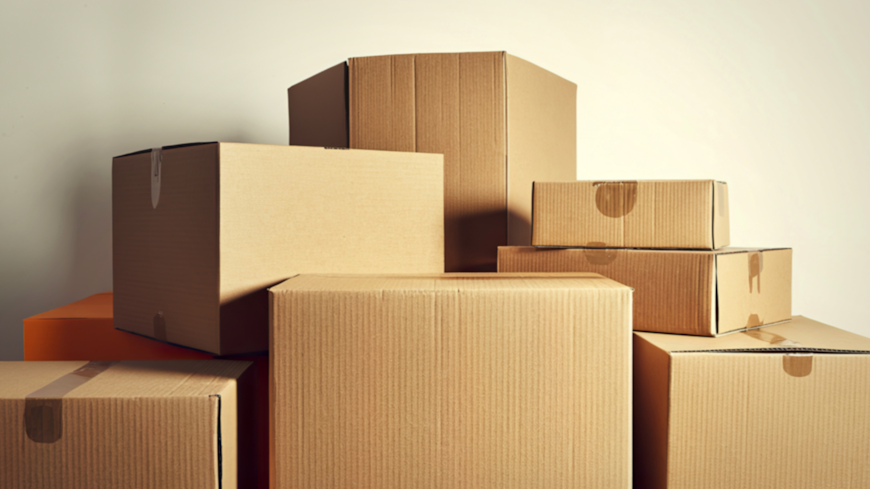
I personally associate my box hoarding habits with the days when mobile phones had a PUK code printed on the box they came in. If you didn’t have the code, you could end up with a useless SIM card. But that’s not the case anymore.
Any important info on a product box can now be photographed – so, no need to keep the packaging.
I say it’s time to stop hoarding boxes and clear out our wardrobes, garages and attics! Join the revolution, and let’s commit to recycling all our boxes!
But what if there’s a fault with the product?
Do you need the box to return a product if it’s faulty? No, you don’t!
If you have a faulty product and you need to return it to the retailer or manufacturer, don’t worry, you don’t need the original packaging. A retailer can’t say they won’t honour their obligations under the Consumer Guarantees Act (CGA) just because the product has been used or is no longer in its original packaging. The CGA can apply for years after a product is purchased. If we all kept all the packaging for the products we bought, just in case, we’d be living in box castles!
The retailer or manufacturer may insist on the original packaging for a warranty claim, but that doesn't apply to a CGA claim.
If a product needs to be sent away for repair under the CGA, the retailer should help you, and that includes providing new packaging. It needn’t be the original, so alternatively you could go to Bunnings, Pak’nSave or another retailer that offers free boxes, and find one that fits your product – then you’re all good!
If you really do want to keep the box in case you have to return an item, put a time limit on it, say 1 or 2 months. If the product is working fine after that time, then recycle the box. Maybe even schedule a regular packaging clean out every few months and add a reminder in your calendar so you don’t forget. Don’t let those boxes linger in the garage for years.
When might you want to keep the box?
If something is the wrong size
If a retailer offers to exchange an item if you choose the wrong size, then it can pay to hold on to the box until you’ve tried on the item. That means trying it on relatively quickly! (Don’t leave it for weeks.) Then, once you’re satisfied it fits, you can get rid of the box as soon as possible.
Storage
Infrequently used items, like artificial Christmas trees, are a good example of when it’s wise to keep the box. However, this only makes sense if the original packaging doesn’t take up significantly more space than the actual item. If it does, then it’s time to think of a different storage solution.
Some boxes add value
If you plan to resell a rare or vintage product, keeping its box can add to the value. Take a minute, though, to consider whether the item really will be valuable in the future. Or will it just be another Beanie Babies scenario?
On the move
If you’re planning to move soon, then boxes could be handy. To save space storing them in the interim, collapse them down. You can tape them back up again when they’re needed. Make sure to recycle all the other packaging items. There’s no need to move more things than you have to.
How to recycle product packaging
Recyclable
Cardboard: kerbside recycling bins and bags or transfer stations.
Shredded paper: often used as an eco-alternative to bubble wrap, this can go in your kerbside recycling along with the cardboard.
Soft plastic: soft plastic recycling bins are available at some supermarkets and other retailers. To find your nearest bin, check out www.recycling.kiwi.nz
Bubble wrap: treat this the same as soft plastic, but have a bit of fun and pop the bubbles first!
Polystyrene (Styrofoam): major hardware retailers, such as Mitre 10, will recycle formed polystyrene at some stores. Formed polystyrene is made up of little beads of polystyrene pressed together to form a shape. Both polystyrene and Styrofoam (a brand of polystyrene) can be recycled into other products, such as insulation for homes. You’ll still be able to see the little beads in the formed shape, so will be able to tell it’s formed polystyrene (and hence recyclable) or not.
Formed plastic: if it has a recycling number on it, and your kerbside recycling accepts that number plastic (1, 2 and 5 are commonly accepted), then you can recycle at the kerbside. Otherwise, it can’t be recycled in your area.
Non-recyclable
Film on electronic devices: rigid plastic films made of PVC (polyvinyl chloride) can’t be recycled like soft plastics, so off to landfill they go.
Plastic with no recycling number: if there’s no recycling number on it, the plastic will need to go to the tip.
Packing peanuts: while these are polystyrene, they can’t be recycled like formed polystyrene (made of little beads), so they’re off to the landfill, too.

Need our help?
If something’s gone wrong with a product or service, our Consumer Rights Advice Line experts can help you get a fair deal. Get personal, practical advice you can trust – included when you join from $15 a month.