By Belinda Castles
Researcher | Kairangahau
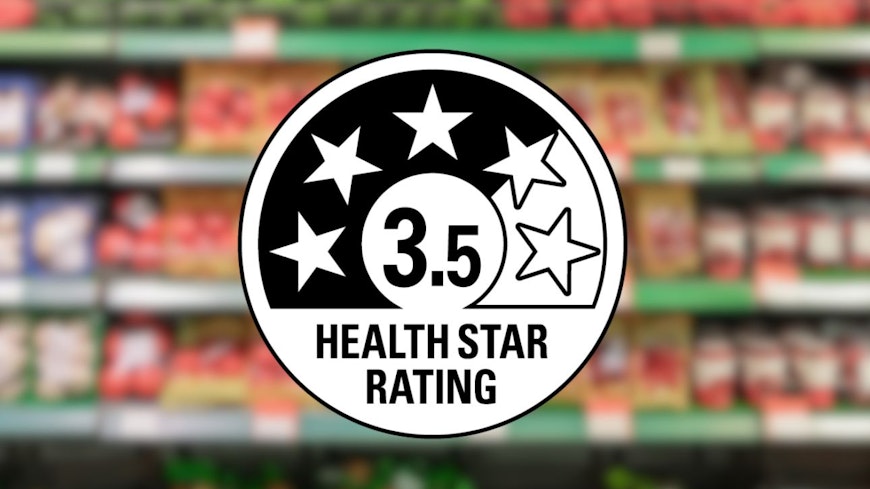
Consumer NZ is pleased food ministers in Australia and New Zealand have agreed to progress mandating the health star ratings system. The front-of-pack system is intended to help consumers make a healthier choice when shopping for packaged food.
The decision follows a new report that found voluntary uptake is still well short of targets. In 2020, food ministers set targets for the system. Health stars were expected to be displayed on at least 70% of intended packaged food products by November 2025.
However, only 36% of intended products in New Zealand currently display a health star rating. While this is a slight improvement on the 2024 percentage (33%), it is just over half the original target.
Ministers expressed concern that the low uptake has limited the health star ratings system’s effectiveness and undermined consumer trust. They are also concerned there are misunderstandings about how to use the rating. In particular, some people don’t know it should only be used to compare similar products.
Consumer has advocated for the health star ratings system to be made mandatory since its introduction in 2014. Consumer’s researcher Belinda Castles said the voluntary system never worked in the best interests of consumers.
“Front-of-pack labelling schemes like the health star ratings must be mandatory to enable consumers to make a healthier choice and easily compare products. Otherwise, industry can cherry-pick which products it puts ratings on and avoid putting stars on less healthy products.”
Castles said the latest uptake figures showed that only 6,834 of 19,021 products intended to display health stars did.
Public health groups like Health Coalition Aotearoa also support a mandatory system. Dr Sally Mackay, Health Coalition Aotearoa food policy expert panel co-chair, commended food ministers for leading the next step to make the rating mandatory.
“This is good for public health and consumer choice. It will support consumers to make informed decisions at the checkout. And it provides an incentive for food manufacturers to put healthier products on our shelves.”
Food Standards Australia New Zealand will undertake 2 rounds of public consultation before a final decision is made about making health star ratings mandatory.
Health star ratings
Health star ratings are a front-of-pack label, similar to the energy-efficiency star ratings you find on appliances. The ratings give at-a-glance information about a packaged food’s overall nutritional value. They range from a ½ star to 5 stars, with the more stars the better.
The number of stars is based on nutrient-profiling criteria developed by Food Standards Australia New Zealand. The criteria are based on 100g or 100mL of a product and consider the positive and negative aspects of that product. They do not consider how natural – or processed – a food is.
The positive aspects are the food’s dietary fibre and protein and how much fruit, vegetables, nuts or legumes it contains.
The negative aspects are energy, saturated fat, total sugars and sodium content. These nutrients are associated with increased risk of chronic diseases, such as heart disease and obesity.
What health stars look like
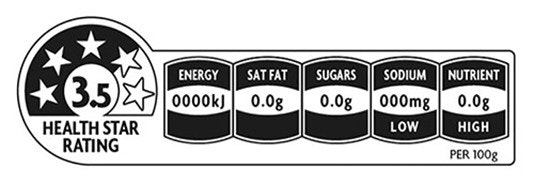
As well as a star rating, product labels can show other information, such as:
an energy icon
3 negative nutrient icons (one each for saturated fat, sugars and sodium)
a nutrient icon (for a positive nutrient, such as iron, chosen by the manufacturer).
The nutrient icons can also state whether nutrient content is high or low, for example, low sodium or low sugar.
Foods that do not display the health star ratings
The rating system was designed to be used on packaged foods. You won’t usually see it on fresh produce.
Ratings can’t be displayed on alcohol or special-purpose foods, such as infant formula and toddler milks.
The system is voluntary, so manufacturers can choose to use it on all, some or none of their products.
Comparing products that use the health star ratings
Different nutrient thresholds are used for drinks, dairy foods, oils and spreads, and cheese products. So, the ratings can only be used to compare similar foods from the same product group.
Serving size
There are no serving size rules in New Zealand, so manufacturers have different “suggested” serving sizes for the same type of food product.

We can't do this without your support.
Consumer NZ is independent and not-for-profit. We depend on the generous support of our members and donors to keep us fighting for a better deal for all New Zealanders.