By Vanessa Pratley
Investigative Journalist | Kaipūrongo Whakatewhatewha
Roll-on, stick, spray, natural, clinical … there are heaps of options on the market when it comes to antiperspirants and deodorants.
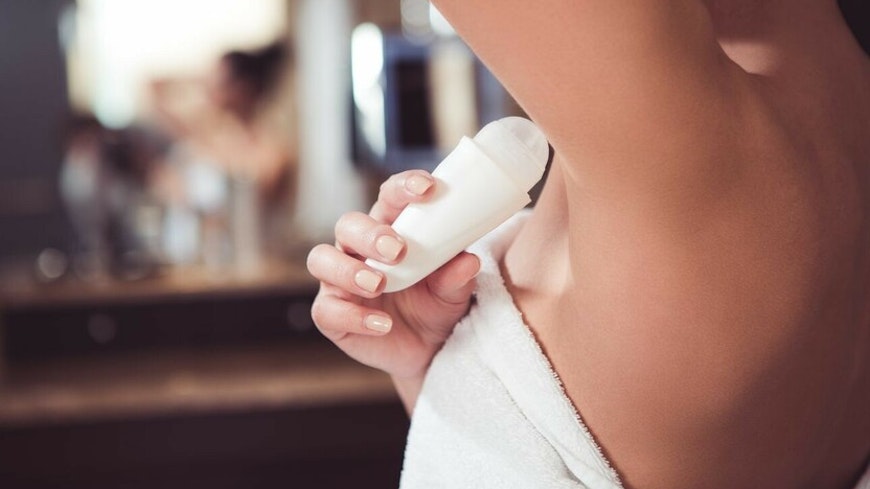
But how do you know which one to choose? We dig into the science to figure out the juice on sweat and how you can buy better to deal to sweaty underarms.
What is sweat?
Sweat, or perspiration, starts in the hypothalamic thermoregulatory centre in your brain, which controls your body temperature. Think about it like a heater that keeps a room at the right temperature. When the room gets too hot, you open a window to help cool down.
In your body, sweating is the same as opening the window. Glands around your body release a salty liquid that evaporates in the open air, cooling your skin in the process. Sweat glands exist all over your body but are especially plentiful under your arms and on the palms of your hands and soles of your feet.
These areas are like a massive food court for bacteria. Sweat itself doesn’t smell; the stench starts when bacteria begin feasting on the salty mixture.
Are antiperspirants and deodorants the same?
Even though we often use the terms interchangeably, antiperspirants and deodorants are quite different things.
Antiperspirants use aluminium-based compounds to block sweat pores temporarily to prevent or reduce sweating. The compounds react with molecules on the skin and in sweat ducts to physically block pores.
Deodorants use chemicals, usually alcohol-based, to create an acidic environment on the skin to reduce smell. Stink-producing bacteria can’t survive in an acidic armpit.
Some antiperspirants can also contain deodorants, a double whammy attack on sweat and smell!
Common claims on antiperspirants
The science says antiperspirants and deodorants work, but what you see advertised on a supermarket shelf and what your pits experience can be very different.
There are countless claims printed in large fonts on nearly every product on the market. A small sweep of pharmacy and supermarket websites reveals claims of anything from 48 to 96 hours of protection and dermatologically tested to motion-activated and “invisible”.
Dove, Rexona, Nivea and Mitchum are a few of the most popular brands in the deodorant aisle. We emailed each of these companies and asked if they could back up the claims they included on some of their products. Here’s what they said.
Dove: Advanced Care, Black & White, freesia scent, 72h, antiperspirant roll-on
Dove, which is owned by global household, beauty and personal care products manufacturer and distributor Unilever, claims this roll-on gives invisible/anti-stain, 72-hour protection. We asked for evidence supporting these claims. Unilever responded with a spreadsheet that explained in more detail what each claim meant but did not provide any evidence to back up the claims.
Rexona: Clinical Protection, Antiperspirant Deodorant, Summer Strength roll-on
Rexona says this antiperspirant deodorant gives 96-hour protection that is three times stronger protection than basic antiperspirant. It says it has “clinical strength” and “Defence+ Technology”. Rexona is also owned by Unilever, which sent a spreadsheet that explained in more detail what each claim meant, but did not provide any evidence to back up the claims.
Nivea: Double Effect, 72h, Anti-Perspirant roll-on
Nivea claims this antiperspirant deodorant provides 72-hours protection and that skin tolerance has been “dermatologically proven”. It did not respond to our request for evidence of this.
Mitchum: Shower Fresh 48h Antiperspirant & deodorant
Mitchum states this product is its most powerful when it comes to sweat and odour control and that it gives 48-hour protection. Mitchum confirmed its product underwent clinical testing. “A wetness study was conducted on a panel of women and men using the [Food and Drug Administration over-the-counter] antiperspirant monograph testing. Results indicated sweat reduction at several different time points, including at 48 hours. Additionally, an odour study was conducted on a panel of women and men using expert odour evaluators. When compared with the baseline value, the formula was determined to be an effective deodorant after 48 hours.”
Are natural deodorants better?
Besides the clinical claims that litter supermarket shelves, there’s a whole other category of product clamouring for your attention: natural deodorants. These come in solid stick form, roll-on and, in a new twist, crystal varieties. Whether they’re ‘better’ depends on what you need from your deodorant.
The key claim for many ‘natural’ deodorants is that they don’t use aluminium-based compounds, but that’s par for the course for any ‘deodorant’ product – it’s antiperspirants that contain aluminium, and, as we established, antiperspirants and deodorants are different.
In fact, we only found one product in our search for an aluminium-free antiperspirant. Natural or not, a deodorant can be effective at reducing bacteria and odour, but no deodorant will be able to achieve what an antiperspirant can.
Besides the aluminium claim, another draw for ‘natural deodorants’ is that they’re less likely to cause skin irritation.
We reached out to dermatologist and New Zealand Dermatological Society president Dr Louise Reiche to learn more about our skin and deodorant products.
When it comes to aluminium, Dr Reiche agrees irritation can be a problem.
“Armpit dermatitis can arise from irritation effects from sweating, blocked pores, fragrances, preservatives and other components of deodorants or antiperspirants,” Dr Reiche said. The fragrances used are one of the biggest irritation triggers, so look out for fragrance free or sensitive varieties.
“Perfume-free deodorants and antiperspirants are less irritating. Most brands have a sensitive skin version, which typically means fragrance free.”
Dr Reiche said reducing the frequency you use antiperspirants and deodorants, as well as avoiding irritating laundry and skin products can help reduce skin irritations.
Is aluminium bad for your armpits?
There are a few myths floating around about aluminium. They’re grounded in the idea that aluminium can be absorbed into your armpits, which research shows doesn’t happen.
Aluminium doesn’t readily absorb into the skin and the levels of aluminium in any cosmetic product aren’t carcinogenic. Simply put, the research has never established a causal relationship between breast cancer and aluminium exposure. But most studies acknowledge a need for more research.
Another concern is that, by blocking the sweat glands, ‘toxic’ chemicals will be trapped inside the body. Helpfully, our liver and kidneys do the job of dealing with toxins in our bodies – toxins can’t exit the body via sweat.
Do you need a whole-body deodorant?
You might have seen it advertised on TV or online and wondered if you need it. ‘Whole body’ deodorants are the newest-trending product in a line-up of hygiene products you probably shouldn’t waste your money on.
As the name suggests, they’re designed to be used all over and typically come as creams or aerosols. They’re not antiperspirants, so won’t stop you sweating, but they may help reduce odour in areas where you can’t usually use traditional deodorants, like your feet or under-boob area.
If you’re concerned about your smell, this product might help, but for the most part, if you’re showering every day, it’s unlikely you’ll need it. As Michelle Spear, professor of anatomy at the University of Bristol, explained in The Conversation earlier this year, these products are a solution to a problem that just doesn’t exist. “The notion that you need expensive products to achieve basic hygiene is a fallacy rooted in marketing, not science,” she penned.
How to remove deodorant stains from clothes
You may have noticed yellow stains on the armpits of your white or light-coloured T-shirts. These stains may seem to never wash out, and they may get worse as the T-shirt ages.
Most of the time, the stains are caused by the aluminium compounds in antiperspirants reacting with sweat and body oils. You can’t really prevent the stains occurring, but you can often get rid of them using a two-part cleaning process.
First, sponge or soak the stain in a mixture of 1 teaspoon ammonia, which you can get at the supermarket, to 1 cup of warm water, mixed with a squirt of dishwashing detergent.
Treat any remaining residue with some turps.
Wash as normal.
Tips for buying antiperspirants and deodorants
Know what you’re buying: Ensure you get the results you expect by double-checking the product’s description. Antiperspirants and deodorants aim for different effects, so consider whether you want to prevent sweat or odour or both.
Shop around: Try a range of products to find the right one for you. There are a plethora of brands and formulations, from roll-on and solid varieties to aerosols and powders. Try a few and see how they perform – but remember to take unsubstantiated claims with a grain of salt.
Apply at night: Some claim the best way to ensure maximum effect is to apply them at night, after a shower when your skin is clean. The product will have time to absorb while you’re asleep. You can reapply again in the morning.
Chat with your healthcare professional: If you can’t find a deodorant that works, or you’re concerned about your perspiration, don’t sweat it. Your GP will be able to help. They can prescribe an antiperspirant with a higher concentration of active ingredients.
There are also other options for reducing sweating, like botulinum toxin (Botox) injections and switching out sweat-causing medications. Surgeries to remove sweat glands or disconnect nerves that run between the spine and sweat glands are last-resort options.