By Amy McNabb
Test Data Analyst | Kaitātari Raraunga Whakamātautau
Whether you love a robust long black, a creamy flat white or other caffeinated brew, having your own espresso machine allows you to enjoy barista-quality coffee at home.
But there’s no point in buying the best coffee beans, grinding them fresh, and perfecting your coffee making technique if you’re not going to keep your machine clean.
“Coffee contains sugars and oils that can bake on to the hot surfaces of your machine. If left for too long, these oils will go rancid, tainting the natural flavours and aromatics of the coffee.”
– Martin Caughley, owner and director of Espresso Ninja (and expert on all things coffee)
You could also be up for costly repairs if you don’t regularly clean your machine. Too much build-up around the group head and portafilter can block the flow of coffee. This puts strain on the internal pump found in most espresso machines, which could cause it to fail.
Faults and nasty tasting coffee can also be caused by the build-up of mineral deposits from water if you don’t periodically descale your espresso machine and change its water filter.
Anatomy of an espresso machine
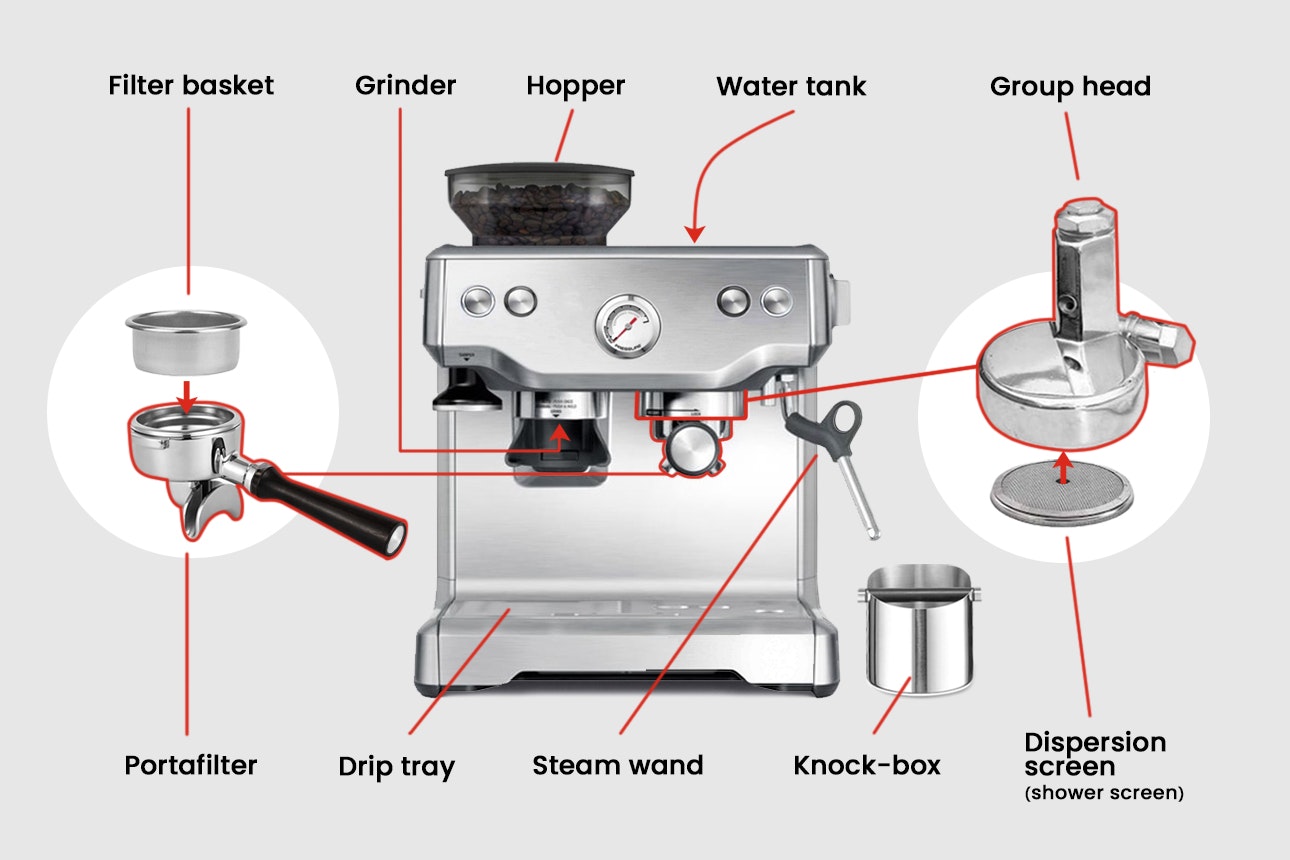
Filter basket: Holds the coffee grounds.
Portafilter: Holds the filter basket and locks into the group head.
Group head: Brings pressurised hot water from the machine into the portafilter.
Dispersion screen (shower screen): Spreads the water evenly over the coffee grounds in the filter basket.
Steam wand: Releases pressurised steam for frothing milk.
Knock-box: Catches used grounds that you knock out of the portafilter.
Hopper: Holds coffee beans until you're ready to grind them.
Grinder: Grinds your coffee beans to the right size.
Cleaning your espresso machine
Daily
After each use:
Rinse the portafilter: Remove it from the group head and empty the used coffee grounds into the knock-box. Then rinse the portafilter and wipe with a dry cloth.
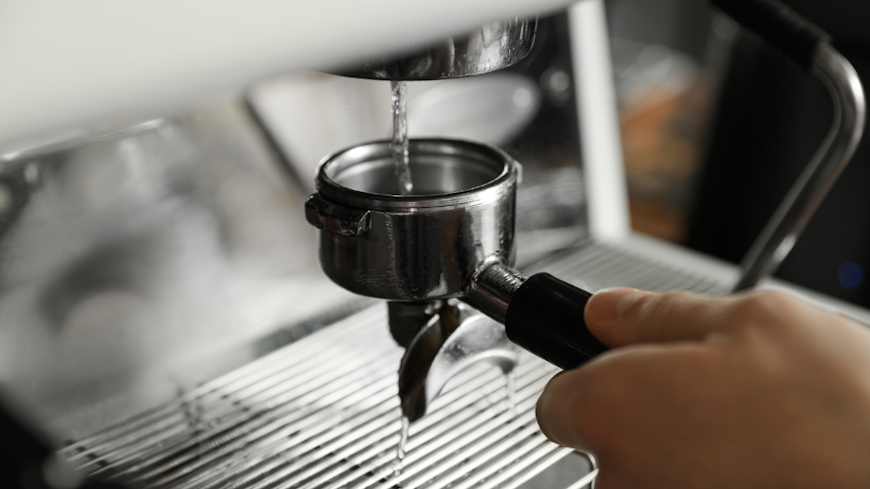
Purge the group head and dispersion screen: Run a little water through the group head. Brush around its inner edge and across the dispersion screen. Then put the clean portafilter into the group head and briefly run the water again.
Purge the steam wand: Turn the steam on briefly once you’ve removed the wand from the milk. Then wipe it with a clean, damp cloth.
At the end of each day:
Remove the filter basket from the portafilter and rinse both.
Empty the drip tray and wipe with a damp cloth.
Empty the knock-box.
Refill the machine’s water tank.
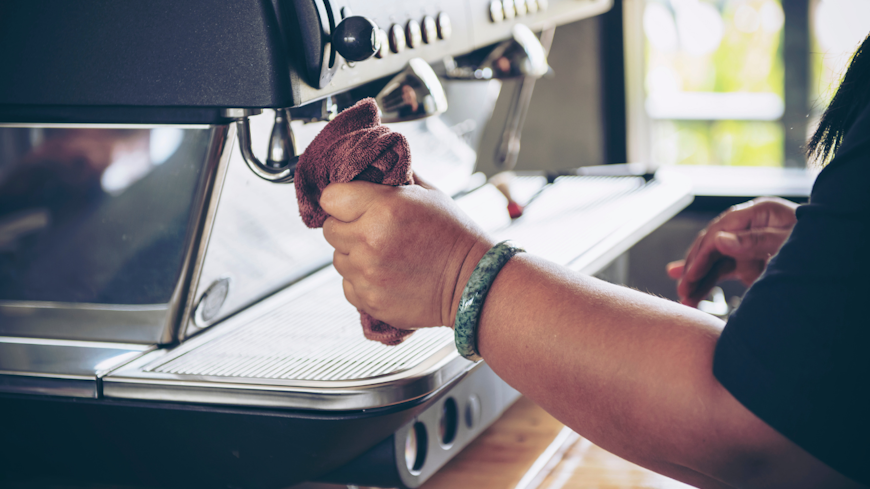
Wipe down the machine’s exterior and surrounding surfaces.
Weekly
If you make several cups of coffee a day, you should do the following tasks weekly. If you only make a cup a day, every few weeks should do.
Clean the inner workings of your machine: Check what your user manual says. Some machines have a cleaning cycle, some require you to pump an espresso machine cleaning solution through the machine’s valve system, and others need backflushing.
Those that need backflushing come with a blind filter (one without any holes) or plug insert for this purpose. The process is like making a shot of coffee but without any coffee grounds. The blind filter forces the water to flush residual grinds out of the group head, back through the machine and out to the drip tray.
Clean the dispersion screen (if removable): Remove the dispersion
screen from the group head and soak it in cleaning solution. Wipe out
the group head with a damp cloth. Rinse and dry the dispersion screen
before reinstalling it.Clean the portafilter and filter basket: Remove the filter basket
from the portafilter and soak both in cleaning solution. Rinse well
and dry before reinstalling.Clean the steam wand: Soak it in a clean jug with boiled water or cleaning solution. Rinse well, purge, and wipe dry with a clean
cloth.Clean the drip tray: Remove the drip tray and wash it in hot, soapy water. Rinse and dry before reinstalling.
Every 2 to 3 weeks
Clean the hopper: Remove the hopper and wash it in hot, soapy water.
Then rinse and dry thoroughly – you don’t want moisture near your
coffee beans.Clean the grinder: Brush or vacuum old coffee grounds out of the
grinder’s burr inlet and burrs (if accessible). Then brush or vacuum
the grinder’s outlet chute.Clean the water tank: Remove it from the machine and remove the water
filter. Wash the tank in hot, soapy water with a soft cloth. Rinse
thoroughly before reinstalling the water filter and tank.

Every few months to yearly – depending on water hardness
Descale your machine: Mineral deposits from water (limescale) build up in coffee machines through use. Follow the instructions in your machine’s user manual to remove them. Use a descaling solution formulated for espresso machines. Rinse the machine well when you’re done.
If you live in an area with hard water, you should descale your coffee machine every 2 months – otherwise, every 6–12 months. Hard water has a high mineral content – it’s common in volcanic regions.
Replace the water filter: Check your coffee machine’s user manual to
see how often you should replace the water filter. If you live in an
area with hard water, you might need to replace the filter more
often.
TIP: Choose water filters that not only filter out impurities but also soften the water to reduce mineral build-up.
Espresso machine maintenance
In addition to cleaning, you should regularly inspect your espresso machine to check for leaks, damaged gaskets or other wear and tear. Deal with any issues early to avoid further damage and to keep the coffee flowing.
If you have a premium espresso machine, it’s wise to have an espresso machinery technician inspect and service it every year or two – particularly if it’s older than 10 years.
“Technicians can often pick things up before they become a problem, such as leaks or wiring issues. Servicing includes replacing worn seals and cleaning any build-up from the nooks and crannies that are harder for the user to tackle. The technician will also tune the machine for ideal coffee extractions.”
– Martin Caughley, owner and director of Espresso Ninja
Eventually, your grinder’s burrs will need replacing too. As they lose sharpness over time, they won’t grind your coffee beans as consistently. A consistent grind is important for even coffee extraction and maximum flavour.