By James le Page
Former Product Test Team Leader | Kaiārahi Kapa Whakamātau Hautaonga
If you’ve left your barbecue on the deck over winter, chances are it’ll be in a state when you whip off the covers – mould, rust and critters can all make themselves at home over the colder months.
Yet, as grimy as it might be, with a touch of elbow grease, you can usually resurrect your barbecue in an afternoon.
Checking the gas bottle and connections
First up, check the gas bottle, connections and hose for damage and corrosion. Also take time to look for leaks before you fire it up. The best way to find leaks is by spraying or painting on a mix of soapy water – if you see bubbles forming, replace the hose and connections.
Check the weight of the gas bottle. If it’s light, get it refilled so you aren’t left short. If you don’t have a refill station nearby, take advantage of a swap station. Some stations will take any old 9kg cylinder as a swap, so it might be a good time to bring in your old, clapped-out one and get something fresh. Otherwise, you may need to buy a new one.

TIP: Have a full, spare gas bottle tucked away in your garage with your emergency water and food. If your bottle runs out mid-barbie, you can quickly swap the new bottle in without needing to dash to the petrol station in your apron. Just remember to swap or refill the empty one when you get a chance.
Cleaning the barbecue
Buy a new wire brush. You should do this every season as the brushes can start dropping bristles – a major issue if one ends up in your lamb chop.
Clean the outside. A warm, soapy solution and a dishwashing brush and cloth combo should do the trick. Look for any corrosion that may be eating into the barbecue or trolley, which could make it unsafe to use or move around.
Clean the inside. Open the lid and take out the grates. Set them to one side. Give the inside a good scrape down – this will probably be last season’s congealed grease. It’s not a pretty job, but it is essential – it’ll help prevent fat fires when you start it up.
Clean the burners. Check for cracks – they might need replacing if they’re damaged in any way as it affects the evenness of cooking. Brush the burners with a wire brush to clear any debris, which helps make sure the flames come out evenly.
Clean out the grease trap. The trap should have your latest scrapings in it, and potentially the remains of the last meal cooked on the barbie as well. Line the grease tray with tinfoil to make cleaning it less of a chore next time.
Check the burners. Fire up the barbecue and take a quick visual check of the flames coming out of the burners – they should appear even. If they don’t, there’s a problem. You might fix it with another brushing, or they might need replacing.
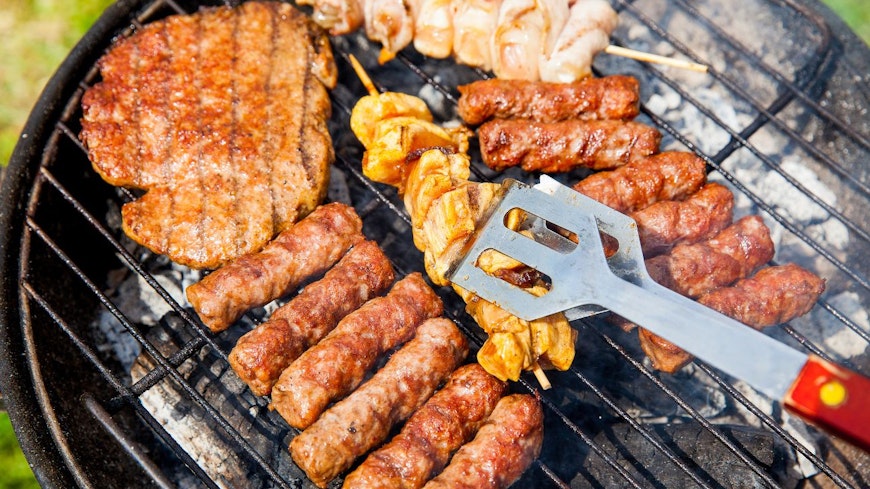
Clean the grills and hot plate. Throw your grill or hotplates back on to the barbecue and fire it back up on high for 20 minutes. Afterwards, turn off the barbecue and let it cool before giving the grills and hot plate a good clean. They don’t need to be surgically spotless, but you can decide what level of cleanliness you’re comfortable with.
Season the grill. This gives it a somewhat non-stick surface and helps prevent rust. Grab some cooking oil (spray is best) and give the grates and hotplates a thin coating, making sure you get an even coverage. Turn the barbecue back on high for at least 15 minutes to complete the job.
Now you’re good to go. Remember to check the grease trap and make sure the insides are reasonably clean after every few cooks. That’ll help prevent fat fires.