By Rebecca Styles
Research Lead | Hautū Rangahau
There are changes you can make to your home to minimise flood damage from a serious weather event.
Nancy Baines, senior healthy waters specialist at Auckland Council, helps communities understand how to make their homes more resilient to flooding.
Before the extreme weather events of 2023, it was hard to convince people of the need for flood resilience, but not now.
“People are really interested – the conversations I have with people are so in-depth.”

Aucklanders aren’t the only ones interested in flood protection. In Consumer NZ’s 2024 nationally representative insurance survey, 33% of respondents had or were considering taking measures to protect their house from weather events.
While financial support can be made available temporarily after the extreme weather, there is generally nothing to help make adaptations before disasters occur. However, there are some small and relatively inexpensive things homeowners can do to help mitigate flooding damage.
Paying for big flood mitigation measures
After 2023’s extreme weather events, Auckland Council introduced grants for some of the affected homes where there was a risk to life in the event of another flood.
The grant was for a maximum of 25% of the property’s 2021 capital value and can be used for: an assessment of mitigation feasibility and construction. It covers major works like raising the home, relocating it to another part of the section, strengthening foundations or land stabilisation.
148 properties were eligible for the grant and have opted in.
Queensland, Australia, has a similar scheme. It instigated a fund after the 2021/22 floods to help make homes more resilient, raise them or, if neither of those options were practical, demolish or relocate them. Under the scheme, flood resilience experts can visit a property and make recommendations.
After a flood event earlier this year, the Queensland government began offering homeowners in North and Far North Queensland a Stronger Homes Grant. The grant, for up to A$10,000, covers smaller actions around the home, such as, raising appliances (switchboards, electrical sockets, hot water systems, washing machines and dryers) above the flood line. It also covers replacing floor coverings with flood-resilient materials or painting stud work to prevent mould.
The Household Resilience Program in coastal parts of Central and Northern Queensland aims to make homes more resilient to cyclones and covers some structural elements such as roofing and windows.
While these schemes are positive moves to help homeowners make their homes more resilient, they are ad hoc solutions after the events, rather than permanent grants to help people adapt to the challenges of climate change before disasters hit.
Local Government New Zealand confirmed most schemes offered in this country have been targeted to communities post significant events. It wasn’t aware of any permanent or pre-event grant schemes.
We think expert advice and financial help should be available for homeowners preparing for flooding in at-risk areas.
Is your property at risk of flooding?
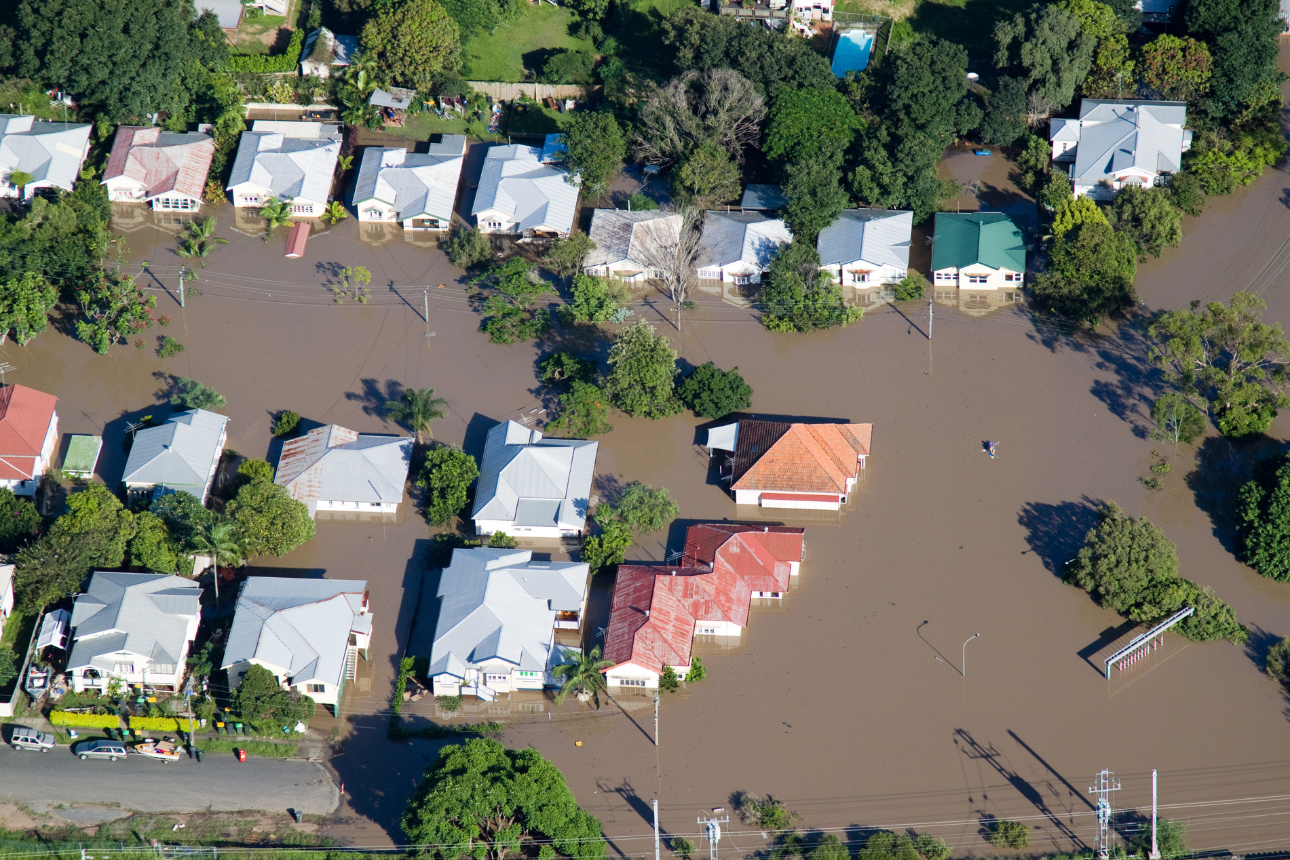
Unless you’ve been directly impacted by flooding, you may be unaware of the risk.
Your council’s hazard maps, along with the land information memorandum (LIM) for your property, should show if your property is at risk of flooding. The property’s record of title should flag if it is susceptible to natural hazards.
The Natural Hazards Commission has a natural hazards portal where you can find out if any hazard claims have been made on your property. From there, you can also explore local hazard maps to see what the risks are in your area.
Earth Sciences New Zealand (formerly Niwa) recently carried out a flood hazard and risk assessment for Aotearoa. You can access its flood hazard data via its website.
How to make your home flood-resilient
While flood-resilience modifications aim to reduce water damage from flooding, they can also make it easier to get into and out of the property during a flood and to clean up afterwards.
Baines explained that “you’re going to take different actions depending on the type and severity of flooding. With simple low-cost measures, you’re really trying to stop water building up around your home.”
A good place to start is to fix broken downpipes and guttering, and make sure gutters, drains and catch-pits are clear so water can run through them freely.
“You want to make sure water can flow freely across your property and your fences have gaps in them, so the water doesn’t back up behind them. During the January 2023 flood, water backed up behind fences, and the fences failed catastrophically, creating waves.”
There are two ways to adapt your home.
Dry proofing stops water getting inside your home.
Wet proofing minimises the damage once water has got in.
For larger-scale changes, Baines recommends contacting a storm-water engineer to assess what can be done.
Dry proofing
The Auckland Council guide for homeowners lists the following dry proofing options.
Raise your electrical switchboard and any heat pump compressor to reduce the chance of flood damage.
Replace solid fences with permeable fencing or screening.
If you have stairs, inside or out, make them an open design to allow water to flow through them. However, they may not be practical for those with low vision or young children.
Replace external concrete pads with materials that will absorb water, like gravel or grass.
Wet proofing
Wet proofing minimises damage once water has entered your home.
Plywood wall linings are more resilient to water damage than plasterboard linings.
Put up wall linings horizontally so the lower water-damaged sections can be removed without affecting the whole wall section.
Raise cabinets and laundry appliances above the water line.
Tiles, stone or brushed concrete are more flood-resilient flooring options than carpet, cork tiles or wood.
Raise power switches to reduce the risk of outages during a flood.
Solid doors are sturdier and can handle flood damage better than hollow doors.
If you’re looking to replace cabinets, look for ones made from flood-resilient materials with removable kick boards that will be easier to clean and dry out after an event.
For more information
The points above are just some of the changes you can make to your property. The following organisations provide more suggestions for future-proofing your home.
Auckland Council has an online guide called Creating a flood resilient home.
The Ministry of Business, Innovation and Employment also has useful information on its Building a more resilient home webpage.
Some local councils offer an eco-design adviser service, with free advice on home performance and sustainability.
Architects, landscape architects and engineers can suggest resilience options for your home and will work with local councils to make sure any alterations are consented.
Will making changes to your property reduce insurance costs?
More frequent extreme weather events is one reason why house insurance bills are climbing. So, will making changes around the house mean cheaper insurance? We asked the Insurance Council of New Zealand (ICNZ).
ICNZ said insurers base premium decisions on several factors, including natural hazard information from the local council or other sources. It recommended “property owners … contact their insurer about any mitigations that have been undertaken as the insurer won’t necessarily be aware of any work done.”
Suncorp, the insurance underwriter for many New Zealand brands said home adaptations are “not currently reflected in our standard pricing.”
IAG, underwriter of State, AMI and others, said it considers a wide range of data and customers could discuss any mitigation they’ve taken with them.
Overseas, some insurers will reduce premiums if homeowners are proactive about mitigating their properties’ flood damage potential.
In Germany, households that have voluntarily carried out flood assessments to their homes (signed off by a certified building surveyor) receive ‘flood passports’. While the passports aren’t mandatory, insurers have offered lower premiums to homeowners who have made the investment.
Meanwhile, back in New Zealand, 86% of respondents in our 2024 Insurance Survey said they hadn’t received any information from their insurer about the impact of climate change on their homes.
Perhaps not surprisingly given this, just 3% thought their house was deemed ‘high risk’ from flooding or sea level rise.
We would like to see New Zealand insurers being more proactive in telling policyholders of the flood risks to their properties and incentivising homeowners to put in place resilience measures to reduce their insurance costs.