If you’re a Consumer NZ member, you would have spoken with either Maggie or Paul if you've ever used our Consumer Rights Advice Line.
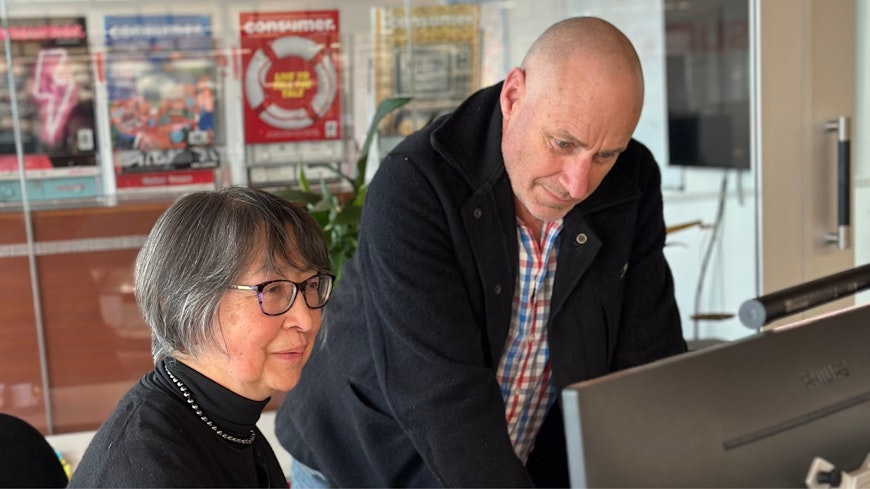
They’ve both been with Consumer for years and have legal backgrounds - they know consumer law inside out.
Our members get free access to advice from Maggie and Paul. Between them, they’ve helped thousands of New Zealanders know where they stand on curly consumer issues. We thought it was about time we introduced you to them.
What is involved in your role?
Maggie: Queries come into Consumer every day – they can take the form of emails, phone calls or website and social media comments. We check through each one and, if it’s from one of our members, we provide advice. Sometimes, this involves a bit of research, but we expect that. It’s part and parcel of making sure we have all the facts and are providing the best advice for consumers’ needs.
We also monitor enquiries to help the wider Consumer team understand which issues are of most concern to consumers and identify enquiries and complaints that warrant further investigation for possible publication in this magazine or as online articles.
Plus, we help with media inquiries and any consumer issues that Consumer’s investigations team might be working through.
And throughout all this, we’re keeping up to date with changes to New Zealand’s consumer laws.
What path did you take to become a Consumer adviser?
Maggie: Originally, back in the United Kingdom, I studied law, then moved into different types of social work before training as a nurse. I came to New Zealand over 30 years ago. When my kids were older, I went back to university and picked up another law degree. I worked for a few years in Wellington’s Citizens Advice Bureau (CAB), before eventually becoming area manager of the Wellington branch. Then I was offered this role at Consumer.
Paul: I studied law at university and ended up at Consumer by accident not long after graduating. I never thought of working at Consumer, but I had a friend who worked here, and he asked me to fill in as an adviser because the organisation needed someone urgently. Then I stayed on because I enjoy it so much.
What drives and motivates you in your work?
Paul: It's very satisfying being able to help our members resolve problems, and it's good to work somewhere that has consumer advocacy as the focus rather than profit.
Maggie: I have always had an interest in unmet needs and really enjoyed studying public law and understanding the process for making changes to laws in an MMP [mixed member proportional voting system] environment. I would like to think I have played a role in improving consumer law by using information from members to identify gaps in the existing laws, highlight changes that need to be made and recommend ways to get existing laws enforced.
I also really appreciate the teamwork I experience at Consumer. Paul and I have complementary skills, which is very helpful. And working with the other staff – especially the advocacy, investigative, product and services support teams – always makes me feel like we are a well-oiled unit working as one to improve things for consumers.
Have you noticed any changes or key trends in the consumer space over the time you’ve worked as an adviser?
Maggie: There has been a massive shift from physical letters to emails and phone calls.
Scams are also now obviously different. They used to be very personal – first with the scammers coming around door knocking, then over the phone – but now they are totally faceless via the internet. People used to be much more trusting, and having to train them to be more careful has been difficult.
I also get really annoyed by companies that try to ignore their obligations – especially the Consumer Guarantees Act, which has been around since 1994. There’s no excuse for not knowing how that applies to your industry if you are dealing with domestic customers.
Paul: Obvious changes include the explosion in online shopping and the influence of social media with the faster pace of life. These have opened a lot of opportunities for consumers but also a lot of risks – mainly the risk of being ripped off.
When you're shopping online, it can be difficult to know who you’re dealing with, where they are located and whether they are genuine.
Plus, if you’re dealing with an overseas business, you may find it harder to resolve issues that arise. Our article 7 tips for shopping online provides some useful pointers to consider when looking to spend money online.
If you could share one piece of advice with consumers, what would that be?
Maggie: If you need help as a consumer, ask for it – if not from Consumer NZ, then from CAB or your local Community Law centre, which includes YouthLaw Aotearoa.
At the moment, AI answers aren't reliable enough regarding New Zealand laws – but I’m sure that will change over the next few years. However, I also think there will always be a need for an accessible, bespoke person-to-person service.
Paul: If you are looking to make a purchase, either online or in the flesh, research and read the online reviews (as many as you can stomach) before you make a purchase, not afterwards.

Need our help?
If something’s gone wrong with a product or service, our Consumer Rights Advice Line experts can help you get a fair deal.
Get personal, practical advice you can trust – included when you join from $15 a month.