By Belinda Castles
Researcher | Kairangahau
In Consumer NZ’s supermarket sentiment survey, nearly half the respondents (45%) had noticed more home-brand products on supermarket shelves compared with 1 year ago. Our survey found some staple pantry home brands take up nearly half the range of products available.
Price and value-for-money make up the top reason 62% of people in our survey told us they choose where to shop. So, it’s not surprising 66% of people reported buying more budget or home-brand products. The cheaper price of home-brand products can be a win for consumers.
However, there’s concern the increasing number of home-brand products is limiting choice. In our survey, 47% of people agreed that the number of home-brand grocery items is changing the range available to shoppers.
Home-brand labels are generally produced by existing suppliers to the supermarkets who win the private label contract. This means the supplier of a home-brand label usually produces products under its own brand in competition with the home brand.
According to the Commerce Commission’s 2024 annual grocery report, home brands make up approximately 14.5% of pre-packaged supermarket products.
The report stated suppliers had raised concerns that home brands were receiving preferential treatment over branded products. The commission found no evidence of preferential treatment but acknowledged its compliance monitoring programme was limited to a small number of range reviews.
We wanted to find out if the number of supermarket home-brand products is increasing and home brands are taking over the selection of products available. Our research was based on data from the University of Auckland. The research included availability and price data for 20 product categories across 15 supermarkets in one week in each of August 2024, March 2025 and August 2025.
We found:
for some pantry staples, home brands make up a fair chunk of the products on offer
for other goods, we didn’t notice the number of home brands had increased.
We also discovered you’ll usually pay less for Pams and Pams Value products at Pak’nSave than at New World. We weren’t surprised. In our 2024 supermarket price investigation, we found Pak’nSave was the cheapest store in all three regions we surveyed.
Here’s what we found out about baked beans, canned tomatoes, canned beans and legumes, canned tuna and standard white flour. We’ve also compared ingredients lists and nutrition information panels for some categories.
Baked beans – 400g to 425g
When it comes to baked beans, there’s more product choice at Woolworths than at New World or Pak’nSave.
Woolworths sells 3 home-brand options, including its organic label Macro Organics. We found an additional 11 products to the home-brand options across 5 other brands in the Woolworths stores we surveyed.
During our survey, Woolworths replaced its Baked Beans in Tomato Sauce with Baked Beans in Rich Tomato Sauce. This resulted in an average price increase from $0.99 to $1.56 the days we surveyed. That makes its low-cost Woolworths Essential beans the cheapest brand available at Woolworths.
Although budget-friendly, Woolworths Essentials baked beans has less beans and tomato puree than the other Woolworths home-brand option.
New World and Pak’nSave supermarkets sell Pams and Pams Value baked beans. True to its name, Pams Value is the cheaper option. But it has less beans and tomato puree than regular Pams beans.
It also pays to check the unit price when shopping. Pams Value baked beans come in a smaller 400g rather than 420g can. It’s still the cheapest option per 100g though.
New World sells 9 other baked beans products across 6 brands. Pak’nSave sells 7 additional products across 5 brands.
If you’re watching your salt content, check the sodium content per 100g. Wattie’s Baked Beans has 435mg/100g. The home brands ranged from 230mg to 320mg.
See which brand came out tops in our baked beans taste test.
Baked beans compared
Canned beans and legumes – 400g to 425g
Canned beans and legumes are a great budget option to bulk up meals. They’re also a good source of plant-based protein, unlike other products we found in our investigation into processed foods making protein claims.
From chickpeas to kidney beans, there’s a big choice when it comes to home-brand canned beans and legumes.
Woolworths sells 9 products under its Woolworths label and 9 cans under its Macro Organic brand. In the 5 Woolworths supermarkets we surveyed, all sold more home-brand canned beans and legumes than the other brands we found. Depending on the store, home brand cans made up 54-70% of the range. The other brands sold were Edgell and Delmaine Fine Foods.
There were fewer home-brand options at New World and Pak’nSave – 7 Pams canned beans and legumes were sold at New World and 6 at Pak’nSave. As well as Edgell and Delmaine, these stores also sold beans and legumes from Old El Paso, Wattie’s, Ceres Organics and Chantal Organics.
When it comes to bean content, check the ingredients list. While the home-brand products in our survey contained 60–61% beans, some other brands contain more. The highest bean content was Wattie’s Red Kidney Beans in Spring Water (69%).
Woolworths and Pams home-brand beans were similar in price. All ranged from $0.27 to $0.34 per 100g.
However, there was a big difference when it came to salt content. The healthiest option is to buy beans in spring water rather than brine. All the Pams products in our survey were in brine.
Red kidney beans compared
Canned tomatoes – 400g
Canned tomatoes are a staple in my pantry. I always buy on price – checking the unit price for the cheapest option. That usually means I buy home-brand canned tomatoes, and there are plenty of options to choose from.
At all 5 Woolworths supermarkets we surveyed, there were 9 products across the Essentials, Woolworths and Macro Organic own brands. There were also 18 branded products across Mutti, Wattie’s and Demaine Fine Foods brands (but not all products were available at each store). Home brands make up 33% or more of options depending on the store.
New World and Pak’nSave also sell their traditional home brands (Pams, Pams Value). But we also noticed Pams Organics making an appearance in this category in competition to Woolworths’ organic offering.
But there’s more choice at New World and Pak’nSave when it comes to other brands. We found 33 products across 8 brands at New World and 29 products across 9 brands at Pak’nSave. Not all products were available each week or at every store though.
It’s difficult to compare the percentage of tomatoes you’re getting across brands. Some brands list the percentage of tomatoes only. Others separate out the percentage of juice and that of tomatoes.
Check the nutrition information panel for sodium content too. Some brands, especially the flavoured varieties, have added salt so are higher in sodium.
Canned tuna – 170g to 185g
Canned tuna is a convenient and affordable way to include seafood as part of your diet.
At Woolworths, its home-brand canned tuna (Essentials and Woolworths) made up one-third or more of the 185g options some of the weeks we surveyed. It was a similar situation at New World and Pak’nSave stores.
There’s not much difference in the prices of home-brand tuna that contained skipjack tuna at Woolworths and New World. Pak’nSave prices were cheaper. Prices on average ranged from $1.19 to $1.44 per 100g.
But Woolworths Yellowfin Chunks in Springwater and Woolworths Yellowfin Tuna in Oil were more expensive. These products on average cost $1.89 per 100g. That puts them on par with John West and Sealord products – the other main players in the canned tuna aisle.
Price isn’t the only important consideration when buying canned tuna. Research commissioned by the Marine Stewardship Council in 2024 found that 92% of New Zealand seafood consumers are concerned about the state of the world’s oceans. Pollution and overfishing are the top 2 concerns.
Find out whether you can trust claims like “sustainably caught” and “dolphin friendly” in our investigation into environmental claims on seafood.
Flour – 1.5kg to 5kg
Our members were big fans of home-brand baking goods in our investigation into home brands versus private labels. One member, Heather, said she’d “never noticed them being of lower quality” and finds them much cheaper.
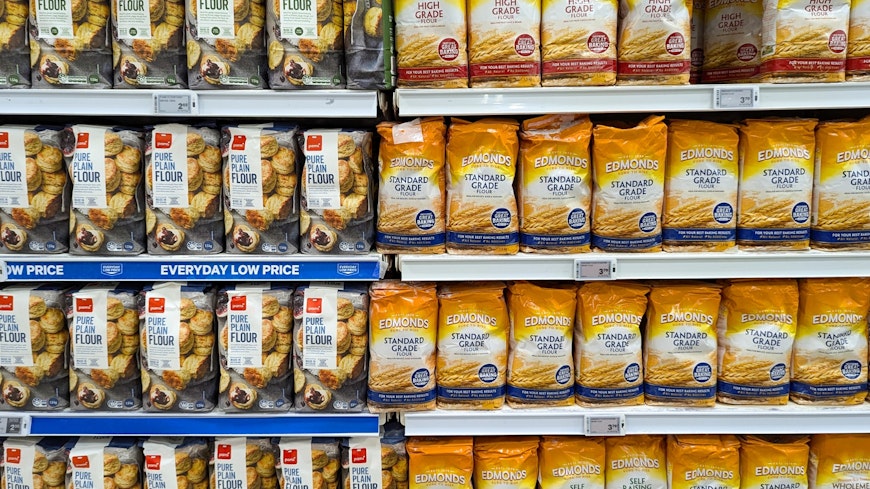
Home brands are big players in the flour aisle. Half the flour products in our survey at Woolworths were home-brand products. It was a similar story at New World and Pak’nSave, with Pams flour sharing the majority of the range with Edmonds flour.
When it comes to flour, there’s little difference between products, so buy on price. Home brands were cheaper than Edmonds for all the flour products we surveyed. Pams flour was slightly cheaper at Pak’nSave compared with New World.
Flour comes in different sizes, so check the unit price to see if a larger size will cost you less. We found the unit price was identical for Pams Pure Flour whether you bought the 1.5kg or 5kg bag. Learn how unit pricing can help you save money at the supermarket.
Flour compared
What you need to know about home brands
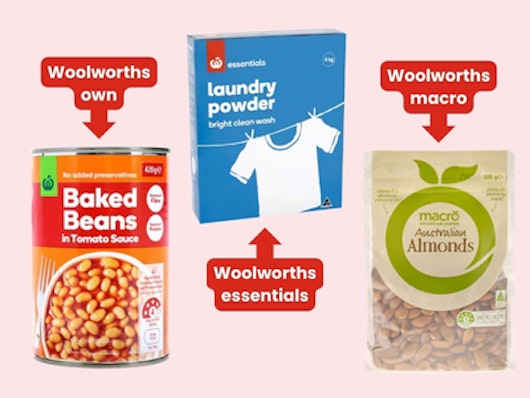
Woolworths home brands
Woolworths own (green Woolworths symbol)
Essentials (red Woolworths symbol) – budget option
Macro (organic range).
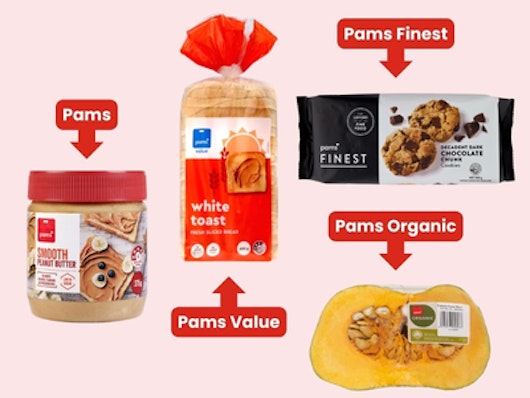
Foodstuffs home brands
Pams
Pams Value – budget option
Pams Finest – premium option. However, we didn’t find any products for this option in the categories we surveyed
Pams Organic – organic range.
We will be keeping the pressure on the grocery commissioner to ensure the monitoring of home-brand products is ongoing. It is important consumer choice isn’t limited to advantage supermarkets’ bottom line.
Supermarkets response
Woolworths said:
The increased demand for our Woolworths, Essentials, and Macro ranges reflects our commitment to offering affordable, high-quality alternatives during a tough cost-of-living period.
We disagree that our Own Brands are limiting choice. We are committed to maintaining a broad assortment of national and local brands alongside our value options.
Foodstuffs said:
Home brands remain a relatively small share of the overall range. Pams products make up around 14% of our grocery offering.
Pams provide a good-quality, low-price option, and the Pams Value range is specifically designed to meet the needs of customers who are watching every dollar.
Home brands are not replacing other products. For every Pams or Pams Value product on shelf, customers will continue to find comparable branded alternatives.
Our shelf-ranging process treats home brands and supplier brands on the same footing. Decisions are based on customer demand, performance, price competitiveness, quality, and available space – not brand ownership.
About our data
The data used for this research article were obtained from the University of Auckland Transdisciplinary Real Cost of Food Database.
Data was collected from 15 online supermarkets in a single week in each of August 2024 and March and August 2025.
The supermarkets were:
Auckland (Woolworths Manukau, New World Papatoetoe, Pak’nSave Manukau)
Wellington (Woolworths Lower Hutt, New World Hutt City, Pak’nSave Lower Hutt)
Hastings (Woolworths Hastings, New World Hastings, Pak’nSave Hastings)
Christchurch (Woolworths Church Corner, New World Ilam, Pak’nSave Riccarton)
Dunedin (Woolworths Dunedin South, New World City Centre, Pak’nSave Dunedin South).
Prices listed in this article are based on an average price across stores for each product. Price collected was the current price and may include specials. Not all products were available in each supermarket each week we surveyed.
Other supermarkets not in our survey may sell a bigger or smaller range of products.
Unit pricing – the secret to saving at the supermarket
Find out more about how to use unit pricing to save at the supermarket.