By Kate Harvey
Writer | Kaituhi
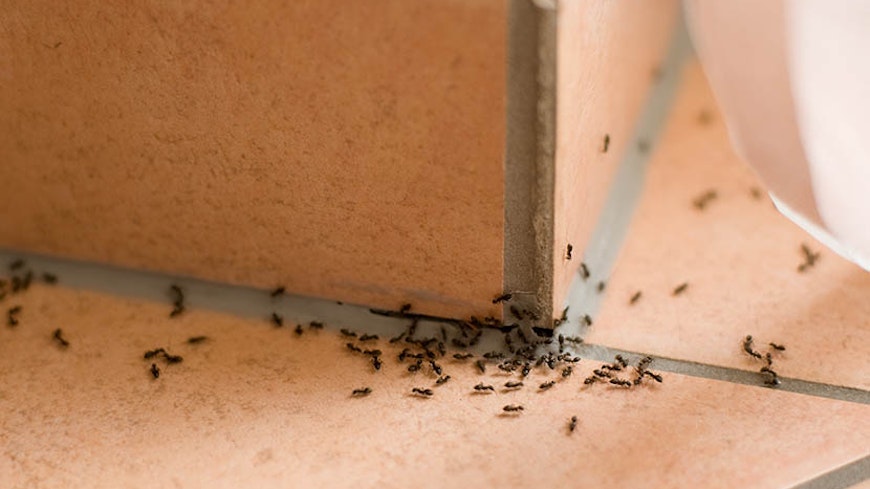
Spotted a trail of ants in your kitchen? We asked pest control experts what works and what doesn’t.
What type of ant is infesting your home?
It’s important to know what type of ant you’ve got before you try to get rid of them – different types require different control methods.
The most common ant invader of New Zealand homes is the white-footed ant. These come from Indonesia and are black with pale feet (though you’d need a good magnifying glass to see that).
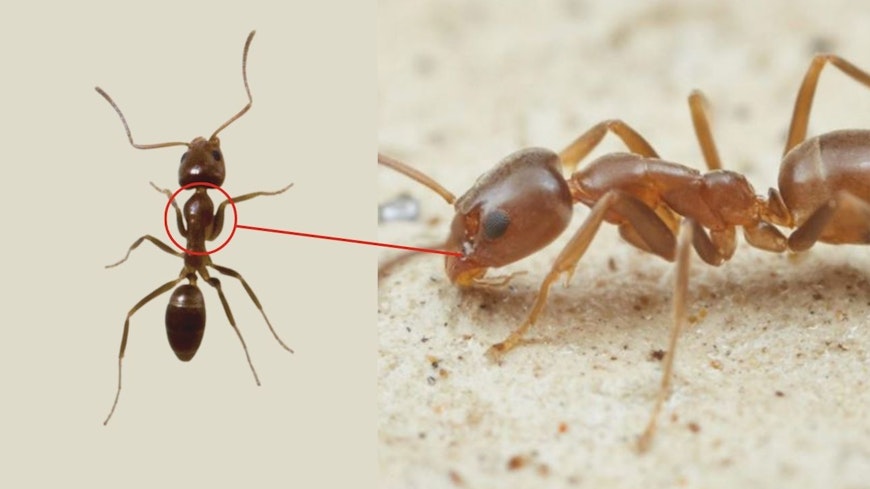
The other common house invader is the Argentine ant, which is more of a honey-brown colour.
The coastal brown ant is causing issues in the Auckland region, while the common black ant can also be found scavenging for food in homes.
We’ll focus on the two main culprits: the white-footed ant and the Argentine ant.
Paul Chapman has been a pest eradicator for 43 years, initially in his native Lebanon where he took over the family business, and now in Wellington where he runs his own companies, Pestproof Pest Control and The Antman.
If you can’t be sure which type of ant you have in your home, there’s an easy trick, he said.
“If you see the trails outside, put your hand on the path of the trail. The white-footed ants will scatter but the Argentine ants will just go over as if there is no obstacle, as if it was a bridge.”
White-footed ants
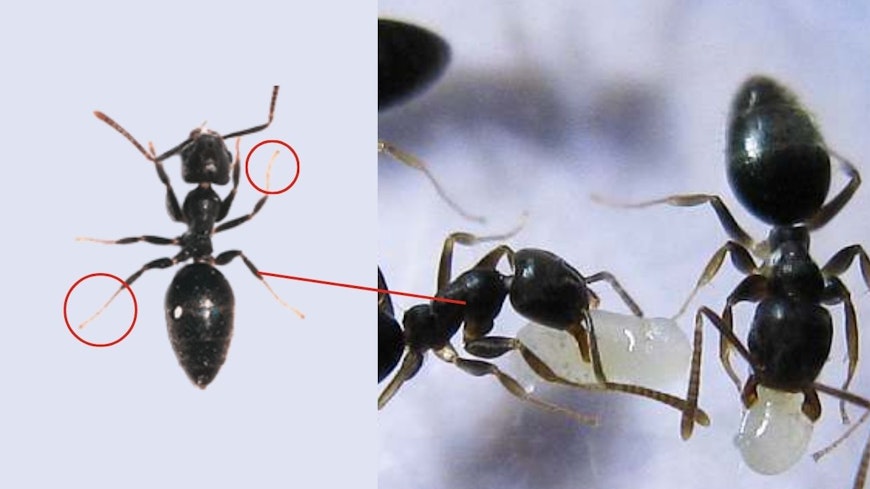
There is a common misconception that all ants live outside in nests and come into your house to get food, Chapman said. But for white-footed ants, the inner walls, ceiling and subfloor of your home are their habitat, and they go outside for food.
“People go and get spray and spray the trails outside, thinking they are preventing them from entering,” he explained. “But they are actually preventing them from getting food from the garden, so they will instead look for food inside your house.”
While he doesn’t discourage people from trying to deal with ants themselves, he warns that many people get it wrong.
“They apply bait in the house. The colonies have two parts – a foraging team that feed outside; they don’t share food. When they eat most over-the-counter baits, they only poison themselves and don’t pass it on to the rest of the colony.
“The rest of the colony [back at the nest] relies on a supply of unfertilised eggs as their source of food. When the queen notices the number of foraging ants is down, she produces more eggs to compensate for the losses.”
Ants will also notice a high mortality rate and split the colony around the house to reduce the risk of extermination, Chapman said.
“You’ll only be successful if you keep using bait religiously inside and outside for about two years.”
That’s why most professional pest eradicators tend to use different baits and formulations that cause a domino-effect pattern of death in the colony.
Chapman said it’s actually easier for the pest experts if people haven’t given it a half-hearted go already, because this can cause the colony to split up.
“It’s a bit like spreading a virus in a computer network – you want the network connected for it to work.”
Nic Bolton, co-owner of Combat Pest Control, said in his experience baits are never enough to fully eliminate ants, because white-footed ants learn to avoid them, and the workers stop collecting from them.
Pest controllers have access to restricted sprays designed to specifically break down ant colonies over time, he said.
Argentine ants
Argentine ants are one of the world’s top 10 invasive species, posing a serious threat to New Zealand's biodiversity.
Unlike the white-footed ants, which are black, Argentine ants are a honey-brown colour. And they don’t live in the cavities of the house; they live outside but raid houses for food. They prefer warm, dry, elevated sites in urban and natural areas, often in soil.
“They are so avid for proteins, they attack bird chicks in their nests,” Chapman said.
The Department of Conservation (DOC) warns that Argentine ants kill and displace native invertebrates that many indigenous species depend on. They will eat lizards, bird eggs and newly hatched chicks, potentially threatening endangered populations. And they devour the food sources that native fauna rely on.
However, getting rid of them is a bit easier than with the white-footed species, Chapman reckons.
He said for white-footed ants, pest controllers tend to spray around the outside of the house. But for Argentine ants, they go as far as possible towards the property boundary. Eradication works best if the neighbours do it too.
DOC also warns that eradicating Argentine ants needs to be done properly, because Argentine ants link their nests within super-colonies which can extend hundreds of metres.
DOC recommends setting out multiple bait stations near established trails, especially along the edges of paths and borders, and refreshing any liquid baits regularly.
Bolton has seen his share of Argentine ant super-colonies which spread across multiple properties. Baits can be ineffective depending on their content, he said.
“As most baits are carbohydrate based, Argentine ants are often not interested in them. As they prefer proteins, they can be found cleaning up things like dead geckos, birds, bugs, et cetera. Argentines are also quite partial to wet cat and dog food.”