By Nick Gelling
Product Test Journalist | Kaipūrongo Whakamātautau Hautaonga
Buying foreign cash from your bank is a thing of the past. App-based travel cards like Wise and Revolut have offered cheaper, more convenient ways to spend money while overseas, forcing other card issuers to step up, too.

As a result, while Wise and Revolut are sometimes cheapest, we’ve found certain credit cards that can compete with them both.
Choosing a more costly option can add up to 4% more in fees on every dollar you spend. That can easily turn into hundreds wasted. Why not spend that money on your holiday instead?
On this page
How we found the cheapest way to access money abroad
To find the cheapest option, we compared the cost of accessing travel money using:
Wise and Revolut travel cards
debit and credit cards
Travelex cash withdrawal
traditional travel cards.
We based our survey on a month-long trip, visiting the United Kingdom, France and the United States, with a three-day stint in Australia on the way home. These trips were allocated £2,500, €1,000, US$1,000 and AU$1,000 respectively.
It’s always good to have some local currency in your pocket. For each country, we included one cash withdrawal to assess any fees for overseas withdrawals.
We assumed most people already have a debit or credit card so didn’t consider introductory offers or start-up costs for those options. We did include the start-up costs for travel cards and services like Wise or Revolut.
Most credit cards have extended interest-free periods, so we’ve assumed the bill for day-to-day spending has been paid off without incurring interest.
Wise and Revolut: new travel cards that could save you money
Best credit cards for travel: 2 cards are miles ahead
Can you just use your debit or credit card for travel?
If you can’t bear to download another app or carry another card, there’s some good news. Using any debit or credit card is now a perfectly reasonable way to spend your money abroad.
However, while everyday cards offer a simple solution to spending money overseas, there are a couple of drawbacks.
You remain vulnerable to shifts in the value of the New Zealand dollar on currency markets. That means the same €5 coffee and croissant could cost you more at the end of your holiday than it did at the start.
You can never be sure how much you’re spending. Your card provider sets the exchange rate as you spend, and the costs are only realised in New Zealand dollars once they hit your bank account.
By way of comparison, Revolut and Wise allow you to purchase your foreign currency at the start of your trip, or when the exchange rate is favourable, and store it in a currency-specific account. This locks in the exchange rate so that your €5 coffee and croissant always will cost the same amount, regardless of how the dollar shifts.
Even if you decide not to use your everyday card as your main way of spending while travelling, it’s still good to have it with you as backup, so your eggs aren’t all in one basket.

Choose the right travel insurance
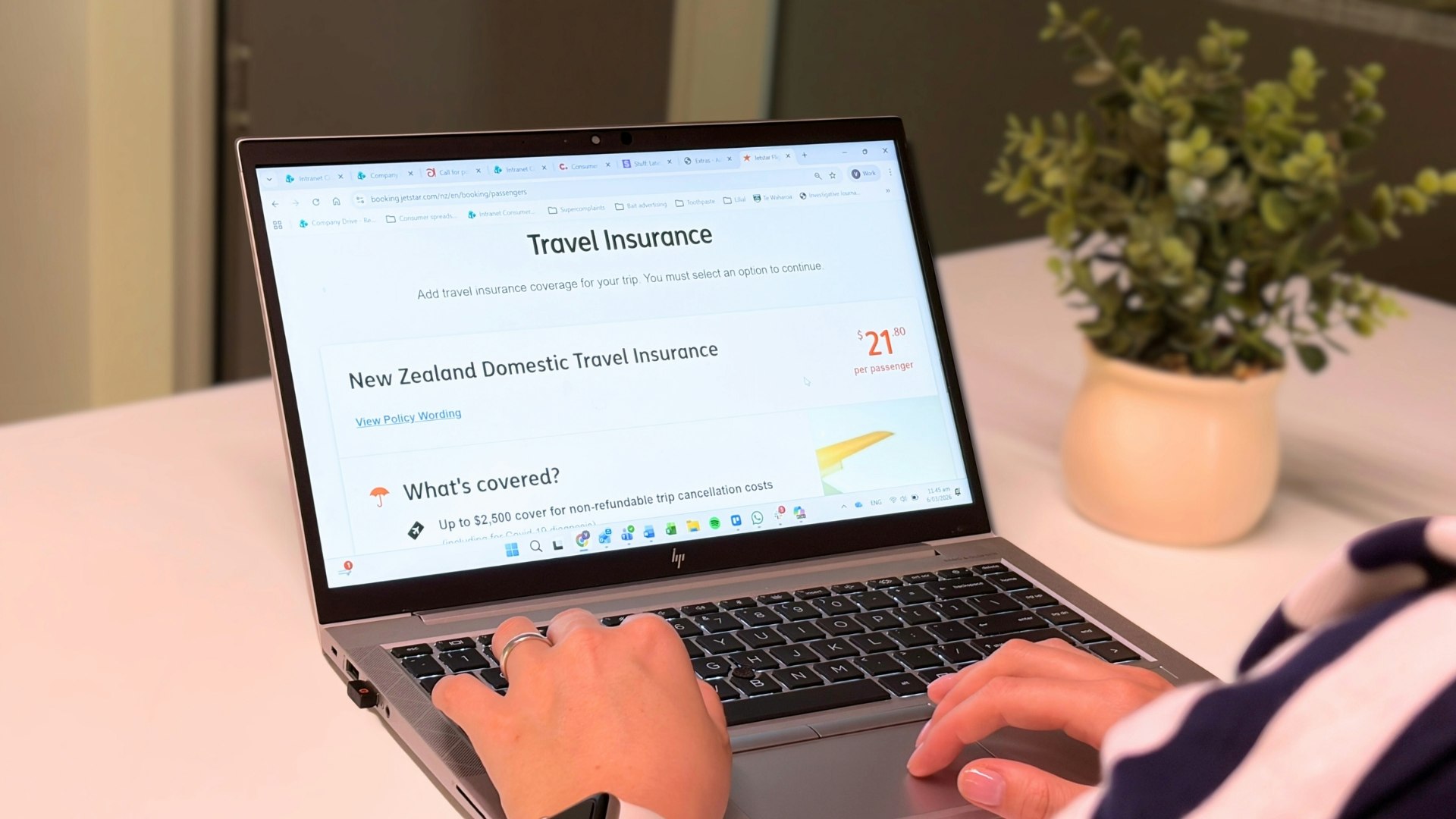
It's your safety net if anything goes awry overseas. Find out what to look for when choosing travel insurance and what's covered, then compare a range of comprehensive policies.
Buying and withdrawing foreign cash
Foreign cash is increasingly hard to come by, more expensive to purchase and less practical than the other options. But it’s always good to carry a small amount of local currency for emergencies or if you’re going off the beaten track.
However, we wouldn’t recommend carrying all the money you need for your trip in cash.
Losing your card might be an inconvenience – but losing that much cash would be a disaster.
If you want local currency on your trip, we recommend withdrawing it once you’ve arrived using a debit or Wise or Revolut card.
Avoid using a credit card to withdraw cash or you’ll be stung with a high ‘cash advance’ interest rate beginning on the day you withdraw. Cash advance interest rates are 10% p.a. at minimum, and both ANZ and BNZ charge more than 20% p.a. on their cards.
If you’re a Westpac customer, also be aware that Westpac charges $3 for overseas ATM withdrawals, even on debit cards.
If an ATM offers the choice of being charged in the local currency or in New Zealand dollars, always choose the local currency.
What about traditional travel cards?

We can't do this without you.
As an independent non-profit, we depend on the generous support of our members and donors to keep us fighting for a better deal.