By Rebecca Styles
Research Lead | Hautū Rangahau
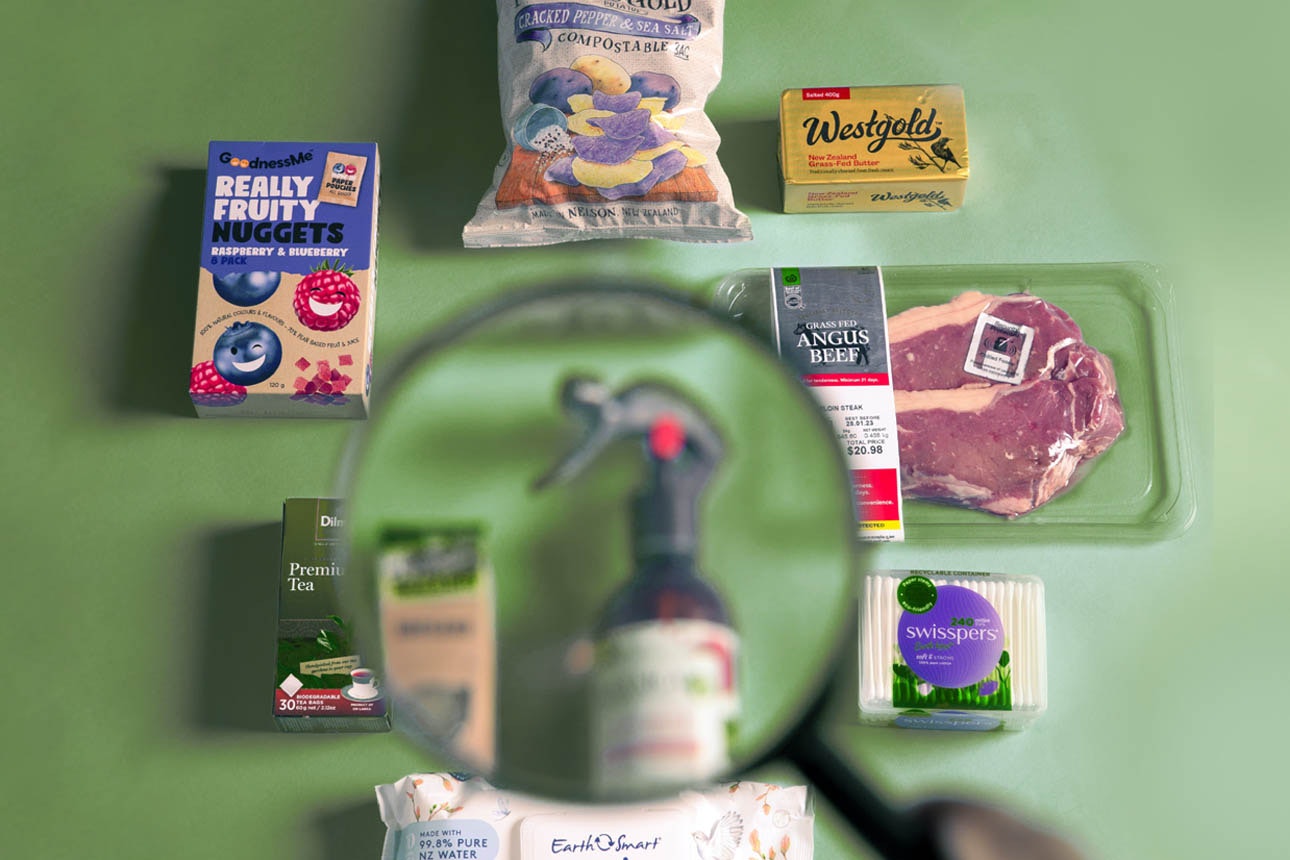
From dog poo bags to the produce section of the supermarket, green claims and sustainable options seem to be everywhere. But a closer look has revealed some dubious claims. Here’s a rundown on the worst offenders we’ve found this year.

1. There’s no such thing as a sustainable single-use plastic bag
The use of the phrase “a most sustainable alternative” on boxes of Masterpet’s dog poo bags was so egregious we awarded Masterpet a Yeah Nah award.
Masterpet produces the Vitapet and Yours Droolly brands of dog poo bags. While the bags are technically home and industrially compostable, it’s more likely they’ll end up in landfill. That’s because there are very limited industrial composting facilities in Aotearoa – and even if there is one close by, it won’t take poo.
If you did want to compost the bags at home, you’d need a separate compost system that isn’t used on any food crops.
There’s no environmental benefit to using a compostable product, if it isn’t composted at the end of its life.
There’s also a common misconception that compostable plastics will biodegrade quicker in landfill, but that’s not the case.
2. The plastic produce bag ban has created a loophole
In July 2023, the government banned single-use plastic produce bags, among other plastic products.
Yet, our investigation found that rather than using less packaging in the produce aisles, at Woolworths “plastic in the produce section has likely increased”.
The plastic bag ban has meant that supermarkets are selling more pre-packaged produce, which is allowed under the new rules. So, rather than buying loose apples, they’re sold in pre-packed plastic bags.
We found that 69% of produce was sold pre-packaged at Woolworths, 42% at New World and 47% at Pak’nSave. Most of the produce that was wrapped in plastic was the stores’ own-branded goods.
While both supermarket chains have lofty sustainability goals, we’re not seeing much action in reducing plastic. Given most of the packaged produce bears the store name, the supermarkets could reduce the use of plastic if they chose to.
3. Not all the soft plastic you take to the soft plastic recycling scheme is being recycled
We cased out Future Post, a soft plastic recycler that turns soft plastic and milk bottles into fence posts. We followed a truck as it loaded up with plastic and drove to a landfill site.
Future Post takes plastic from industry – big names like Fonterra and Nestle boast of their involvement with the scheme. You may have also contributed to its collection by taking your bread bags and other food wrappers to the Soft Plastics Recycling Scheme bins at supermarkets.
When we asked Future Post why it took a load of plastic to the dump, it said the plastic wasn’t suitable for recycling. Our sources think otherwise.
Despite the evidence, the companies that send their plastic to Future Post are continuing to back the scheme.
On our subsequent visits to the Future Post site, we’ve seen more and more plastic stockpiled.
While Future Post may have started from the best intentions in the world, we think these kind of recycling schemes enable businesses to keep using hard-to-recycle plastic packaging. They also put the onus on consumers for recycling the packaging, rather than encouraging businesses to think of more sustainable solutions.
4. Polyester is never eco friendly
We investigated environmental claims on cosmetics and came across a Garnier Micellar Reuseable Eco Pad.
While the pads can be reused and chucked into the washing machine once a week, they’re made from polyester – a fabric that’s likely to shed microplastics and therefore is not very “eco”.
5. How to check your sunscreen is reef safe
Many sunscreen brands are using green claims like “reef-safe”, “reef-friendly” and “ocean-friendly”, but there’s no standard or official definition about what these terms mean.
However, so long as your sunscreen is water resistant and meets the mandatory Australian and New Zealand sunscreen standard, it will be safer for coral reefs and the aquatic environment in general compared to sunscreens meeting overseas standards.
All of the sunscreens listed in our database comply with the mandatory standard.

Help stop greenwashing in Aotearoa
We need your help to call out dodgy 'green’ claims.