By Amy McNabb
Test Data Analyst | Kaitātari Raraunga Whakamātautau
Bone conduction headphones differ from other types primarily by conducting sound vibrations through your cheekbones instead of directing the sound through your ear canals. This keeps your ears clear so you can still hear environmental noises. They’re often called ‘open-ear’ headphones.
They rate poorly in tests in which sound quality is given the most weight. But they serve a very different purpose from other types of headphones. It’s not possible to match others on sound when the intention is to let in environmental noises that ultimately compete with what you’re listening to.
We trialled the latest model by Shokz (previously AfterShokz), the OpenRun Pro, to see the advantages and disadvantages compared with other types of headphones. We also looked at how the significantly cheaper Lenovo X3 Pro stacked up in comparison.
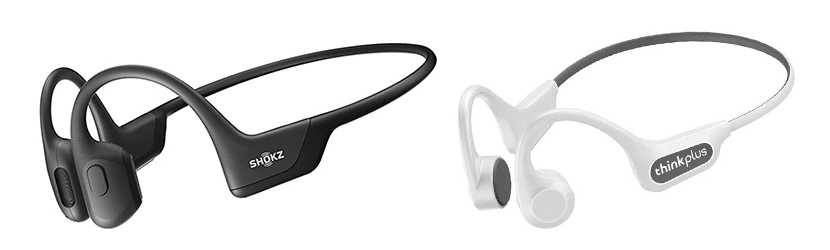
Left: Shokz OpenRun Pro, right: Lenovo X3 Pro.