All you need to know to make the right tyre choice. We explain the types of tyres available and provide tips on making your tyres last longer.

Paying too much for car insurance?
Our latest survey results found you could save hundreds of dollars a year by shopping around.
Low-pro or no-go?
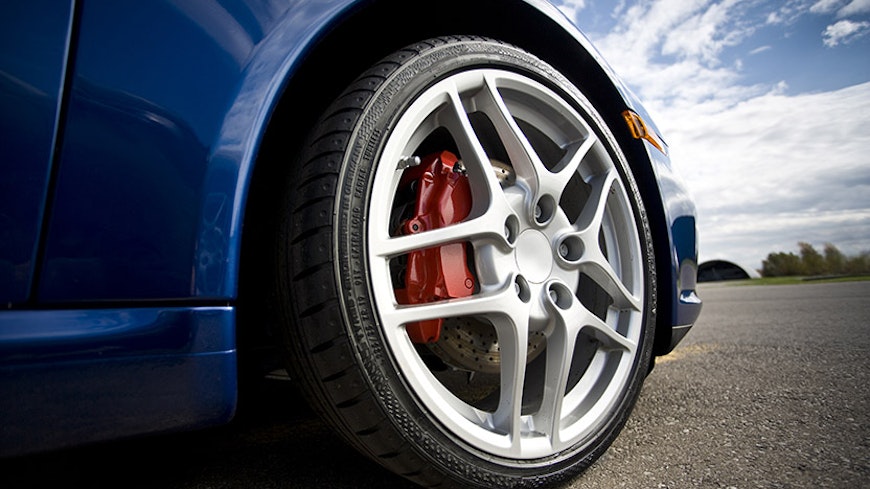
Many carmakers offer their vehicles with two or three different wheel sizes within a range, typically increasing the wheel size and decreasing the tyre profile for higher trim-levels. The theory is a wider contact area generally improves roadholding and braking, while a shorter sidewall is stiffer and deforms less during cornering, which in turn sharpens steering response. It’s not just performance though, some people simply prefer the look of low-profile tyres – a larger wheel size can give a sense of sportiness or prestige to a vehicle.
The lows of low-profile
Our roads can be rough. Driving in New Zealand, you are less likely to roll smoothly on tar-sealed Euro-style highways and more likely to rumble over coarse chip-seal roads. Your tyres, an integral part of your car’s suspension system, are on the frontline when dealing with humps, potholes and other road irregularities. As tyre profile reduces, so does the tyre’s ability to absorb and cushion bumps, which results in a less comfortable ride. Additionally, the chance of your tyres, wheels and other components suffering impact damage increases.
Size matters
Fitting after-market wheels and tyres of a different size to those specified in your owner’s manual may upset your car’s balance and can potentially be dangerous. Altering your tyres’ overall diameter can affect the calibration of your speedometer and odometer. If you want bigger wheels and low-profile tyres, we advise seeing a tyre specialist.
Rolling resistance
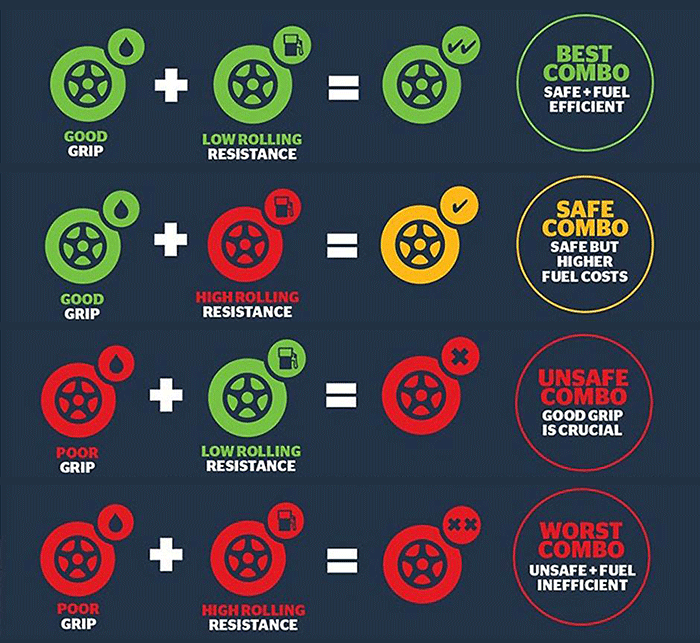
A car fitted with low-rolling-resistance tyres will require less force to roll down the road, so they’ll be more fuel efficient than standard tyres.
Most tyres grip well in the dry. It’s the combination of good wet grip and low rolling resistance that’s more difficult to achieve.
Which last longest?
Some tyres have a tread-wear rating on their sidewalls, but local tyre-makers say the ratings often have little relevance to New Zealand conditions.
And long-lasting tyres may not be a good thing. The US consumer organisation Consumer Reports says tyres that last too long may pose a safety risk, because rubber-compounds deteriorate with age.
Some major car manufacturers have recommended throwing away tyres after 6 years, regardless of wear.
Tyres are usually date-coded, so a tyre dealer can work out if a tyre is really old. In New Zealand tyre wear is fairly rapid, so 6-year-old tyres aren’t common – except for imported second-hand tyres.
If long life is your priority, ask your tyre dealer for a model with a good tread life. Just be aware that long tread-life and good grip don’t always go together.
Tips for tyre shopping
When shopping for tyres, here are a few tips:
Where possible buy tyres with good grip and low rolling resistance – this means you’ll get the best of both worlds. Ask your tyre retailer which tyres meet these criteria.
Phone around. During our surveys we find large variations in tyre prices. Retailers running specials were able to sell some models around $100 cheaper per tyre than others. Haggle for the best price using quotes from other fitters.
Consider the total price of your new tyres. Quotes for tyre prices should include fitting and balancing cost, but also ask about wheel alignment – you might get this offered at a discounted rate. If you are shopping for budget tyres, it might be worth paying a little more for Premium tyres that come with a road hazard warranty.
Tyre prices can be difficult to find online – most fitters will only offer a quote in person or over the phone. But check websites such as hyperdrive.co.nz who offer a wide range of tyres with online prices that include local fitting.
How to read a tyre
Each tyre has standard markings that allow you to pick the right type for your car. It’s a confusing mix of letters and numbers, and of measurements in mm and inches. Here’s what it all means.
All new tyres are marked with a size and speed rating such as 185/65R14 86H. This means:
To keep the tyre grip evenly balanced when cornering, a car must have the same size and type of tyre on the left and right wheels on an axle (and usually the same size all round). Marking the size means WOF inspectors can easily check that your car has the right-sized tyres.
It also helps you. When you’re looking for the best price on a replacement tyre you need to be able to quote the size (and sometimes the load and speed ratings).
The triangle on the sidewall points to a small bar in the tread grooves, which shows the minimum tread depth. The letters “TWI” or the maker’s logo are alternative sidewall markings for the indicator.
Standard markings can reveal the tyre’s origin. All tyres (except some Australian-made ones) should have at least one of these marks.
E = European, plus an approval number.
DOT = American, plus an approval number.
JIS = Japanese.
NZS 5453 = New Zealand Standard for locally made tyres (though tyres are no longer made in New Zealand).
There may also be information about the construction: number of plies and ply material, tubeless rating and information about suitable uses, or how to correctly mount the tyre (see Directional tyres, above).
How to buy
Replace a single tyre with the same type and size (a different brand is acceptable in an emergency). Don’t mix an old cross-ply type with a radial, or a steel belt with a fabric-belt tyre on the same vehicle. This can make the vehicle too difficult to handle safely and is against the law.
Put the tyres with the best grip on the rear. If you lose grip, it’s easier to control an understeer than a rear-end oversteer.
WOF rules say you can fit tyres that are no more than 5 percent larger or smaller in diameter (so replacing tyres up to 20” diameter with tyres 1” larger or smaller is fine). If they are wider, the tread must not extend outside the body panels and the vehicle’s track (the distance between the centreline of tyres on an axle) must not vary by more than 25mm. Anything bigger in diameter or width will require a modified certificate.
Tyre care
Some users get exceptional distances out of their tyres. How? They look after them.
A 20 percent drop in pressure (from 26psi to 21psi) increases the rate of wear by 20 percent. Severe over-inflation also causes wear, but a 10 percent increase has a very small effect.
Underinflated tyres can reduce fuel efficiency by up to 4 percent.
As well as wearing faster and using more fuel, soft (under-inflated) tyres have an unstable hold on the road. And if your tyre pressures are uneven (with different levels of inflation), you could end up out of control on a corner.
Keep the pressures at the manufacturer’s recommended levels, and remember to adjust upwards for heavy loads or prolonged high-speed driving. You should be able to find the manufacturer’s recommendations in your car’s handbook, or on a sticker that’s often on or near the driver’s door. Otherwise, ask your car dealer or a tyre company what the recommended levels are.
Buy your own gauge. Petrol station gauges are often inaccurate. And don’t forget to check the spare.
Have the wheels balanced and aligned when you fit new tyres.
Have the alignment checked if you have a severe impact with a kerb or very large pothole or rock, or notice wear and/or feathering of the edges when you check your tyre pressures.
Go gently through bends and avoid heavy braking.
It’s normal for front-wheel-drive cars to wear the front tyres more rapidly. Rotate the tyres every 10,000km to even out the wear. The legal minimum is 1.5mm in all principal grooves around the circumference of the tyre (it used to be 1.5mm of tread over 75 percent of the tyre). The tread wear indicators will guide you, or you can use a tread-depth gauge to keep track. They cost around $10. Tyre dealers usually do free checks.
If your tyres are wearing rapidly or unevenly, or if the steering pulls to the side, have the wheel balance and alignment checked (cost: usually around $70).
Now that WoF periods have been extended for many cars, it’s important to keep up car maintenance. For a quick DIY car safety check go to www.nzta.govt.nz/checkyourcar.
Given good operating conditions, regular rotation and a conservative driving style, a set of new premium steel-belt radials should last for 50,000km or more. Expect less from around-town use with lots of turning and braking, or high-speed use with hard cornering and braking
Space-saver spares
The NZTA has imposed a speed limit of 80km/h, which is marked on the label.
You’re supposed to drive on it only for a short distance - to get yourself home or to deliver the car to the nearest tyre fitter.
Keep it pumped up tight to the pressure marked on the label or tyre. This is usually around 60psi or 420kPa. They are safe only when used at the right pressure, which is usually at least twice that of a normal tyre.
Used within the guidelines, they are safe. Running them too soft or too fast can be dangerous.
If you would rather have a proper spare, and you want to keep your costs down, check the wreckers’ yards. You may be able to pick up a cheap rim (we’ve seen them for $30 to $50) and then get a good second-hand tyre put on it. Make sure it will fit your hubs and the spare wheel well.
Watch those emergency repairs as well. “String repairs”, where a length of stringy material is forced through the hole from the outside, or sealant repairs (injected through the tyre valve) are not permanent. Both are done without removing the tyre from the rim and are not safe for long-term use.
If you get one of these done, you should have the tyre taken off the car and fixed properly as soon as possible.
4WD tyres
Given the cost of 4WD tyres – $200 to over $500 – it’s well worth thinking about.
Tyre companies offer a compromise: 4WD tyres designed for the road. They don’t have the macho tractor-tread look and won’t be so useful in the mud, but they’ll last longer and give better braking on wet tarseal.
However, if you drive a 4WD that never leaves the road, you still need tyres that are designed for the vehicle. That’s usually because of the extra weight involved.
When buying, it’s useful to know 4WD tyres frequently have their sizes measured in old fashioned inches. The alternative is metric – the same way as car tyres. Yes, it just adds to the confusion!
A 4WD tyre with the markings 31 x 10.50 R15 LT M/S 109Q means ...