By Kate Harvey
Content Manager | Pou Whakahaere Ihirangi
Paper jams right in the middle of printing a big document. Slow print speeds when you’re racing to grab your printout and go. Error messages that take a chunk of your day to sort out. Printers are meant to make our lives easier, but somehow can press all our buttons while most of theirs remain a mystery to us.
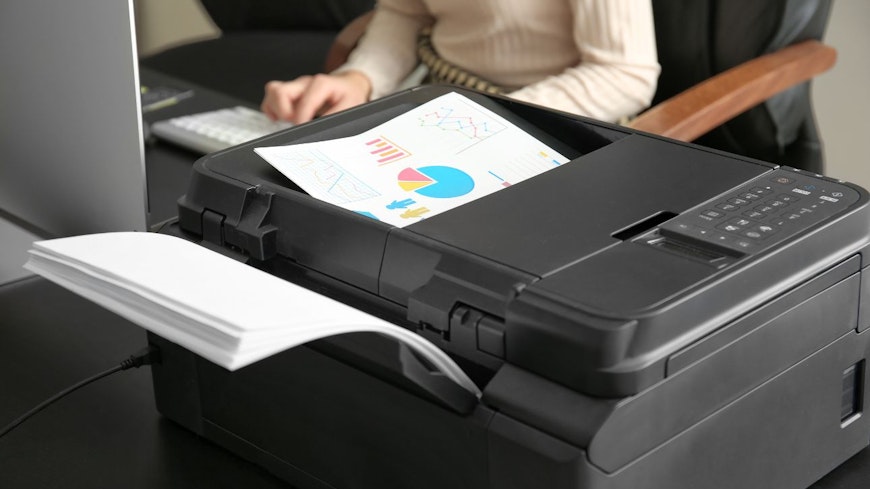
The biggest annoyance of all though, is when you realise your printer’s out of ink – yet again! Printers can be cheap to buy, but reality comes crashing in if you find yourself with an ink-thirsty one and are constantly forking out for ink to keep it going.
So, when you’re standing in the printer aisle, how do you know which ones will cost you a fortune in ink?
That’s where we come in. One of the things we look for when we test printers is how much ink they use. We also look at how much power they use – some can even use a surprising amount when they’re just in standby mode, because they’re always waiting to get the nod from your device to start printing.
We give each printer we test an “energy and ink use” score so you can get an idea of whether it’s one that will cost you a lot in the long run. We’ve got test results for 65 printers at the moment, and the highest energy and ink use score is 89, and the lowest 49.
What type of printers use the least ink?
Printers that use ink cartridges are usually cheap – manufacturers know once you start having to replace the ink cartridges that’s when they’ll get their money. Unless you’re getting a printer just to print a page once in a blue moon, you’d be better off paying the higher price for an ink tank model.
Ink tank printers have refillable high-capacity ink tanks that don’t need to be topped up anywhere as often as you have to replace cartridges. They also create less waste.
Worst printers in our test for ink and power use
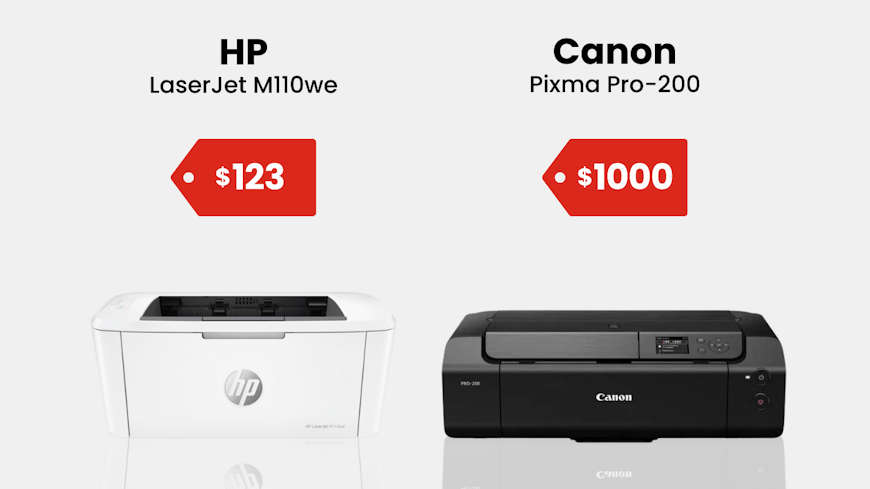
The printer that gets the worst score for energy and ink use is the HP LaserJet M110we. With an extra-low price tag of $123, you can see why people might think it’s a bargain.
The printer with the second worst energy and ink use score is the pricey Canon Pixma Pro-200. At nearly $1,000, it demonstrates how tricky it is to assess these things when you’re standing in the store or scrolling online.
If you’re ready to buy a printer, the easiest way to find one with low ongoing costs is to view our test results.
Great printers that don’t use a lot of ink
Top tests and reviews
Find the best products for your home with our top expert tests and reviews.