By James le Page
Former Product Test Team Leader | Kaiārahi Kapa Whakamātau Hautaonga
I recently bit the $8,500 bullet and had a hot water heat pump installed at my home, leading to immediate savings of $42 per fortnight.
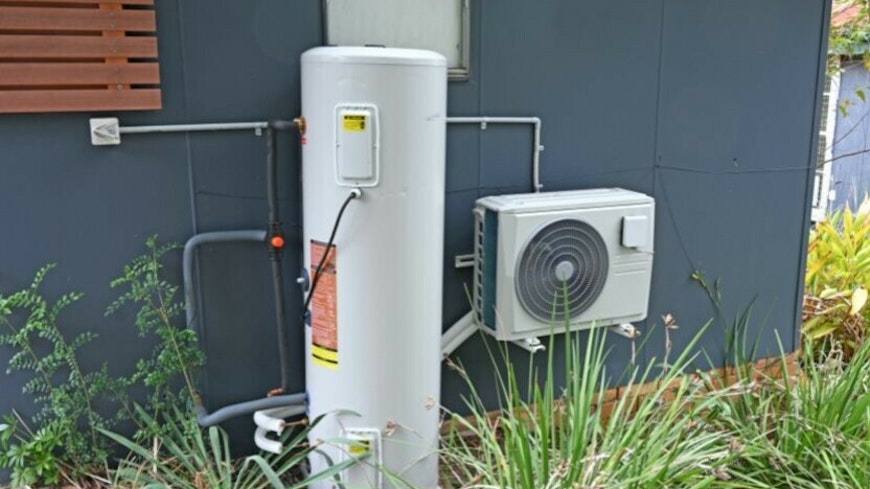
Hot water heat pump (HWHP) systems take the concept of traditional electric hot water cylinder, but instead of an element use a heat pump to heat the water.
Heat pumps are more efficient at heating rooms than electric heaters, and it turns out the same is true when it comes to heating water. Once I got over the initial cost of buying and installing the system, the ongoing savings on power started immediately.
Here’s what I learnt.
Top tips for installing a hot water heat pump
Plan to replace a failing hot water system before it dies rather than wait until it’s totally kaput. When you don’t have hot water, you realise how imperative it is, and your options dwindle.
Always ask for a better deal. The local plumber we went with initially quoted $9,800 for the install. This was for the 275L Rinnai HydraHeat top-spec model. I asked for a quote for the lower spec 265L Rinnai Enviroflo GR and a better deal than the recommended price listed on the Rinnai website. The plumber gave me what I asked for.
As the tech is relatively new, choose a known brand you can trust and rely on for future maintenance and service.
There’s only so much power to go around. If you own a large house and already have an induction hob, an EV charger and a large, ducted heat pump, you might find yourself getting close to the limit of what your home’s power supply can provide. In which case, you’ll need to weigh up the capital cost of upgrading from a single-phase to a two-phase supply to cover the HWHP too.
If you’re home for the day when you have your HWHP installed, expect periods when the water or power or both are switched off.
Time to replace the old hot water cylinder
In January, my family moved to a house with a dilapidated gas-fired external hot water cylinder.
We’d committed to getting rid of gas at our new place and as soon as we moved in, installed a 6kW heat pump in the lounge. So, the central heating is on notice.
Within a few months of moving in, rusty brown hot water was pouring out of our taps, indicating the hot water cylinder was corroding from the inside. My toddler’s bathwater had a brown tinge before he’d even dipped a toe. Time was up for the old cylinder.
The cheapest replacement option was to install an instant gas heater for about $3,000. But we’re getting rid of gas. So, I steeled myself for the HWHP quote and wasn’t surprised when it came in at $8,505 installed.
That was too much for us to pay upfront without help.
Home loan help
Enter Westpac, the same bank we held our home loan with.
Westpac offers up to $50,000 of lending interest free for 5 years with its Greater Choices Home Loan. Borrowers can use the loan to install insulation and double glazing, replace gas with HWHPs, and take other energy efficiency measures.
We were in business and signed up to pay back our loan over 5 years.
Brand and model selection
Comparing HWHP’s isn’t as simple as for other types of water heaters, because they’re not yet regulated for energy efficiency in New Zealand. You also can’t easily compare energy performance between brands, unlike space heating heat pumps, plus differing outside air and water temperatures may affect their coefficient of performance (known as COP, which is a measure of their efficiency).
With that in mind, I decided to rely on brand recognition and longevity.
If I’m installing a water heater, I want to know the brand is going to stick around – in case something goes wrong down the track. Of course, there’s no guarantee a company will survive from year to year, but Rinnai is a water-heating brand I’ve grown up with, so it has my trust.
Rinnai had two spec levels for the hot water cylinder size we were looking for: the latest HydraHeat, with an online price of $6,499 for a 275L tank; and the entry-level Enviroflo GR, which retails for $4,499 for a 265L tank. Both models have more sizes. The Hydraheat is more efficient, but I balked at the cost and went with the (relatively) cheaper Enviroflo option.
Installation of the hot water heat pump
This was a bigger job than I’d expected. The plumbers were at the house all day, sorting the pipework and terminating the gas lines, and the electricians took half a day to run a new cable from the switchboard to the HWHP and connect all the electrics.
The cost breakdown in the quote made a bit more sense after this labour revelation. Less than half the overall cost was for the HWHP itself.
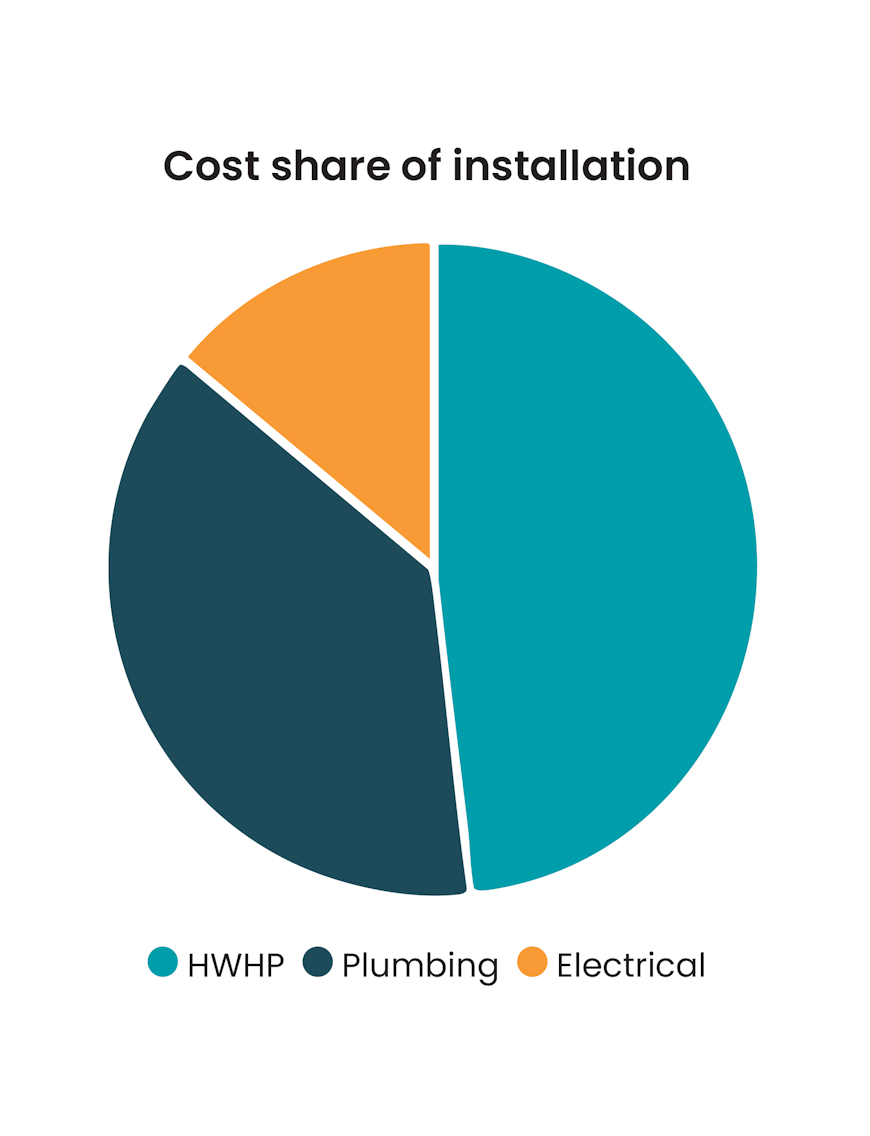
This was the plumber’s first time installing the Enviroflo GR, and the pipework was on the left-hand side of the system, while our old system had everything on the right. That made for a whole lot more faffing at the plumber’s end.
I was given comprehensive and patient instructions on how to use the system and change the settings, as well as a general rundown on the installation process. The system was initially set to ‘hybrid’ mode to heat up – that’s where both the heat pump and the internal electric element (like you’d find in any regular electric cylinder) work together to heat the cylinder to a set temperature of 65°C.
After 3 hours, it was ready. I changed the system’s setting to ‘eco’ mode, where only the heat pump is working to keep the water at 60°C, and escorted my wife to the kitchen to proudly show off the (no longer brown) hot water cascading from the tap.
What happened to my power bill?
Since we hadn’t previously spent a winter in our new home, I couldn’t compare one winter with another. What I could do was compare within the same winter the pre- and post-install power bills to see if there was an immediate impact on costs.
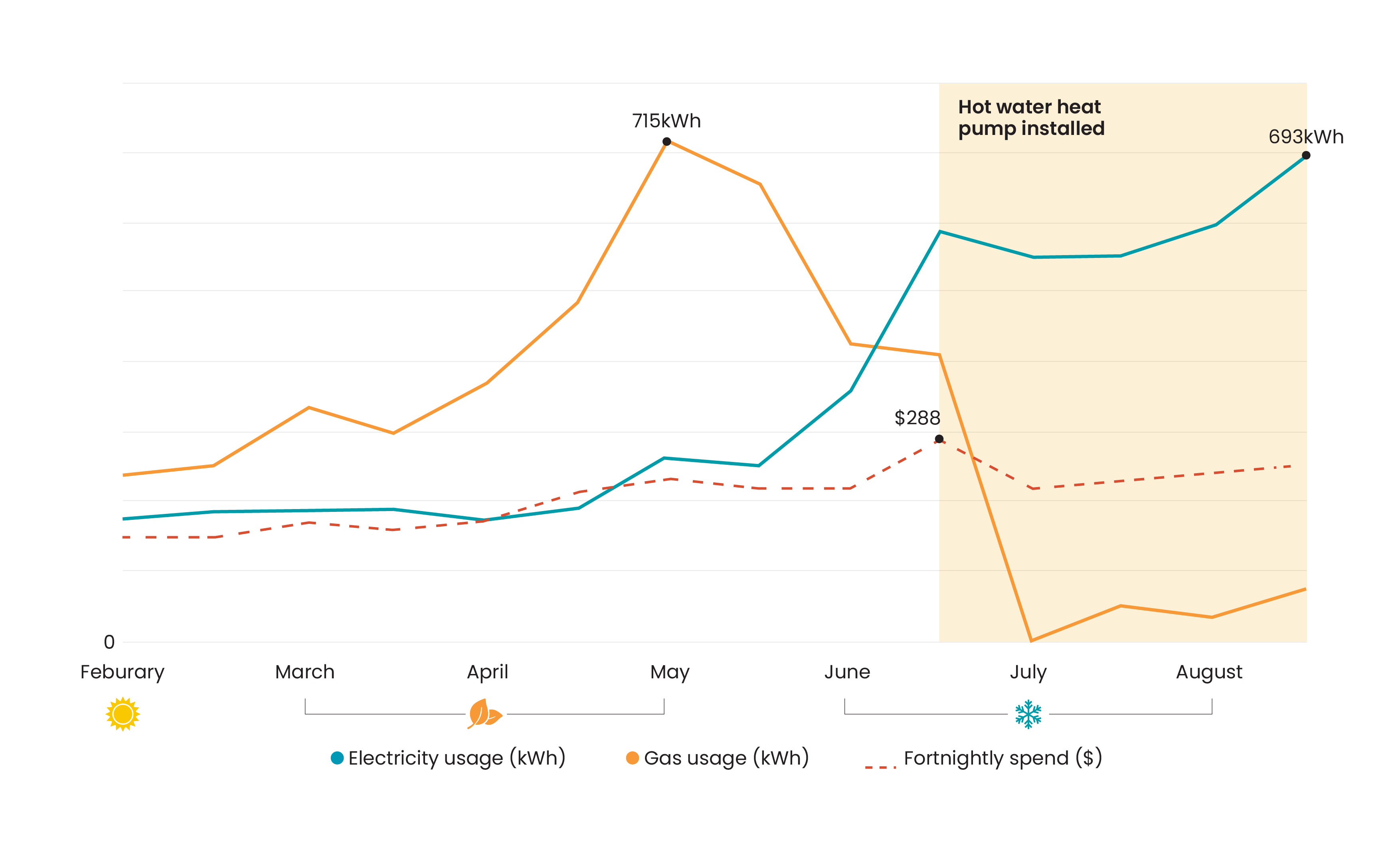
Our gas usage plummeted to near zero because after the HWHP was installed – it was only fuelling the central heating (which we only turned on eight times over winter). Meanwhile, our average electricity usage jumped by 6.2kWh per day.
However, our winter average daily energy costs dropped from $19.25 pre-install to $16.21 post-install. Viewed another way, that’s $42.56 saved per fortnight, a bit more than the $33 we’re paying off at the bank.
At this point, I should have changed from ‘low user’ to ‘standard user’ for electricity and vice versa for gas, but I only noticed the reversal in our energy usage trends in August, when it was too late to save on my winter bills. Had I been more switched on, I could have saved myself $30 per month in gas fixed daily charges and shaved another $30 per month off my bills for electricity.
Now that we have changed our usage plan, we’re all set for the future. The next step will be to disconnect the gas, saving a further $50 a month in fixed daily fees (it costs $192 to disconnect the gas, though).
You pay a real premium for HWHP technology at present, but I reckon we’re onto a real winner. We’re more than covering the bank loan repayments, and the numbers suggest the HWHP will easily cover its total upfront cost within 10 years.
Checklist for buying a hot water heat pump
What are your household’s hot water requirements, and are they likely to change soon? If your household is downsizing, you might not benefit as much from a HWHP system.
Have you got more than one quote, and do the installers have experience installing your chosen system? Go with the more experienced crowd.
Do you have enough space outside your house to site one? Is it away from bedroom windows? My Rinnai is louder than a regular heat pump.
Does your bank offer a green loan with zero interest? If not, you might want to consider moving banks.
How do the quoted hardware costs compare with what others have paid or the manufacturer’s stated costs?
Do you need a building consent to do the work? The installer should know, but double- check with your local council.
During the quoting process, have the installers check the capacity of your switchboard to make sure it can handle the addition of a HWHP
Have you chosen the right size HWHP? Don’t undersize your HWHP or you’ll end up with cold showers. Conversely, an oversized cylinder will have you paying too much for something you don’t need.
If you have a gas connection currently, what are the disconnection costs? (Check with your retailer.)
Hot water heat pumps explained
HWHPs take heat energy from the outside air, using an evaporator coil similar to that found in a refrigerator. The refrigerant liquid in the coil absorbs the heat, which is then transferred into the hot water cylinder via a compressor and heat exchanger.
Essentially, HWHPs use the free heat energy in the air, enabling them to use up to 75% less electricity than conventional electric hot water systems.
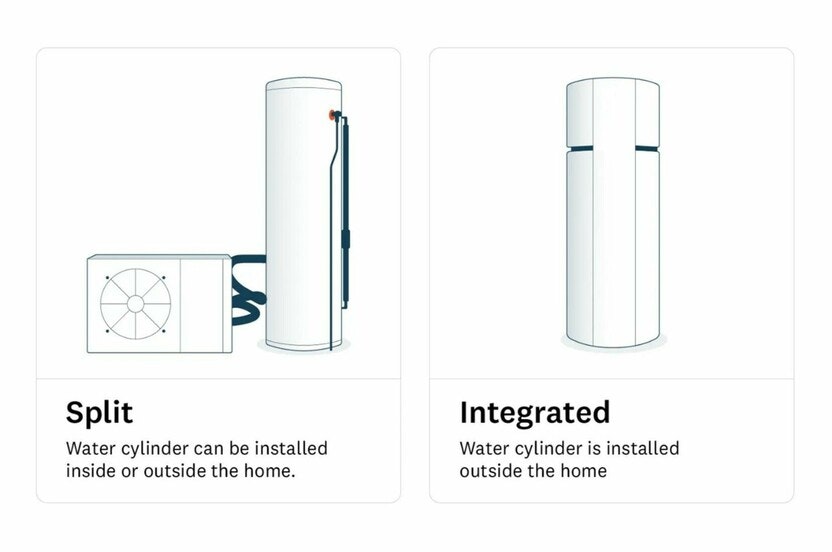
There are two types of HWHP – split and integrated. Split models separate the hot water cylinder from the heat pump compressor, so you can have the tank installed inside your home, with the compressor unit outside. The installation for a split system may be more expensive than for an integrated one, as you need to connect the compressor to the tank and they might be some distance apart.
Integrated units have the compressor sitting on top of the cylinder as a single unit. They must be installed outside but are very well insulated and designed for this, and they are quicker and a little cheaper to install. The market is much larger for integrated systems, so there’s more choice.
Article brought to you in partnership with EECA (the Energy Efficiency and Conservation Authority).