By Amy McNabb
Test Data Analyst | Kaitātari Raraunga Whakamātautau
The Suunto Wing 2 ($350) are bone conduction headphones – the second iteration of the Suunto Wing. They transmit sound vibrations through your cheekbones, keeping your ears free to hear the world around you.
I’ve tested other open-ear designs, including similar models from Shokz. But Suunto’s Wing series have some unique features. They come with a mini power bank, and I was intrigued by the idea of ‘turn & brake’ lighting and being able to control the headphones with head nods.
I wanted to know if such features are genuinely useful, and whether the headphones also provide solid sound and battery performance.
Pros and cons of the Suunto Wing 2
Ears remain free to hear environmental noises
Excellent battery life
Come with an ultralight 500mAh power bank
Lightweight and compact
Stable and comfortable
Durable and highly water resistant
Easy to use
Optional hands-free head gesture controls
Optional LED lighting.
Difficult to hear audio in noisy situations
Sound not as good as in- and over-ear headphones.
Summary
The Suunto Wing 2 have some great safety features: open-ear design, LED lighting and hands-free controls.
The head gesture controls work well on smooth runs and rides, but it’s better to keep them switched off if you’re jolting around, to avoid accidental track changes. The LEDs make you more visible in low light, although can’t be seen from the front or back.
If you don’t care for the extra bells and whistles, the Wing 2 cover all the basics well too. They sound pretty decent for headphones that also let you hear your environment. Plus, they’re comfortable, stable and durable.
The Wing 2 are similar in design to the Shokz OpenRun Pro 2. The Shokz sound better and cost a bit less ($298). But the Suunto Wing 2 are more water resistant (IP66) and come with a wee power bank that gives them an amazing 30+ hours of run time before needing mains power to recharge. That’s more than double that of the competition.
The Wing 2 are ideal for long-distance runs, bike rides and multi-day adventures.
Full review of the Suunto Wing 2
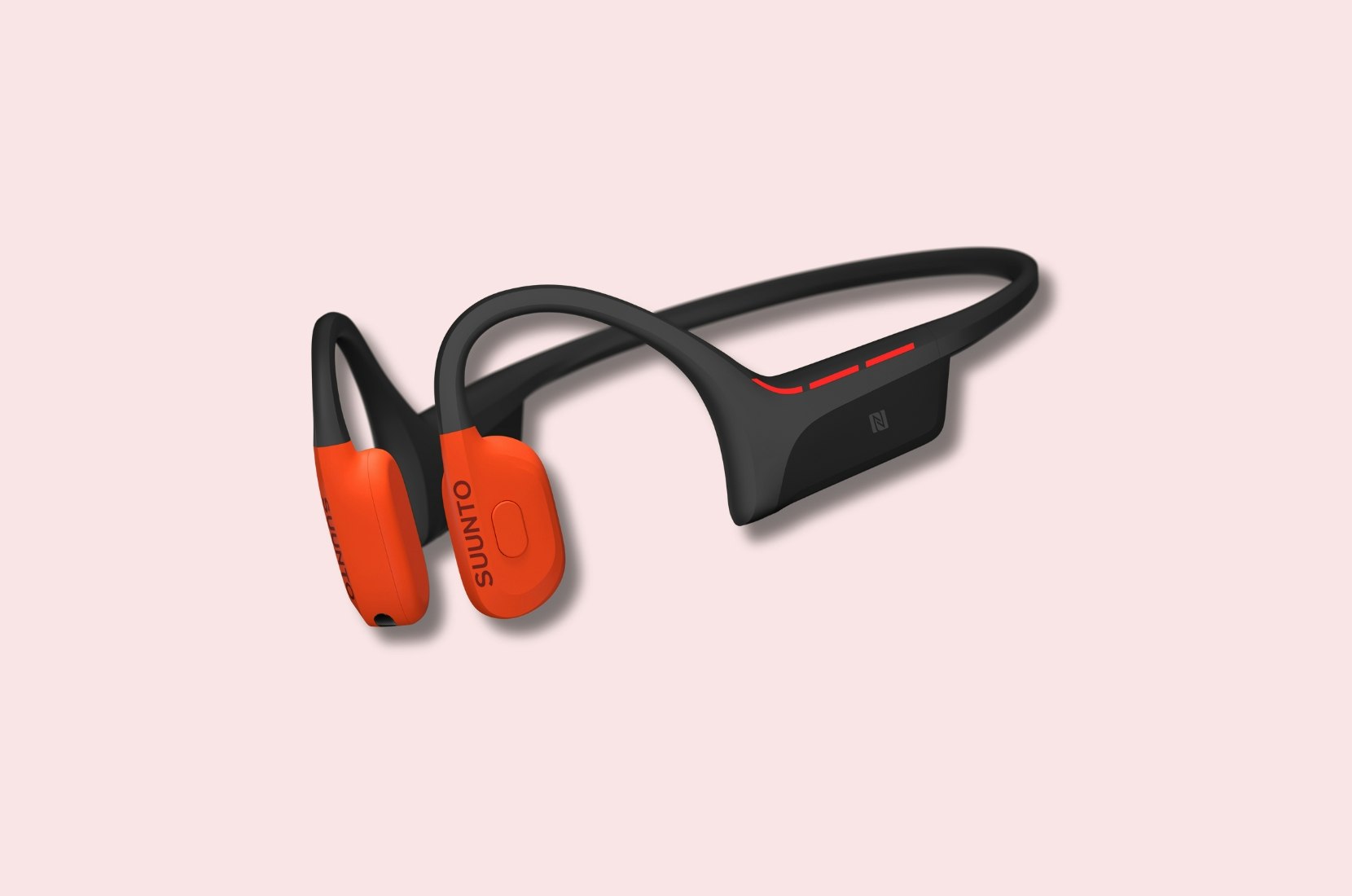
Suunto Wing 2 in black and coral orange. Also available in solid black.
Design and fit
I don’t like blocking out external noise when I’m outdoors – it feels unsafe. I want to hear if a vehicle or person is nearby. In addition, on- and over-ear headphones make my ears hot, and they feel unstable when I’m exercising. And I’ve struggled to find earbuds to fit my tiny ear canals and stay put.
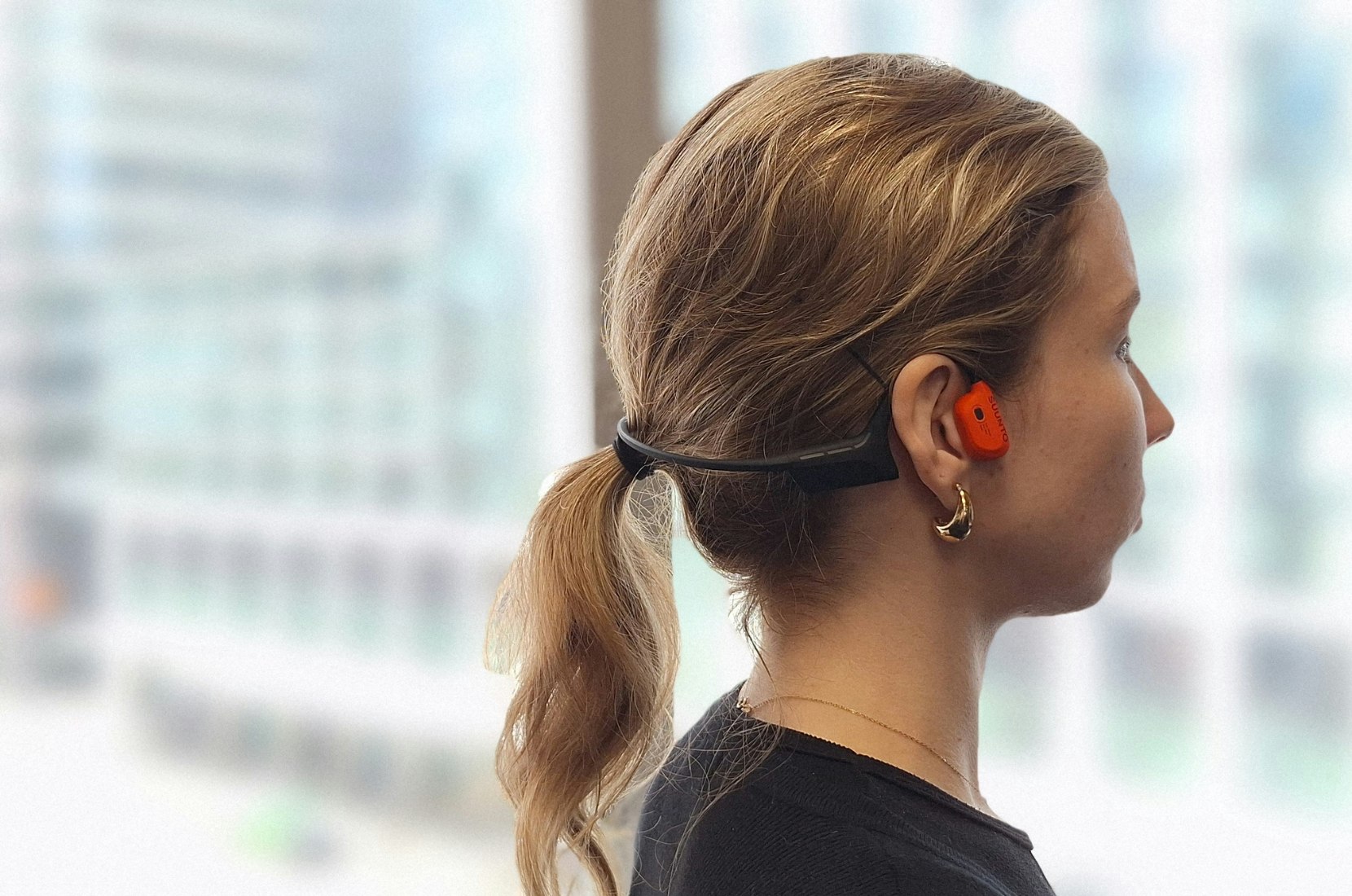
That’s why I’m a fan of open-ear headphones. I particularly like those with ear hooks and a solid bar that goes around the back of your neck for stability, like the Suunto Wing 2. I find this design much easier to put on than models with separate earpieces.
Constructed from titanium alloy and silicone, the Wing 2 feel sturdy and comfortable. They’re similar in design to the Shokz range of bone conduction headphones. They’re just a bit chunkier and, at 35g, slightly heavier than the Shokz OpenRun Pro 2 (31g). The button layout is the same too, with + and – on the right earpiece, and a multifunction button on the left.
The Suunto Wing 2 may not suit smaller heads, though. I have a larger head (58cm), and they feel a bit loose on me. Although secure for upright activities, the earpieces shift slightly when tilting my head up or down – like when tying shoes or during dynamic workouts – making the audio seem quieter.
By contrast, the Shokz OpenRun Pro and Pro 2 have a snugger fit, giving firmer contact with your cheekbones and, therefore, seemingly louder and clearer audio. The Shokz also come in a ‘mini’ size for small heads, which the Suunto Wing 2 don’t.
As with other fixed neck-bar models, the Wing 2’s neck bar stops you listening while lying back on a pillow. But these headphones are designed for quite the opposite – running and cycling outdoors.
If you’ve got long hair, you’ll probably get tangled putting them on and taking them off, unless you tie your hair up. But they work fine with a ponytail. You can also wear them with a running cap and sunglasses, although wearing all three creates pressure behind the ears. After 30 minutes, my head started to hurt.
While many headphones are only splash- or sweat-resistant, the Wing 2 have an ingress protection rating of IP66. That means they’ll cope even if you get caught in a full-on downpour. They’re also highly resistant to dust.
Sound performance
Like other open-ear headphones that let you hear your surroundings, the Suunto Wing 2 don’t deliver the most immersive sound. That’s to be expected. Equally, it can be hard to hear your audio in noisy environments. On Wellington’s busy and windy waterfront, I had to crank the volume to max to hear well.
Even though bone conduction headphones bypass the eardrum, playing them loud for long periods can damage your hearing – specifically the stereocilia, tiny hairs in the inner ear that help decipher sounds.
If you’re heading somewhere noisy, rather than blasting the volume, you can wear the Wing 2 with earplugs. That’s worth knowing, since some open-ear headphones sit too close to your ear canals, getting in the way.
At higher volumes, the Wing 2 produce vibrations that tickle the area just in front of your ears. I’ve noticed this with other bone conduction models too.
The Wing 2 have two sound modes – ‘normal’ and ‘outdoor’. Outdoor mode is louder and sharper, but the sound feels less balanced and a bit harsh, to me. Normal mode sounds similar to – though not quite as good as – the original Shokz OpenRun Pro. And the Wing 2’s maximum volume is quieter.
The sound quality of the Wing 2 is noticeably lower than the Shokz OpenRun Pro 2 (the second version of the OpenRun Pro). There’s an even bigger gap between the Wing 2 and the JBL Soundgear Sense air conduction headphones, which I recently reviewed.
That’s partly because the OpenRun Pro 2 combine bone and air conduction tech, and the JBL speakers sit directly in front of your ear canals. The trade-off is that these designs reduce the ability to hear what’s going on around you – the Wing 2 are better for this.
The Suunto Wing 2 leak a little bit of sound, but it’s not significant.
Wind noise cancelling microphone
The Wing 2 are claimed to have a noise cancelling microphone capable of handling winds up to 30kph. But it’s no match for Wellington’s weather. When walking on a windy day, people I was talking to on the phone could hear significant wind noise. And during the strongest gusts, they couldn’t hear what I was saying.
Controls
The Wing 2’s basic button controls are straightforward, allowing you to play/pause, take calls, skip tracks and adjust the volume. Various button combinations let you switch sound and LED light modes, activate the voice assistant, and more. Some combos are customisable in the app.
The buttons have a positive feel, but the + and – ones are small and fiddly to find while running. That’s because the charging ports are cramped into the same area on the right earpiece. It’d be better if they were on the other earpiece, allowing larger + and – buttons.
Head gesture controls
Something quirky about Suunto’s Wing series is head gesture controls. I wouldn’t choose to use this feature on public transport or walking down a busy street, but this hands-free option can be handy for runners and cyclists. You can answer a call with two nods of your head, or reject a call or skip tracks with a double head shake.
The controls work better than I anticipated. I didn’t have to shake or nod my head as much as I thought I would. And they’re specific enough to prevent accidental triggering on bike rides and smooth runs. But they can cause frequent track skipping if you jump or jolt around, so are less suited to rugged trail runs and dynamic workouts.
I turned the head controls off after a while to prevent unintentionally changing tracks when I’m engrossed in a good audiobook. It also makes the battery last longer.
Lights
Another distinctive feature of the Wing 2 is the row of red LEDs on each side. They have several light modes, such as steady, blinking, and a range of reactive options, including ‘turn & brake’. You can also turn the lights off – that’ll preserve battery life too.
The LEDs can help people see you if you’re running in low light conditions. That’ll add to your safety, especially when running along roads and turning your head to check for traffic.
However, since the LEDs are on the sides, they’re not visible from the front or back. For this reason, the braking part of the ‘turn & brake’ setting – which lights up the LEDs when you suddenly slow or stop – is a bit gimmicky. I tend to run with a bright headlamp when it’s dark, which makes me far more visible than the Wing 2’s LEDs do.
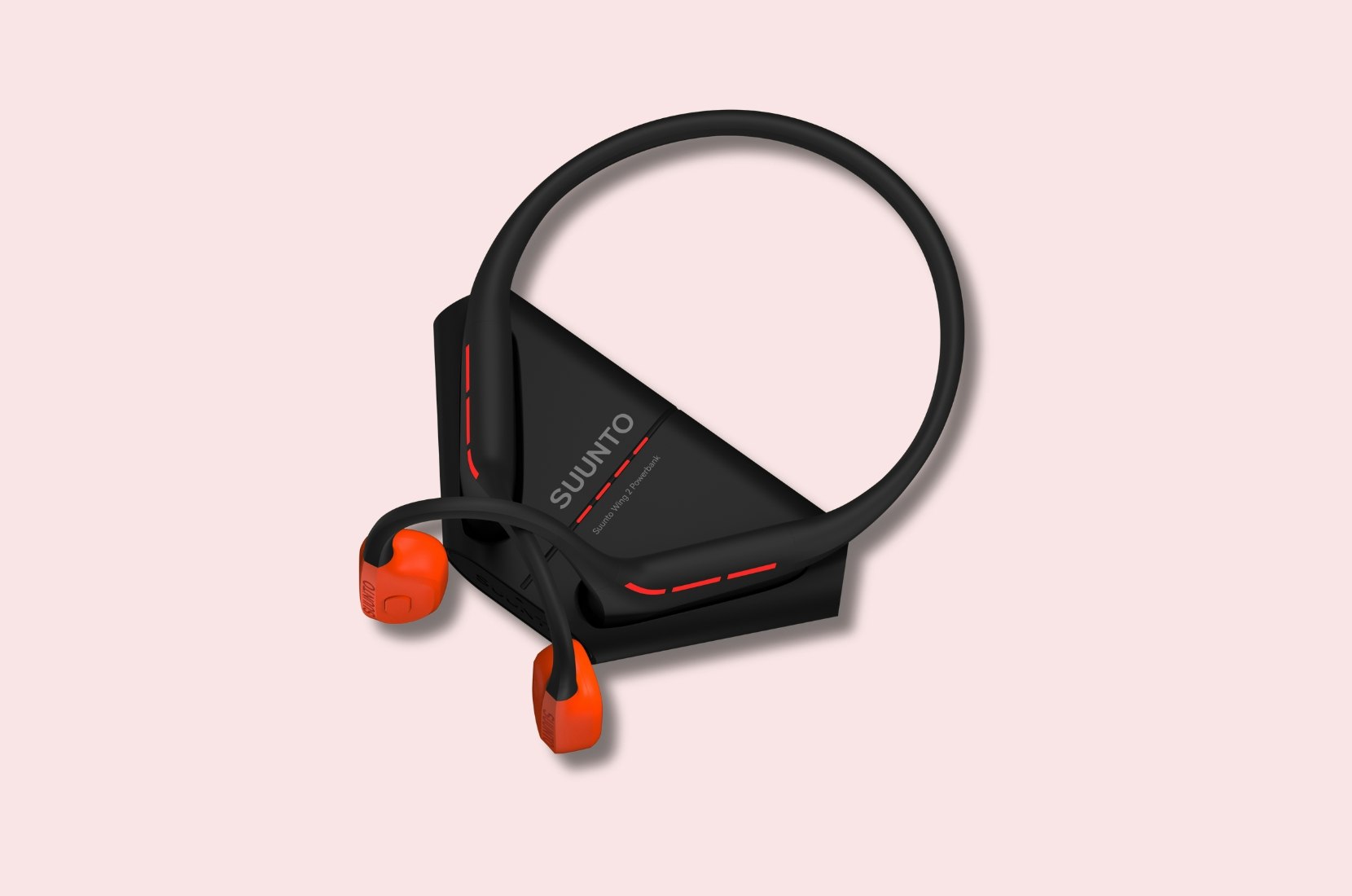
Suunto Wing 2 charging with dedicated power bank.
Battery life and charging
For me, the real standout feature of the Suunto Wing 2 is battery life. The headphones have a built-in 170mAh battery, which Suunto says will give you at least 10 hours’ run time at 60% volume with the lights and head gesture controls switched off. In my trial, they actually ran for a whopping 16 hours and 40 minutes.
The headphones take just under an hour to charge fully from flat. And if you realise just before heading out that you’d forgotten to charge them, 5 minutes plugged in gives you 15% battery. That’s around 2 hours and 45 minutes of run time. Impressive!
In addition, the headphones come with a 500mAh power bank that extends total run time to well over 30 hours. It’s uber light (36g) and takes up minimal space, making the Wing 2 awesome for long-distance runners and cyclists, including those packing light for a multi-day epic. Plus it charges fully in less than 1.5 hours.
Both the headphones and power bank have USB-C ports, so you can charge them with the small cable supplied or any other USB-C cable. The headphones also have a magnetic connector that docks to the power bank.
When the headphones are docked with the power bank, LEDs on both light up to show charging. I was disappointed to find that the LEDs don’t indicate charging progress. But you can tell when the headphones are fully charged, as their LEDs flash, then go out.
To check the headphones’ battery level when in use, you can see a percentage under the Bluetooth settings on your phone or in the Suunto app. You can check the battery level of the power bank by pressing a button on the front. Four LEDs on top show remaining charge in roughly 25% increments.
Suunto app
The Wing 2 are compatible with the Suunto app. It contains a user guide and a bunch of controls and settings for the headphones, including button customisation, LED light modes and sound modes.
You can also use the app and headphones to do a neck mobility assessment to check your cervical spine health, and a jump assessment to measure your neuromuscular fatigue. I didn’t try these assessments and wouldn’t read much into the results.
Note: You might need to pair the Wing 2 with your phone via Bluetooth before downloading the Suunto app. When I downloaded the app first, it couldn’t find the headphones, and I couldn’t pair them to my Samsung Galaxy A54. I had no problem when I downloaded the app last, instead.
Suunto loaned us the Wing 2 to review. All our reviews are independent and unbiased.