By Nick Gelling
Product Test Journalist | Kaipūrongo Whakamātautau Hautaonga
Do you hesitate to flip your heat pump to cooling mode because you don’t know how much the electricity will cost?
Your heat pump will cost roughly the same to run as an air conditioner as it does as a heater in winter. Read on to learn how to calculate the cost per hour so you can judge whether it’s worth switching on.
We’ll also give you some tips for:
staying cool without AC
calculating how much you can save by switching power companies.
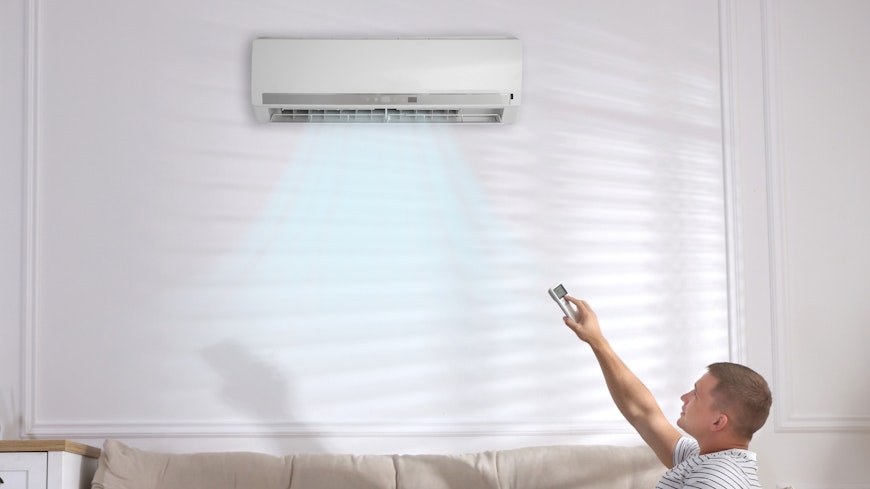
Cooling costs about the same as heating
All heat pumps are fully equipped as air conditioners too. The technology works more or less the same whether you’re in heating or cooling mode.
However, small differences in model design and tuning mean capacities and efficiencies differ slightly between heating and cooling modes. In New Zealand, heat pumps tend to be marginally less efficient in cooling mode. However, they draw less power overall when cooling because they have a lower cooling capacity.
On average, using your heat pump at full capacity, you can expect to spend about 7% less on cooling than you would on heating.
The actual amount depends on your model, but in general, costs are similar.
If it’s time for an upgrade, check out our picks for the best heat pumps for air conditioning.
How to calculate if air con is worth switching on
It’s easy to calculate how much you’ll spend to have your AC working at full power to drop the temperature to your desired level.
First, you’ll need 2 specifications you can find in your product’s manual or by searching its model name.
The cooling capacity (Tip: You can often find this by adding a decimal point to the number in the model code. For example, the Daikin FTXJ35TVMA has a cooling capacity of 3.5kW.)
The energy efficiency ratio (EER). If you can’t find it, use a conservative estimate of 3. The average cooling EER is about 3.9.
Divide the cooling capacity by the EER to find how many kW of electricity your heat pump uses.
Then, multiply that amount by the unit price of your electricity plan to get the cost per hour. If you don’t know your unit price, use the average value of 29c.
For example, a heat pump with a cooling capacity of 8kW and an EER of 4 uses:
8/4 = 2kW of energy, for a cost of 2 x 29 = 58c per hour.
Here are what some common cooling capacities might cost to run.
Knowing this value can help you decide whether your comfort and health is worth an extra dollar or two – we’d suggest, usually, it is.
Once the space is down to your target temperature, your air con has to spend far less energy to maintain it, so the cost drops significantly.
However, if you leave the AC on all day and night, you’ll definitely notice the effect on your power bill.
Cheaper ways to stay cool
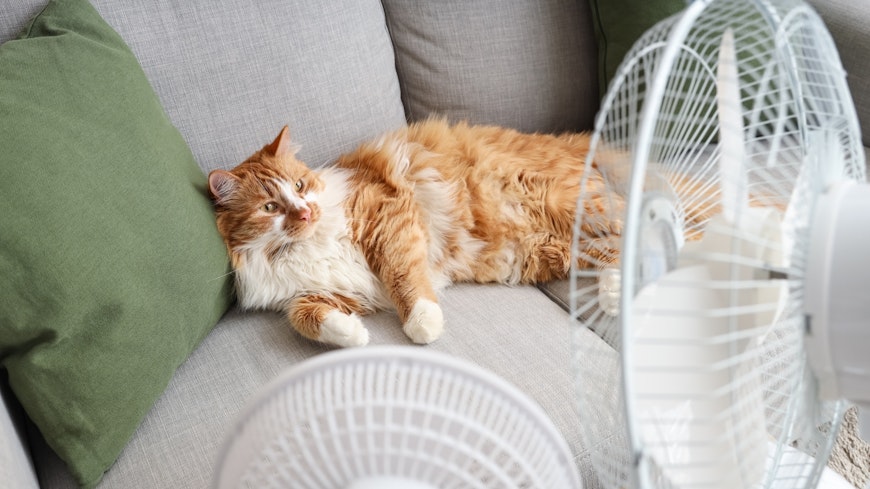
Prefer to keep air conditioning as a last resort? Before you reach for the remote, here are 6 free or low-cost ways to keep the heat down.
Use plug-in fans
Fans don’t use a lot of power because they have small motors. Even running a common 60W pedestal fan for 8 hours a day will only cost you about $4 in power per month.
But don’t expect too much from the humble fan. It’s only effective if it’s pointing right at you as it doesn’t actually cool the air.
However, there is one hack to level up a fan’s impact …
Point the fan outside at night
This might seem crazy, but if it’s hotter inside than out, set up a fan pointing out an open window. The fan will push the hot air out the window, leaving a vacuum that pulls in the cooler outside air.
This will mostly only work at night, when the temperature difference between inside and out is bigger. It can be a lifesaver if your bedroom is too hot to sleep in.
Get clever with cross breezes
If there’s any wind outside, create a cross breeze by opening windows on opposite sides of the house – and the internal doors between them.
This will flush all the warm, humid air from your house, which will make a big difference to how you feel.
Invert your curtain routine
If you know it’ll be a hot day, skip opening the curtains or blinds in the morning. This is especially useful if they’re on west-facing windows, where the hot afternoon sun will hit.
Then, if it’s still too hot after the sun goes down, open as many curtains as privacy allows to let the maximum heat escape.
Stick a film onto your windows
Even with the curtains closed, the sun will heat the back of the curtains, which then radiate heat into the room. What’s more effective is a film applied to windows that let in too much sun. A film’s solar heat gain coefficient (SHGC) tells you how much solar radiation will pass through it. A SHGC of 0.8 means 80% of solar radiation will pass through. Look for the film with the lowest SHGC. The downside to films is they can distort the colours you see outside, making things look darker than they are.
Don’t run appliances during the day
When it’s hot, try to prepare meals that don’t need heating and hold off turning on the dishwasher until later in the evening. Appliances like ovens, cooktops and dishwashers will heat up your kitchen. If you want to cook, you won’t heat the kitchen as much if you use an air fryer.
Clothes dryers can increase air humidity, which makes a hot temperature feel even worse. Try to run the dryer on cooler days or dry your clothes outside.
Bills too high? Find out how much you can save
If you’ve done the maths and don’t think you can afford to switch on the air con, do yourself a favour. Switch to a cheaper electricity provider and spend some of the savings you make on keeping yourself cool.

Powerswitch makes it easy to see if you can save money by switching to a cheaper plan. Plus it’s free and independent!