By Chris Schulz
Investigative Journalist | Kaipūrongo Whakatewhatewha
With an array of new recycle, reuse and repair options on offer, and a repairability bill being heard in parliament, the future looks brighter for broken appliances. Armed with a defunct blender, Consumer went in search of a better way to dispose of it than dumping it in landfill.
It's 10am and the front gates have only just opened, but Alli Mitchell is already hard at work. "We get all sorts of random stuff in here," says the site manager for the Hauraki Repair and Reuse Centre. She points at two fibreglass kayak moulds that have just been delivered. "Someone doesn’t want them anymore. They're filling up a shed.”
After 4 years running the Paeroa recycling facility, Mitchell’s become a master of finding new homes for random things. It is, she says, the facility’s mission to stop things from being sent to landfill. What will Mitchell do with two kayak moulds? "They're a niche product," she admits. She shrugs her shoulders, then has an idea. "We'll probably put them on Trade Me." She sounds confident. "We'll sell them."
That's not all Mitchell's planning on selling. On this rough-and-ready site, more goods are compiled than most big box stores. Nearly everything dropped off here is used and unwanted, but has some life left in it yet. Once the items arrive, they get sorted, checked and assessed. Then they go on display, placed in crates, stockpiled on shelves, dangled from hangers, or thrown in boxes, until they find their new home.
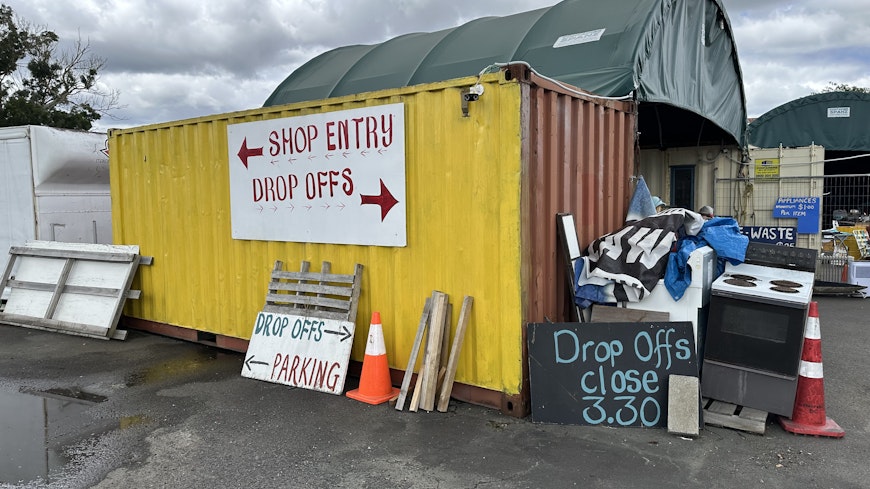
On this sunny Thursday morning, the centre is quickly filled with punters looking for bargains. People dig through boxes of lights, rustle through rooms stocked with kitchen appliances and household electronics, rifle through racks of clothes, pick their way through ovens and stove tops, and check out a room full of comfy couches and chairs, where used books, records and CDs are stacked in neat piles.
Soon, Consumer encounters a customer carrying a planter box. She’s trying to leave, but she’s lost her friend. It’s something that happens regularly at this last-chance saloon. Finally, she finds her – the friend had scurried away to find a bargain herself. "She spotted all these chairs … she’s buying them now,” the customer says. “She’s never been here before. She’s having a wonderful time.”
How much is too much stuff?
The idea came after Mitchell made yet another drive to Thames’ Seagull Centre to drop her own unwanted items there. Mitchell couldn't bring herself to send anything to the dump; she had a hunch many other locals probably felt the same way. A trust was formed, and after four years of fundraising and planning, Mitchell applied to become Paeroa’s site manager. In 2021, the doors opened.
So far, that hunch has proved to be correct. Around 300 tonnes of waste has been stopped from going to the dump. In the process, it’s become Paeroa’s positive version of Needful Things, a place containing almost anything anyone might be looking for but can’t afford, or doesn’t want to buy, brand new. Second-hand bikes, baseball bats, window frames, tools, duvets, weed eaters and leaf blowers; there’s even a near-new copy of the Playstation 2 game, Guitar Hero. “These are near new,” says Mitchell, pointing at gleaming light fittings inside yet another shipping container.
Everything on display might be someone's trash, but could easily be someone else's treasure. "We don't know what's coming when, or how much of it," says Mitchell. She’s standing next to a shelf offering a Vibrofit Pro for sale, a vibrating exercise machine that promises to “amplify your workout results”. It can cost up to $600 new; here, it’s just $50. “We sold three in the last month,” says Mitchell.
It’s the kind of electronic gadget she might see back on her shelves in a few months. “People use them twice and they sit in the garage for a year,” she says. “They’ll probably bring it back.” Yet, if it wasn’t for Mitchell, that Vibrofit would almost certainly head straight to landfill, where it would sit along with the thousands of tonnes of e-waste estimated to be created in Aotearoa each year – forever!
The enormous problem with e-waste
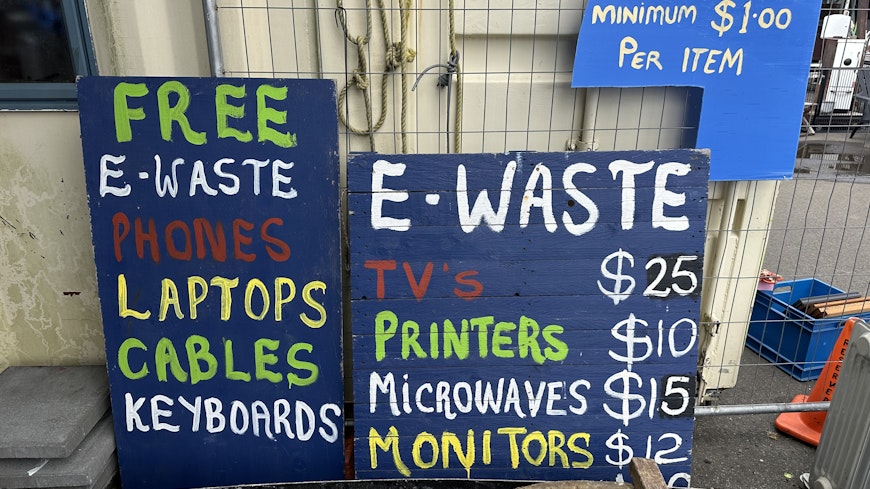
Aotearoa’s problem with e-waste is already huge, and it’s growing. Around 99,000 tonnes of e-waste are believed to be generated in Aotearoa each year, a Massey University study from 2019 suggests. But it’s just an estimate – experts say we don’t track the real amount. Just 2% of that total is believed to be recycled, which means the rest goes to landfill.
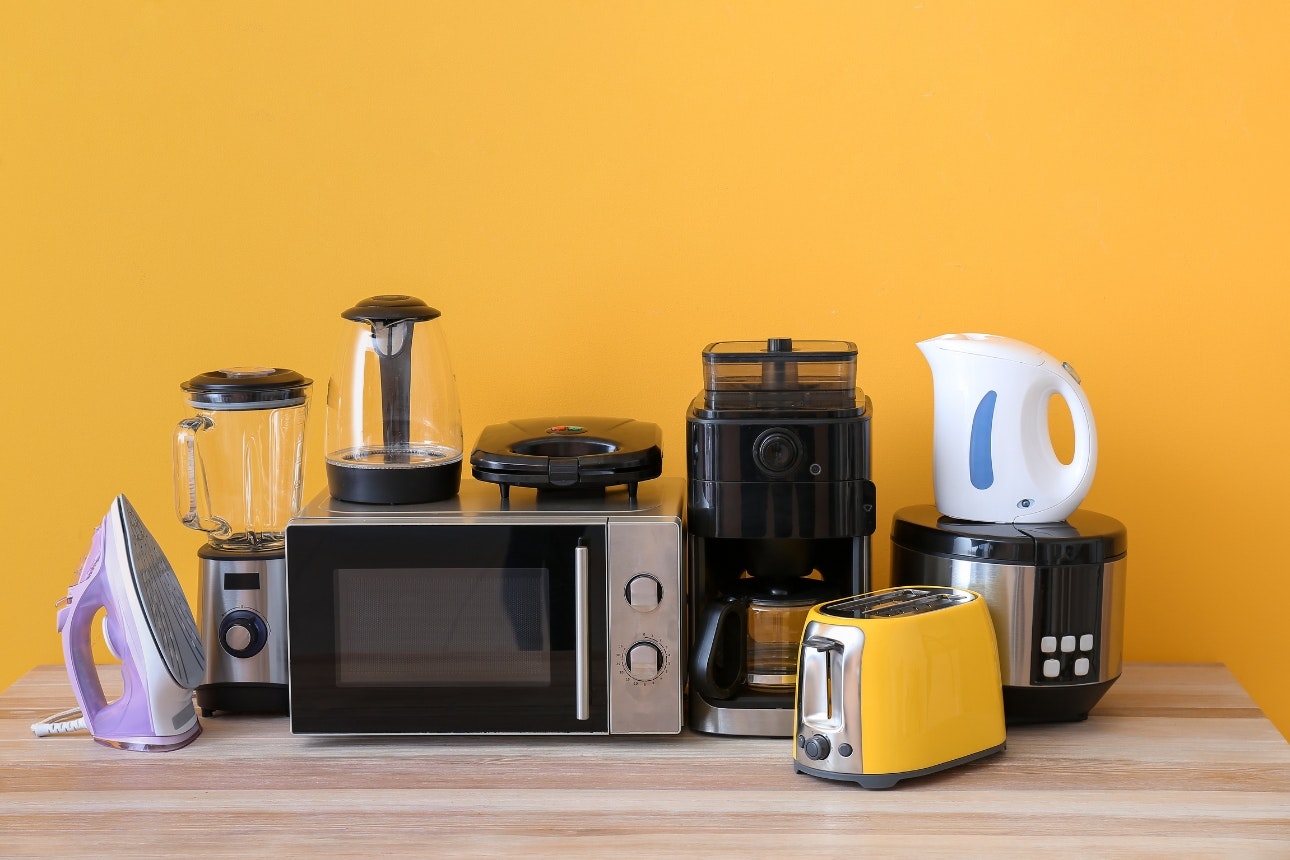
Right now, there are no incentives for businesses to provide repairability or post-life options for the appliances they sell. Often, the cheapest option for consumers is to just throw a malfunctioning item out and buy a new one.
The Right to Repair Amendment Bill hopes to change all that. Introduced to parliament by the Greens in April 2024, it passed its first reading in February 2025 and proposes a law change to remove a loophole that currently allows manufacturers to replace a faulty product instead of repairing it. Consumer has found that, for a lot of small appliances, this often means the faulty product is binned as it’s too expensive to repair or recycle.
Paul Smith, the founder of FixedFirst NZ and a right-to-repair spokesperson, says the bill is a “baby step” compared to other countries. Many have already adopted right-to-repair laws, he says. “We’re falling behind really quickly.”
Smith believes the bill is a move in the right direction; a chance to force companies to be responsible for the lifespan of their products, not just the creation of them. “The only way you get it to work is to say, ‘Look, we'll set the bar low so that everybody achieves that, because then that becomes your business as usual.’”
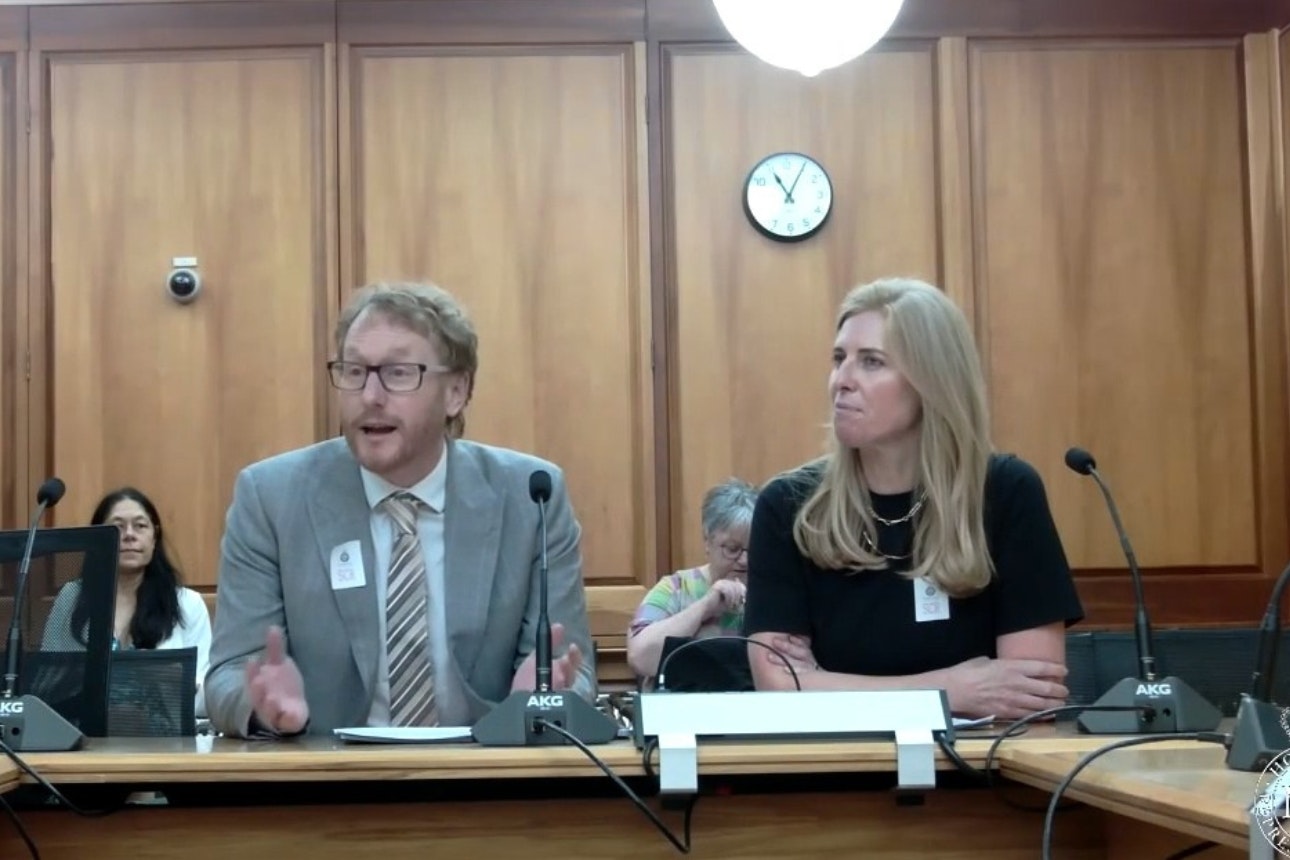
Consumer agrees. On August 28, we presented a petition containing 21,000 signatures to parliament calling for the introduction of repairability labels on household appliances and electronic devices. "New Zealanders are tired of replacing products due to minor faults, paying excessive fees for repairs, and being limited by where they can get products repaired,” Consumer NZ CEO Jon Duffy said at the time. "We know New Zealanders want to see a shift towards a circular economy where products are built to last and repair is not just an option, but the norm.”
Why do we need recycling centres?
Until that bill becomes law, places like the Hauraki Repair and Reuse Centre are the ambulance at the bottom of the cliff. Mitchell sees the results of rampant consumerism every day. “Things are no longer built to last,” she says. “We’re creating so much cheap stuff … Because we're making so much crap, it's not going to last the distance.”
Among her biggest problems is e-waste. Upstairs, spread across a dedicated floor, are piles of stuff waiting to be assessed by their part-time electrician. Mitchell shows Consumer a room full of appliances that can’t be resold because of the rules surrounding wiring insulation: modems, printers, phones, faxes, stereos, speakers, gaming equipment, DVD players, radios, turntables, foot spas and sewing machines.
This is why I’ve come to visit. A few weeks back, our beloved household blender stopped working. It’s 13 years old, and Froothie, the Australian company that sold it to us, admitted it had recently closed its New Zealand repair centre. Instead, that blender would now need to be sent to Australia for testing and repairs. The cost? $36. But that’s just shipping – there would also be repair costs involved too, as the blender is out of warranty. Froothie suggested we browse a range of new blenders on its website instead.
I didn’t want a new one. I wanted our old one back, and I didn’t want to have to pay hefty amounts for postage and repairs.
So, rather than send the blender to landfill, I’ve come to Mitchell to ask if there might be another way. What would she do with it? She took one look at it and shook her head. “I’d probably send it to Patrick,” she says.
Patrick and his hungry e-waste machine
Phones are dissected. Desktop computers are pulled apart. Column heaters are stacked in tubs, gaming controllers piled into oil drums, and wires – so many wires – are thrown into bins. “We’ll do the auditing, we’ll do the decommissioning, we’ll strip the data, and we’ll sell the assets,” says Patrick Moynahan matter-of-factly.
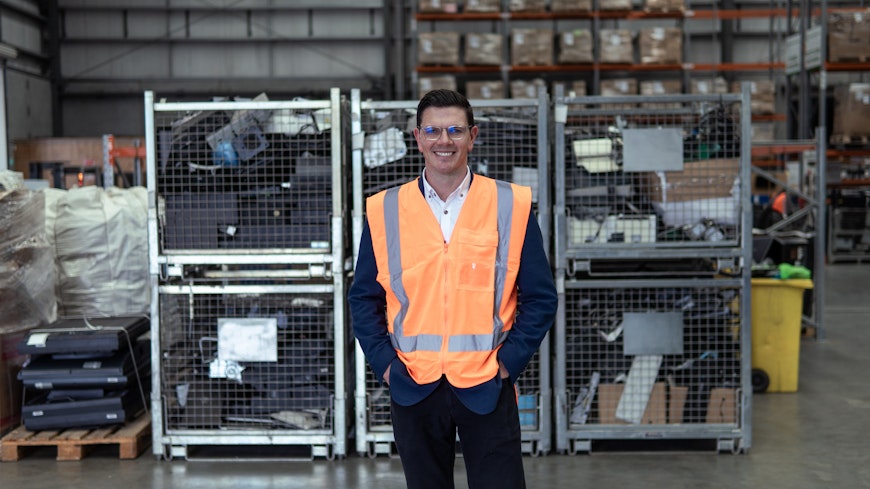
Moynahan and I are in Penrose, standing inside a huge warehouse called Echo. The noise is overwhelming. Moynahan, the boss, says he became interested in e-waste recycling after visiting a small recycling facility seven years ago. “I said, ‘This is fascinating.,’” So, he bought that business, learnt all he could about the industry, and began expanding. Now he has a facility in Wellington and is planning to open another in Christchurch soon.
Echo’s growth has been solid because the e-waste problem isn’t going away. Moynahan says they receive goods from across the spectrum – from near-new office fitouts to stuff that hasn’t worked for years. They’ll accept anything that has a plug, for a price. Laptops, monitors and modems can be dropped in bins outside, for a small fee. Moynahan’s team of 60 assesses them, strips them and sells the parts.
Much of the din is coming from a giant blue machine shuddering and shaking down one end of the building. It’s an optical sorter imported from Texas, the only one of its kind in the country. Standing on top of it is a staff member, who’s feeding televisions into the machine through a designated slot. It’s a bit like a giant Hungry Hippo eating e-waste.
The optical sorter ingests TVs, then automatically pulls them apart, then separates their components. It can pull apart up to 400 televisions a day. Moynahan says there’s no shortage of fodder – when someone’s TV breaks, people don’t bother repairing them. “They’re really difficult to fix,” he says. “People just go get a new one.”
That’s the problem, across the board, with anything with a plug. I show Moynahan my blender, and he shakes his head. What would he do with it? I ask. “We’d cut the cord off of it, pull out any plastic stuff, then pull the motor out of it.” This is not the answer I was hoping to get.
Is there any hope for my blender?
Under the Right to Repair Amendment Bill, any company selling consumer goods would also have to offer repairability options. That means Froothie would have to offer to fix my blender – in a reasonable time and at a reasonable cost – no matter its age.
Paul Smith of FixedFirst NZ says that if the bill was already law, I might be having an easier time getting our blender fixed. But after 13 years of dutiful service, it seems there’s little hope left for it.
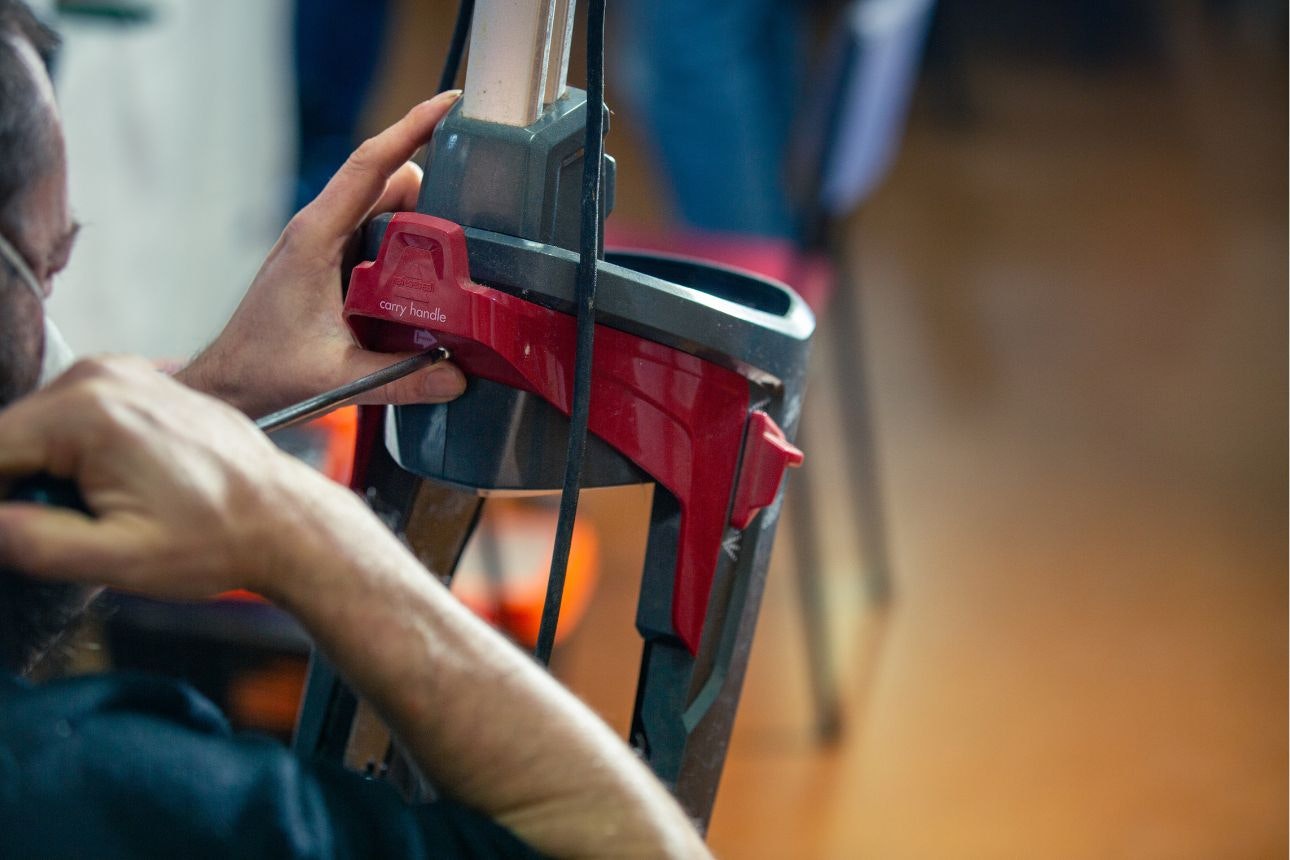
Smith has one more suggestion – take it to a repair cafe, a free service where registered electricians help breathe new life into broken products. Until then, the blender’s acting as a large, chunky doorstop for our porch door, which blows shut in the wind. Either way, it won’t be going to landfill.
How to repair a broken appliance
Under the Consumer Guarantees Act, consumers are required to be offered a refund, repairs, or a replacement when something goes wrong. Approach the manufacturer to see if they’ll repair it under warranty; if it’s no longer under warranty, cite your rights under Consumer Guarantees Act.
If that doesn’t work, repair cafes offer free services and can be found around the country. Search Repair Cafe Aoteaora to find one closest to you.
If you need to dispose of an electronic item, each council has different rules and regulations around disposal. Check their websites for options.
Many businesses now offer recycling drop-off points – check their website for the place you purchased your item to see if they’ll take it back.
E-waste recycling centres like the Hauraki Reuse + Recycling Centre and Echo are available around the country; instead of landfill, you can dispose of your used electronic goods appropriately often for just a gold coin or two.

Sick of wasting money on products you can’t repair?
Learn about our campaign for a right to repair and help us demand a mandatory repairability label.