By Bryan Wall
Product Test Journalist | Kaipūrongo Whakamātautau Hautaonga
It’s no secret top loader washing machines are way quicker than front loaders, but our testing shows it’s to the detriment of washing performance.
However, front loader cycles are becoming frustratingly long. Some machines take several hours to complete their wash. Why is this and which washing machine should you choose to get a quick and effective wash?
We test washing machines with a 3.5kg load on a normal cycle with a cold wash. Our current average tested cycle time for top loaders is 61min. For front loaders, it’s over double this time at 131min! Our slowest front loading offender takes over 4 hours to complete its standard cycle!
However, the average washing performance score for top loading washing machines is 10 points less than that for front loaders – 67 versus 77 respectively. Washing performance combines scores for dirt removal, rinsing, spin efficiency and gentleness.
Top loaders are also rougher on your clothes. Our gentleness test average score for top loaders is 10 points lower than the front loader score at 48 versus 58.
And then there’s water use! Top loaders are very thirsty machines. Our tested machines use on average 113L of water on the normal cycle, and one uses over 166L – that’s a bath full! Front loaders average only 59L.
Top loaders rely on the clothes being submerged in water and detergent to remove dirt. Front loading washing machines continually lift and drop garments in and out of the water. It’s this continual agitation of the clothes’ fibres that helps front loading machines remove more dirt.
Why do front loader washing machines take so long?
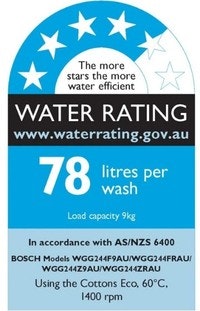
The increases in washing cycle time for front loaders is mainly due to efficiency requirements. Washing machines are sold with water and energy efficiency ratings prominently displayed as selling points – the more stars, the more efficient. To achieve more water rating stars, a washer needs to use as little water as possible but still clean to an acceptable standard. The only way to do this is to extend the cycle time so the clothes are in the water and detergent for longer. The odd thing is that the extended cycle time doesn’t affect the energy efficiency rating. The majority of energy expended in a wash cycle goes towards heating the water at the start (tip – cold washes save you money!).
You can, of course, reduce the cycle time by choosing a shorter programme, but there is no guarantee you’ll get as good a wash. We did some testing on this a couple of years ago.