By Bryan Wall
Product Test Journalist | Kaipūrongo Whakamātautau Hautaonga
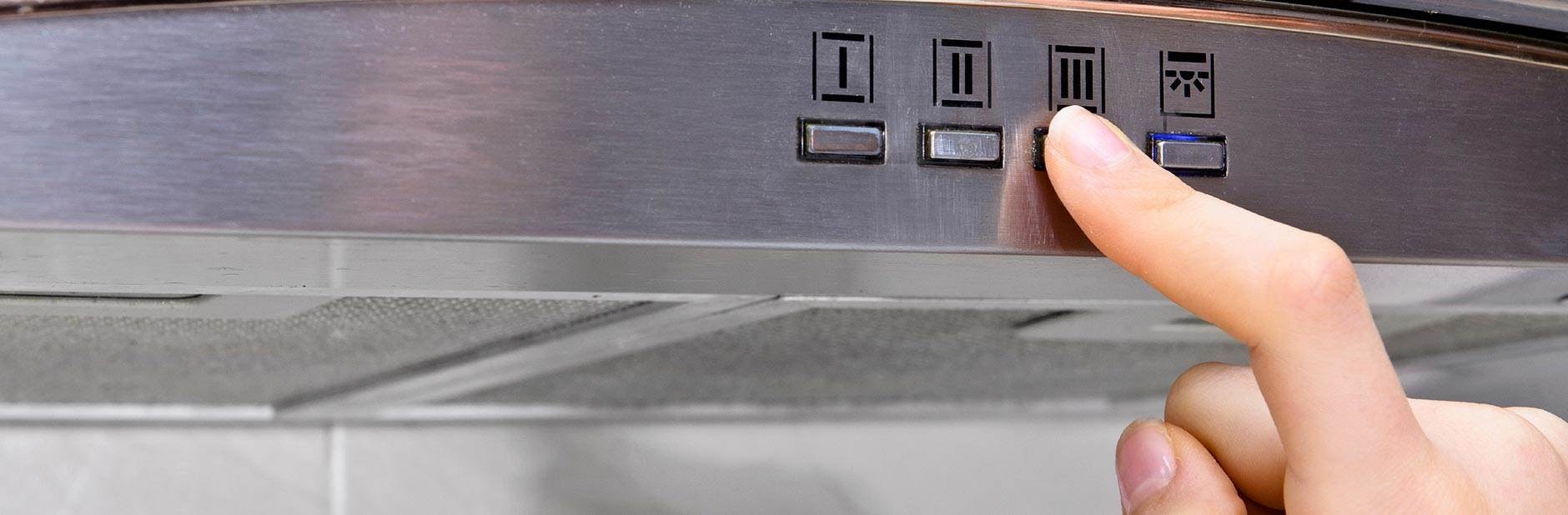
In the Wall household, we barely ever have our rangehood on anything but the lowest fan speed as it’s so damn noisy. Anything level 2 or above is akin to having a leaf blower stuck in your face. We probably should get a new rangehood.
It’s vital to consider noise levels when choosing a rangehood so you’re not put off using it. At Consumer NZ, we’ve made that easy by recording the noise levels for the rangehoods we test. We calculate a ‘quietness score’ based on noise on the lowest and highest fan speeds. That can help you choose a model that extracts effectively and quietly.
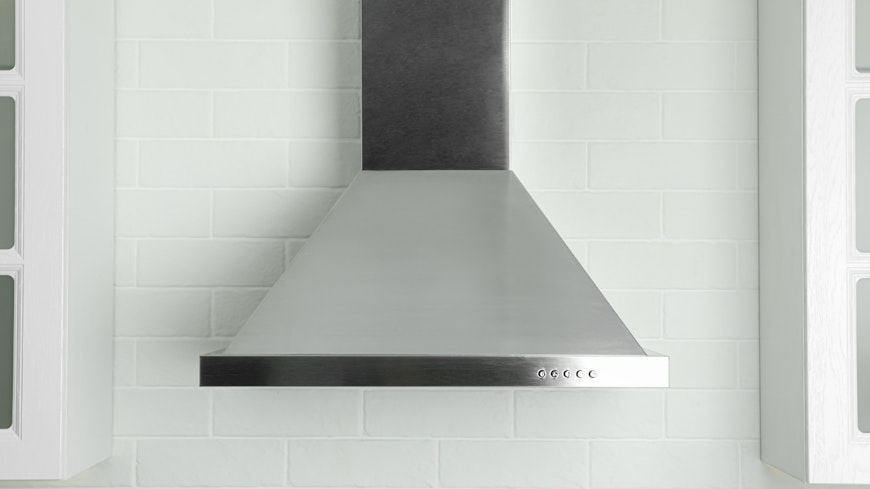
How we test rangehood noise levels
We place a noise meter 500mm from the front of the rangehood, and we record levels on the lowest and highest fan speeds. Manufacturers publish their own noise level readings. We recommend you don’t compare them with our readings as their test environment and process will be different.
Ducted or recirculated rangehoods
Rangehoods can be installed in either ducted or recirculating modes. In ducted mode, smells and steam (which can be greasy from frying) are blown outside through ducting.
In recirculating mode, there is no ducting (useful for kitchens that can’t have ducting to the outside). Instead, the sucked air is passed through a carbon or charcoal filter and recirculated back into the kitchen. This eliminates cooking odours and grease but not moisture. This goes back into your kitchen, making recirculating a second-best option.
We test rangehoods in both modes as performance and quietness scores differ.
Quietest overall rangehoods
Quietest canopy rangehood
Downdraft extractors
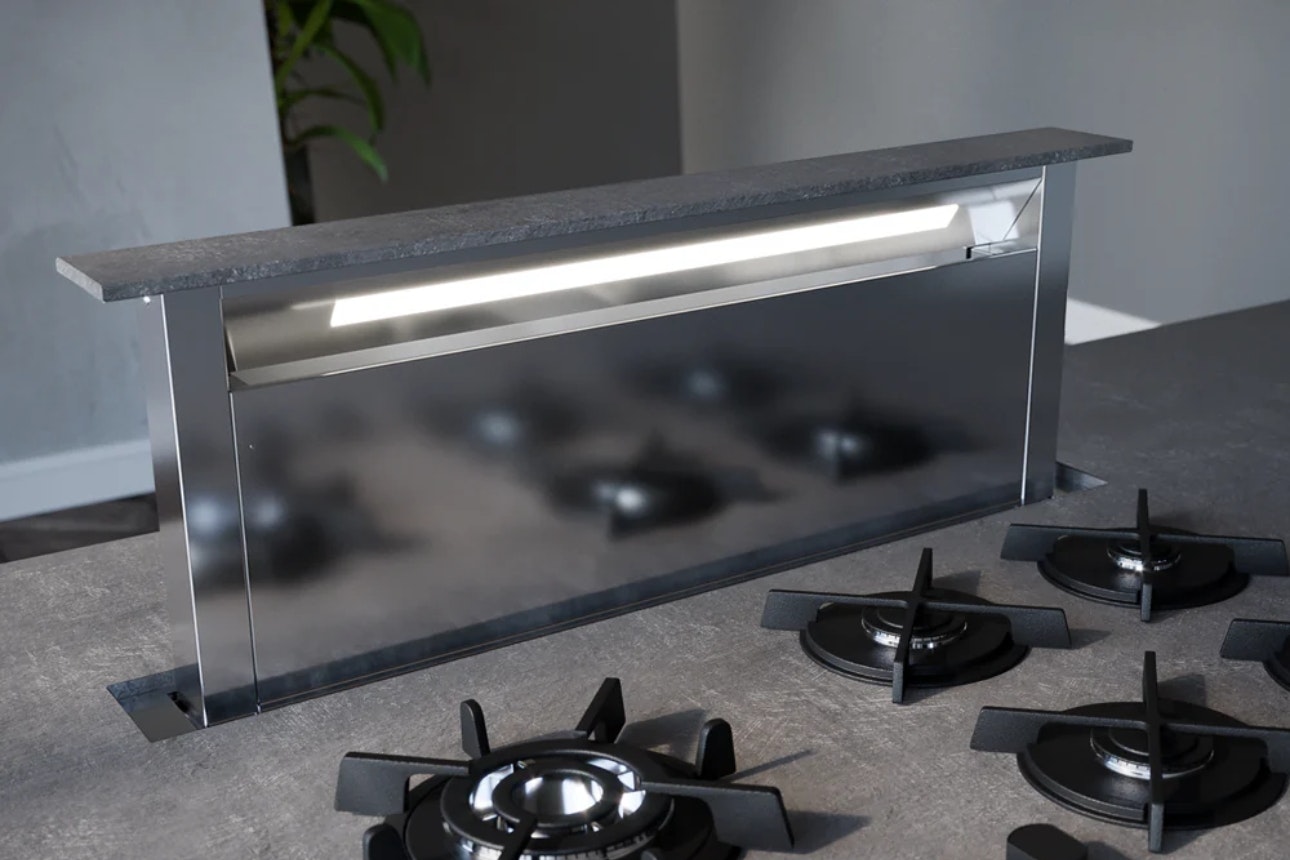
Sleek and stylish, downdraft extractors are integrated into your benchtop and rise up when turned on. We don’t recommend the two models we’ve tested if noise levels are important to you. Neither extracts that well unless you have them on the highest fan speed, which is quite noisy.
If noise annoys, a model to avoid
Is there a way to make your rangehood quieter?
There is, but you need to sort it out before installation.
There are several factors that can influence how loud a rangehood is: canopy design, motor efficiency and room environment amongst them. But one that is often misunderstood is the ducting type.
Types of rangehood ducting
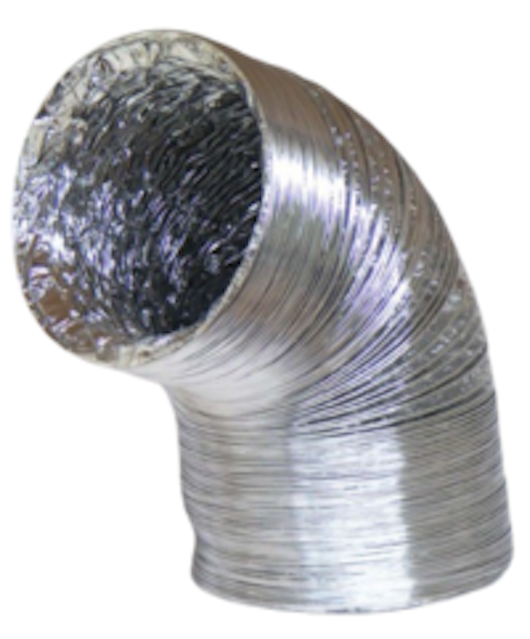
Flexible
Flexible ducting is:
the cheapest of all ducting types
the easiest to install (and commonly used in ventilation systems like HRV and DVS)
lightweight and easy to bend around corners.
It consists of a steel coil covered in a membrane, which is often PVC with a foiled coating.
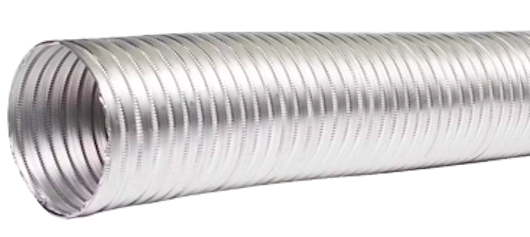
Semi-rigid
Semi-rigid ducting has a smoother internal bore and is:
also flexible but not quite as bendy as flexible ducting
made from an aluminium spiral.
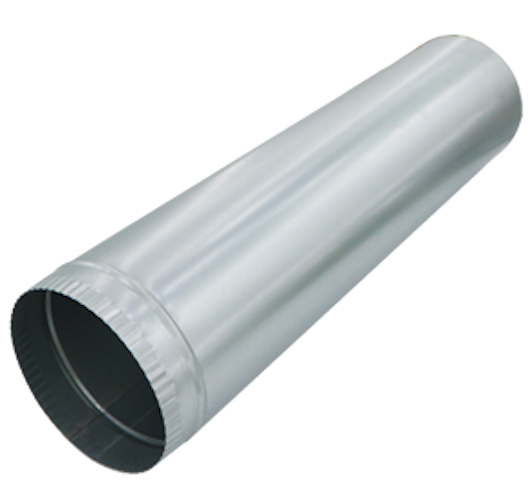
Rigid
Rigid ducting also has a smooth internal bore. It is:
made from galvanised or stainless-steel sheeting
ideal for long straight runs
great for rural homes where rodents could be a problem, as they can eat through flexible ducting.
Price
Rigid and semi-rigid ducting can typically be two to three times the price of flexible ducting.
The quietest option
This is a contentious subject! It mainly comes down to the skill of the installer.
If installed correctly, flexible ducting can be one of the quietest options for rangehood ducting (as well as the cheapest). However, many retailers won’t recommend using it due to poor installs and subsequent warranty claims.
If flexible ducting isn’t extended fully, it will bunch up and impede air flow, creating turbulence and increasing noise levels. Squeezing flexible ducting through small gaps can also increase the noise. This is because the fan has to work harder to push the air through the narrower section.
Therefore, many retailers and manufacturers recommend semi-rigid or rigid ducting. But these come with more expensive installation and increased material costs.
In an ideal world, the duct would have a straight run from the rangehood to the outside. For most installs, the secret to keeping the noise down is to minimise the length of the duct and the number of bends.
Replacing a rangehood
If you are replacing an older rangehood, it pays to check the diameter of the original ducting. It could be 125mm in diameter, while new models tend to have 150mm diameter outlets. Often newer models are connected to the old, narrower ducting using an adaptor. This reduces air flow and efficiency and increases noise.
Our installation for testing
When we test rangehoods in our lab, we use a rigid PVC pipe to remove any of the variation that flexible ducting might introduce. This means we have a near-perfect set-up, so our recorded noise levels can be lower than those you might experience with a home installation.
You should use our noise level readings for comparing tested models only.
Don’t try to compare manufacturers’ noise readings with our readings. There is no way of knowing how the manufacturers installed their units or where they were standing when testing the sound level.