By Bryan Wall
Product Test Journalist | Kaipūrongo Whakamātautau Hautaonga
It’s almost unbelievable that the domestic microwave oven has been around for nearly 60 years. Considered at first to be futuristic, microwaves became commonplace in our kitchens in the 1980s, with their magical ability to rapidly overheat the edges of food while the centre stayed cold.
Now, microwaves are an indispensable device for many of us. Their design hasn’t changed much over the years, until the advent of the flatbed variant in the last decade.
So, what is a flatbed microwave and why do we at Consumer love them?
The problem with microwaves
Microwave ovens produce – surprise, surprise – microwaves. They do this using a component called a magnetron; a type of vacuum tube, similar to what used to be found in televisions.
These microwaves enter the water molecules of the food that’s inside the oven, generating heat.
However, the nature of the microwaves and the way they bounce around the inside the oven creates hot and cold spots in the food. To address this, rotating turntables were introduced to ensure the food heated evenly. Even then, there could still be cold spots in the centre of the food where it wasn’t spinning.
Enter the flatbed
One day, engineers came up with the idea of having the magnetron rotate instead of the food and the flatbed microwave was born.
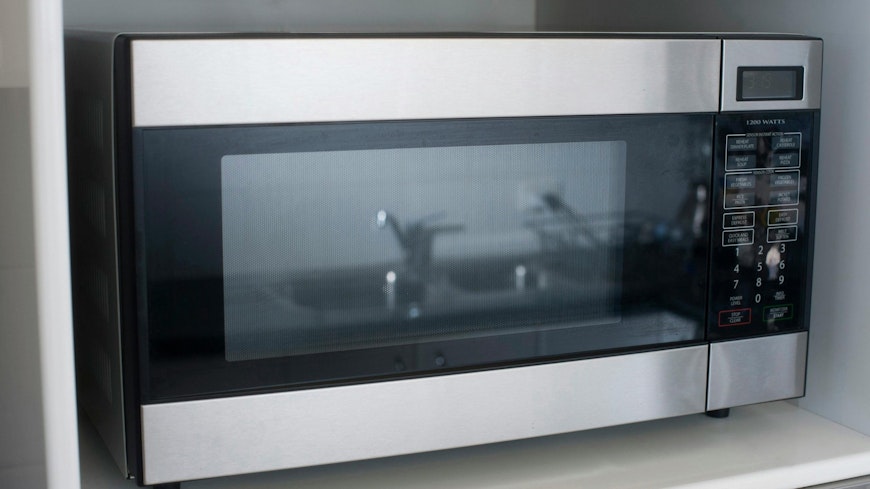
The magnetron is concealed in the base of the oven and rotates during cooking, moving the hot and cold spots around and ensuring even heat. As a result, flatbed microwaves no longer need a turntable.
It’s such a simple change, you wish they’d thought of it earlier.
Pros of flatbed microwaves
Even cooking without hot and cold spots.
Maximum internal space for cooking.
More flexible interior, enabling different shaped dishes to be used without hitting the side (as can happen with standard microwaves that use a turntable).
Very easy to clean.
Cons of flatbed microwaves
Price – the lowest price models are at least twice the price of entry level turntable models.
How do flatbed microwaves perform?
We currently have 58 tested microwaves online, of which 12 are flatbed models.
The average cooking performance score for turntable models is 84, but for flatbeds it’s a tad higher at 85. Cooking performance is based on defrosting mince and a whole chicken, cooking broccoli and reheating quiche.