By Nick Gelling
Product Test Journalist | Kaipūrongo Whakamātautau Hautaonga
Sick of signing in with pen and paper? Would automatic location alerts give you peace of mind? You need a phone that can scan official Ministry of Health QR codes.
On this page
Happily, almost any smartphone you buy will do the job. The NZ COVID Tracer app is lightweight and uses a minimal amount of processing power. You might just have to wait a few seconds for it to open on slow phones. The app runs on:
Android: Any phone with Android 6.0 (also called Android Marshmallow) or later can run the app and use Bluetooth tracing. This includes any phone from 2016 or later. Some earlier Androids can update to Marshmallow, but there are no guarantees.
iPhone: iOS 10 or higher is required, which covers every Apple phone since the iPhone 7. However, the Bluetooth tracing feature (strongly recommended by the Ministry of Health) requires iOS 12. Any iPhone since the XS (2018) has iOS 12 or later out of the box, while earlier devices can be made compatible through updates.
The cheapest options
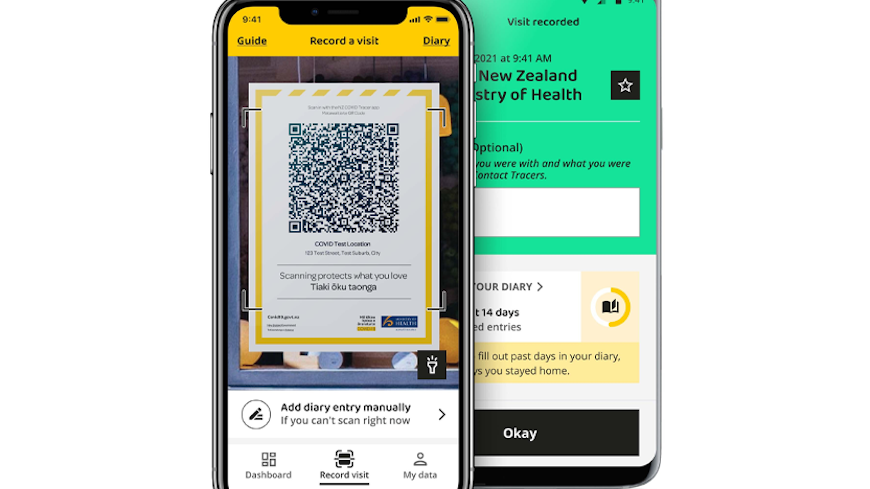
We’ve heard from people wanting a phone for scanning, receiving alerts, and nothing else. If that’s you, the simplest smartphones sell for less than $100. They’re often sold by telcos like Vodafone or Spark and locked to their networks. However, they tend to be terrible as phones – if you think you might use it as anything more than a pandemic pal, you’ll quickly become frustrated with how underpowered it is.
For slightly faster processing, a half-decent display and likely a longer support life, we’d suggest looking at Nokia’s entry-level models at about the $200 mark. You could also spend a bit more (say, $400) on an Oppo or Xiaomi phone that can compete with more expensive mid-range devices.
Buying second-hand
A used or refurbished phone makes sense as a contact-tracing companion. Since all you need is something from 2016 or later, you can get a phone that was once luxurious for a fraction of its original cost – like a Samsung Galaxy S7 for $219. It’s even better if a friend can gift you a phone they don’t use any more. Just make sure whatever you get has a new enough operating system – Android 6.0 or iOS 10.
However, beware that some phones more than 4 years old have ceased to receive security updates, putting your data at risk. The COVID Tracer app will be fine, but don’t use an unsecure phone for things like financial transactions.