By Kate Harvey
Writer | Kaituhi
The country’s two big supermarket chains say they’re on track to display unit pricing throughout their stores by the time their grace period runs out at the end of August.
Unit pricing makes it easier to compare the price of products on what they cost per unit of measure – for example per 100g or 100ml – so we can work out what’s cheapest regardless of size, brand, or specials.
Unit pricing became mandatory under the Fair Trading Act on August 31 last year, but supermarkets were given a whole year’s grace period before having to comply. They get another year before their websites must display unit pricing.
We asked Foodstuffs – the owner of New World and Pak’nSave – and Woolworths if their stores were on track to be compliant by August 31.
Woolworths shared it had a team working for the last 6 months to implement the unit pricing requirements and, as a result, it was on track to meet the deadline. “The largest change for us has been the requirement in the regulations to display the unit price in a font size that is no less than 25% of the font size in which the product’s purchase price is displayed. This has meant we’ve needed to redesign our ticketing templates, as our existing font was slightly smaller than required,” Woolworths told us.
Foodstuffs said it was already displaying unit pricing for most of its products and it was on track to being fully compliant by August 31. “Our stores are all locally owned and operated, and we’re well under way to ensuring the new unit pricing changes are rolled out smoothly and that our teams are fully trained and supported.”
Something to watch out for
When we can see unit pricing, it makes it easier to compare the prices of products.
But an eagle-eyed Consumer member alerted us to a unit pricing discrepancy. He spotted a 1.5kg bag of sugar that cost $3.99 and a 3kg bag that cost $8.19 with the same unit price of 0.27/100g. You'd actually save money buying two of the smaller bags.
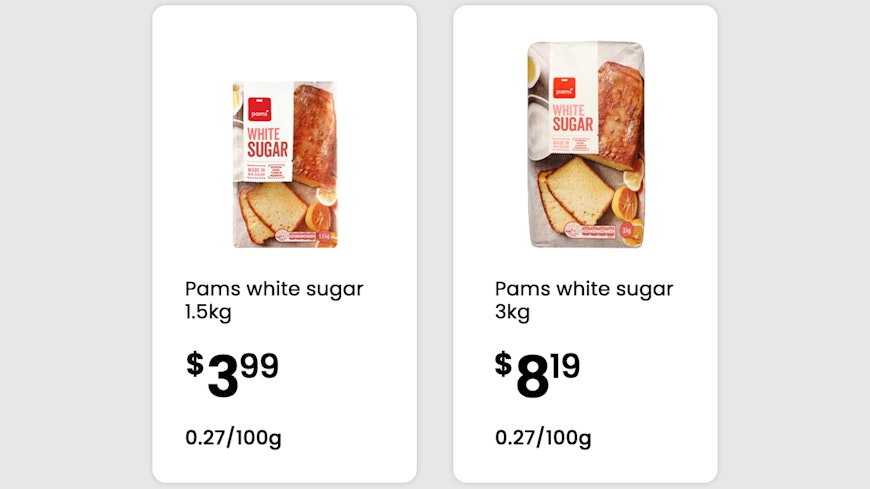
At first glance, it looks like the supermarket has made a mistake, but the price difference is due to rounding. The supermarket has rounded the smaller bag of sugar’s unit price up from 0.266/100g and the bigger sugar bag’s unit price down from 0.273/100g – as it’s meant to under the regulations.
While unit pricing saves us from having to do a lot of maths in our head, it seems we still need to look at prices critically sometimes.
How to save money at the supermarket with unit pricing
Our guide to unit pricing and how the small print can help you save big.