Choosing which machines to test
As much as we’d love to, we can’t test every washing machine on the market – testing is expensive and time consuming, and we have a limited budget.
Instead, we regularly survey the market, and ask manufacturers which models will be deleted, which are staying available and what new models they plan to release in the near future. Then we choose a representative selection of machines for testing, including both cheaper and more expensive models, front and top loaders, and any models with interesting technical innovations.
If you don’t see the model you're considering buying in our washing machine reviews, try and identify a similar model by the same manufacturer and check out our brand reliability and satisfaction survey results. If you choose a brand that scores highly, you’ll likely end up with a good machine that will also last a long time.
Lifetime score
Our overall score combines test performance (how well the appliance works and how easy it is to use) with repairability (how often repairs may be needed, how easy it is to get parts and the warranty period), predicted reliability (how likely models from the brand are to remain free of faults) and brand satisfaction (how satisfied owners of the brand's machines are likely to be).
Predicted scores
We use years’ worth of test data to predict how a similar model will perform using machine learning. We focus on key attributes like brand, product type and price – for example, predicting the score for an LG front loader washing machine based on test results for other LG front loaders of the same size within the same price bracket. Predicted scores are displayed only where we have a high level of confidence, based on consistent results across multiple similar models we have tested in the past. The scores we display are the median of the interval of scores predicted by the tool.
When predicting scores for washing machines, we look at the brand, whether the machine is a front loader or top loader, and the price.
For more detail on our predicted scores, see We’re trying something new – so you can compare more products.
Test performance
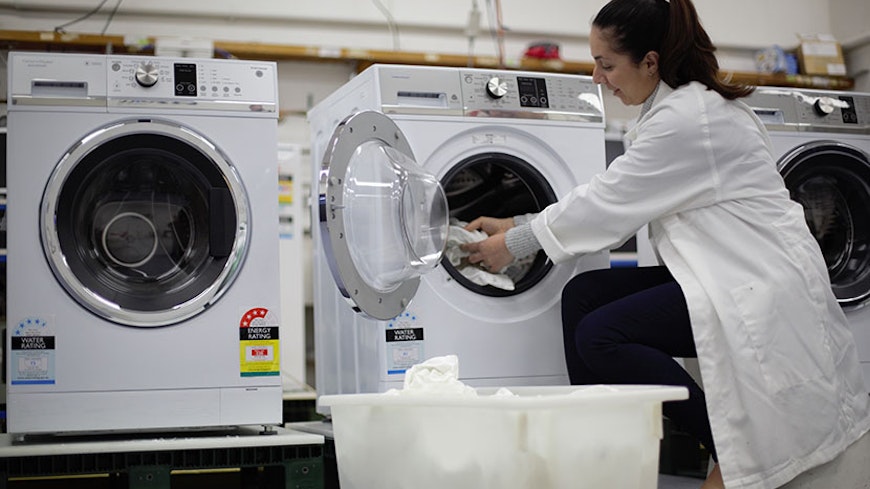
Preparing machines for testing in our lab.
It’s no good if a product lasts for several decades if it doesn’t work well in the first place. A disappointing product will soon become unloved and unwanted. For this reason, our independent lab testing forms an important part of our overall score.
Our washing machine test is based on the Standard AS/NZS 2040:1998. We test each washing machine with a 3.5kg (dry weight) load of washing, as our research indicates this is the average load size in New Zealand.
We complete two identical wash cycles for each washing machine and average the results.
Our test includes dirt removal, rinsing, gentleness and spin performance. We also measure energy and water efficiency plus noise output.
Dirt removal
Specially prepared swatches of fabric, pre-stained with a specific amount of dirt, are attached to a standard wash-set of linen garments. These swatches are the same as those used for international Standards tests.
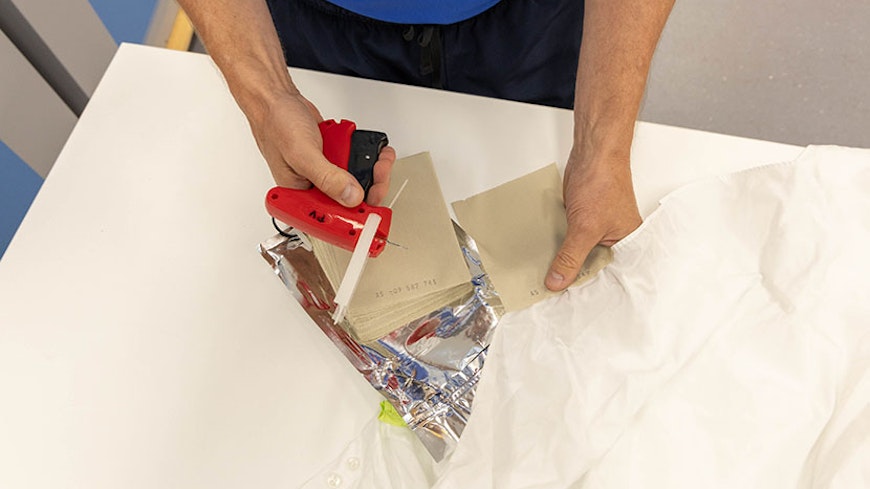
Dirt swatches being attached to linen prior to testing.
We then wash the test load on a standard cotton cycle at 20°C. Laundry detergents are formulated to work best at lower temperatures and we’ve found that warm washes make a marginal difference to dirt removal.
After the wash, we remove the swatches and analyse them with a spectrophotometer. This machine detects the amount of light reflected from the swatch, which we use to calculate how much dirt has been removed. In simple terms, the whiter the swatch, the more dirt has been removed.
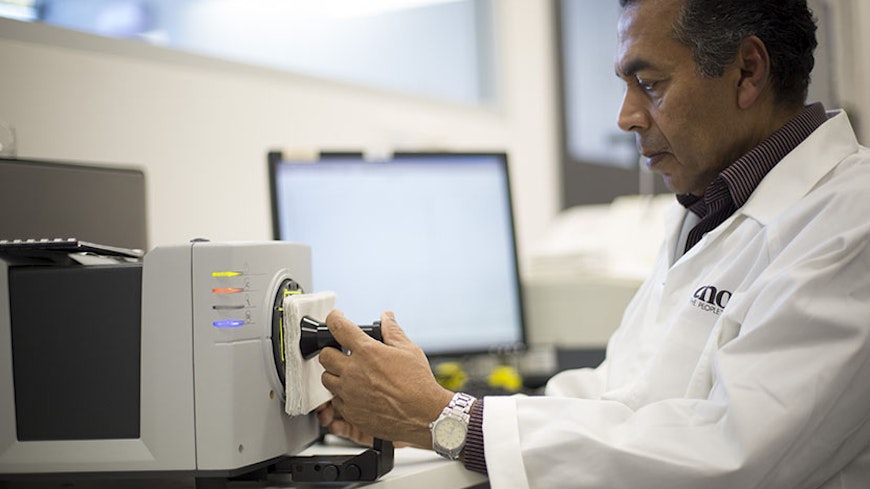
Swatches being analysed with the spectrophotometer; multiple swatches are used to prevent light bleed-through.
Rinsing
We add a special marker chemical to the wash and take a water sample at the end of the final cycle. The amount of this chemical left in the rinse water determines how well the machine has rinsed out dirt and removed detergent.

Adding the marker chemical.
Gentleness
To check how gentle a machine is on your washing, we attach swatches of an easily frayed fabric to the test load. We measure the swatches before and after the wash. The less fraying there is, the gentler the machine and the higher its gentleness score.
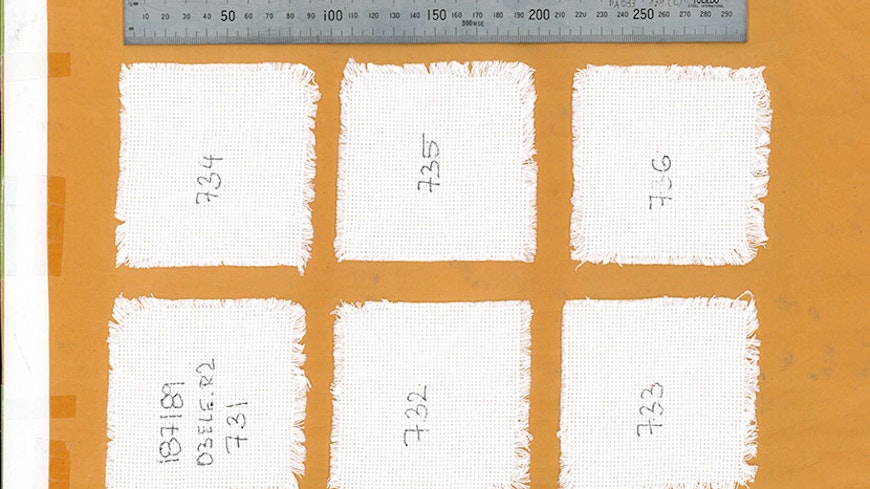
A set of frayed swatches being measured.
Spin performance
We weigh the load of washing before and after the wash. The closer the final weight is to the original 3.5kg dry weight, the more water has been removed in the spin cycle and the higher the spin performance score. We use a machine’s maximum spin speed for this test.
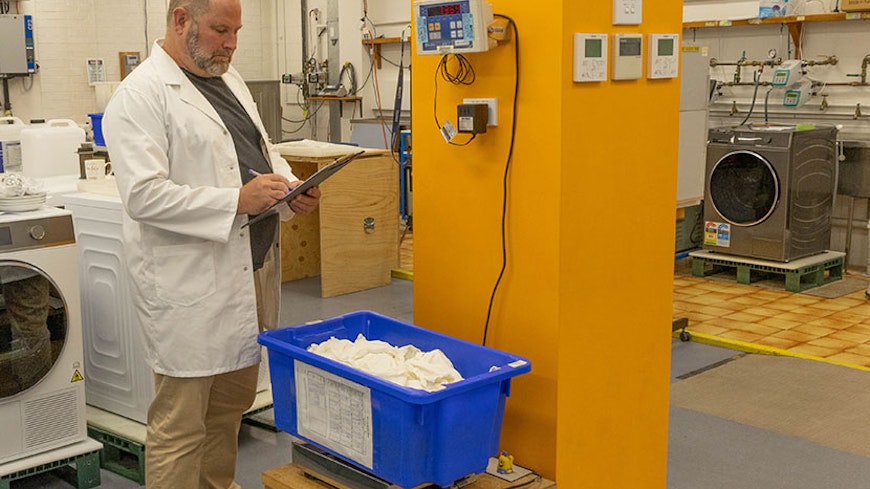
Weighing our test load.
Energy efficiency and water efficiency
We measure the amount of electricity and water used for the standard cold wash cycle to generate scores for energy efficiency and water efficiency. We also calculate annual running costs from the energy used (kWh) and current price of electricity, assuming one standard cold wash per day for a year.
The energy and water efficiency results from our tests often differ from energy and water label consumption figures and associated star ratings due to differences in the wash cycle used for testing. Use the figures in our washing machine reviews to compare models.
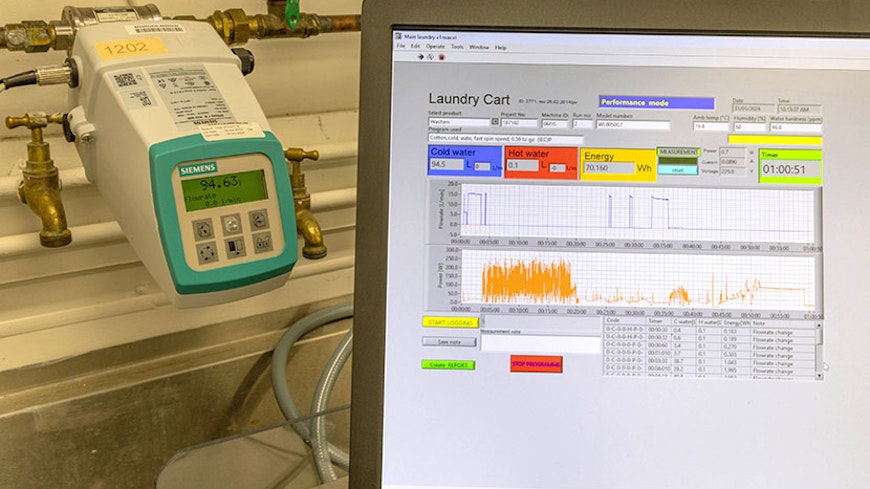
Energy and water consumption being recorded.
Noise
Nobody wants a noisy appliance. We accurately record the maximum noise level a washing machine makes during its spin cycle – measured 1m away from the machine and 1m from the ground.
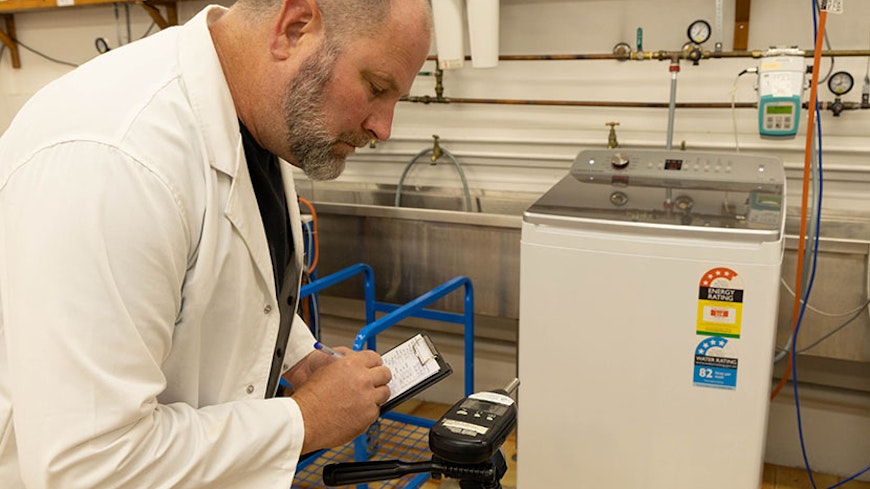
Recording noise levels during the spin cycle.
Repairability
On average, a washing machine should last around 10 years, but we can’t expect an appliance to perform without fault for its whole life, so repairability is paramount.
To assess the repairability various brands' washing machines, we talk to repair and spare parts companies and check:
which brands' machines require the most repairs
how easy it is to get spare parts for different brands and what they cost
how easy each brand's machines are to repair.
We also factor in manufacturer warranty periods.
Predicted reliability
It’s reasonable to expect a new appliance to remain fault-free for at least the first 5 years. Our predicted reliability won’t tell you whether the washing machine in your laundry will spring a leak tomorrow, but it does show which brands make models that are less likely to fail.
Brand satisfaction
Satisfaction is important – no appliance should be a source of buyer regret. Appliances with very satisfied owners are more likely to get cleaned regularly and maintained well. Their owners are also more likely to get any faults repaired rather than look for a quick replacement.
Survey data
In our regular reliability and satisfaction surveys, consumers tell us about faults that have made an appliance they own unusable or mean they’ve had to change how they use it. We also ask them how satisfied they are with the appliance. We use this data to produce our predicted reliability and brand satisfaction scores.
We use a statistical test to rate the relative performance of each brand. Compared to data we have for all products (of the same type) in the survey, we rate each brand with highest, high, average, low or lowest for predicted reliability and brand satisfaction respectively.
You can compare the rating of different brands for the same product type (for example, the predicted reliability rating for Miele and Haier washing machines), but you can’t compare the results for different product types (for example, satisfaction of LG washing machines and Samsung clothes dryers).
We analyse brands that get at least 30 responses in our survey. That means there are some brands we can't analyse because we don't have enough data. For those brands, we assume they have average reliability and satisfaction.
Our data is based on 3,415 responses from owners of washing machines in our 2024 survey. This data will be updated with our 2026 survey results later this year.